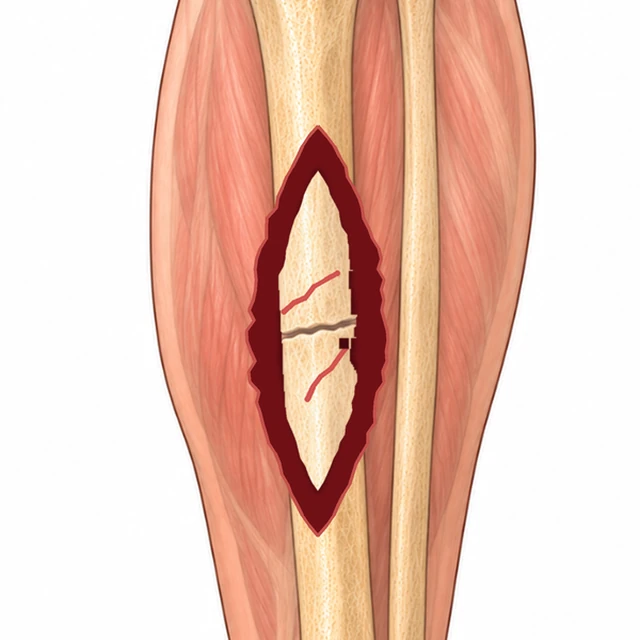
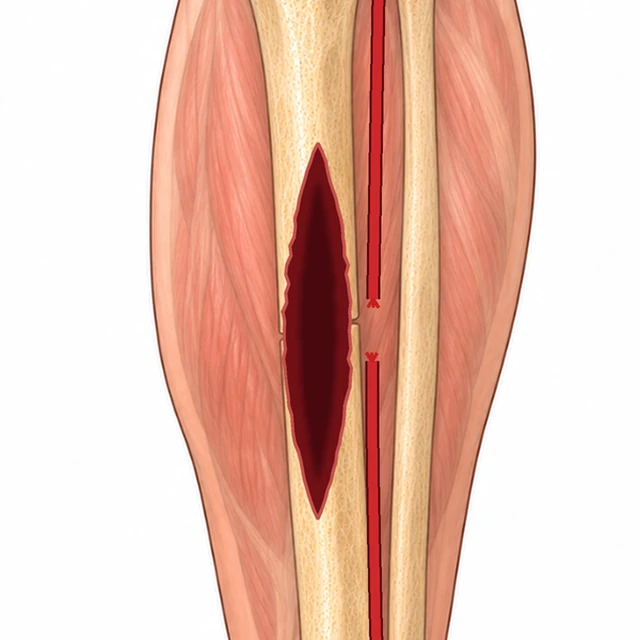
Gustilo-Anderson classification: treatment by type, age and patient data
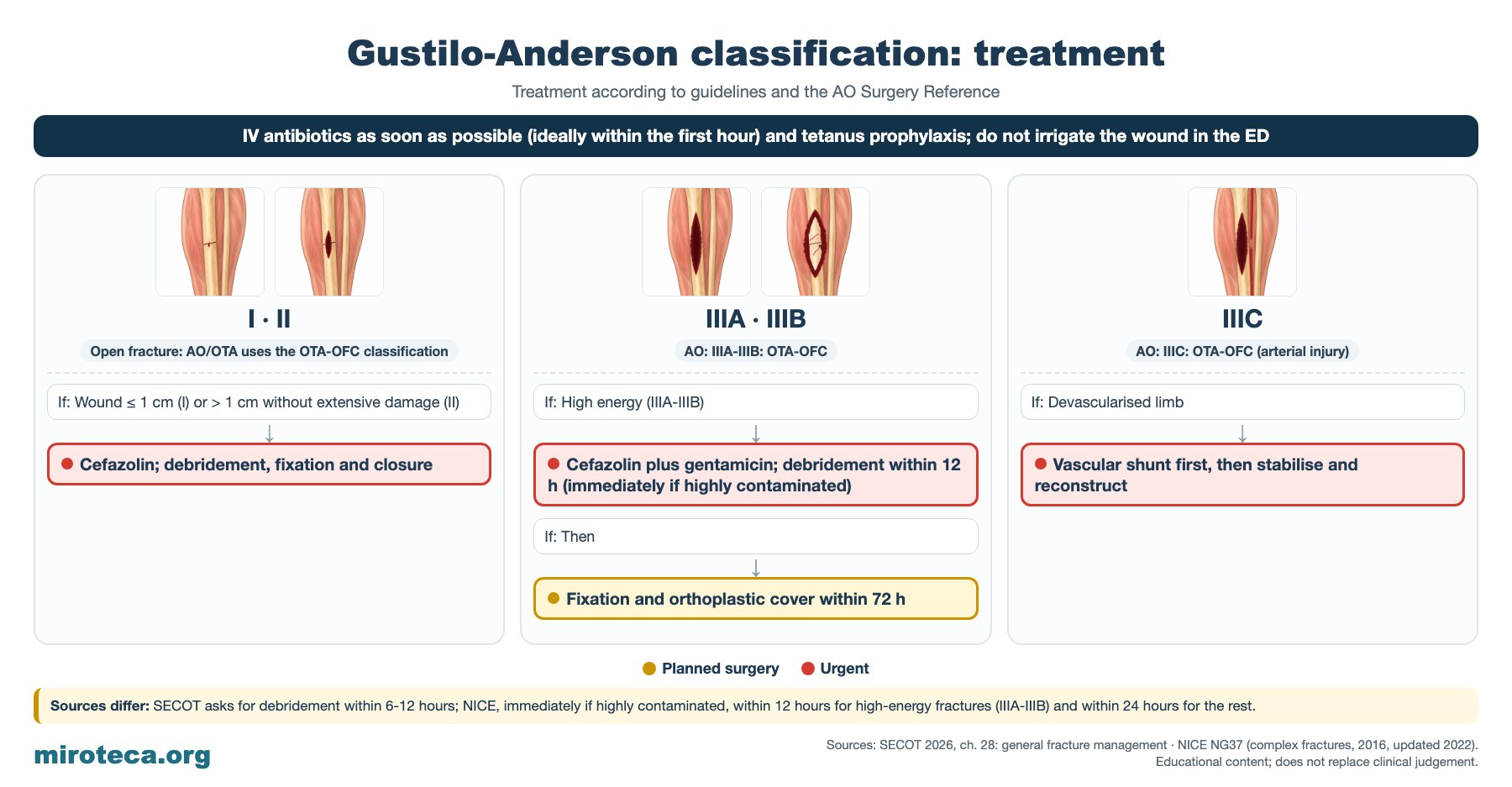
IV antibiotics as soon as possible (ideally within the first hour) and tetanus prophylaxis; do not irrigate the wound in the ED.
Educational content; does not replace clinical judgement. Download
Each type and its treatment
Tap an X-ray to enlarge it next to the diagrams.
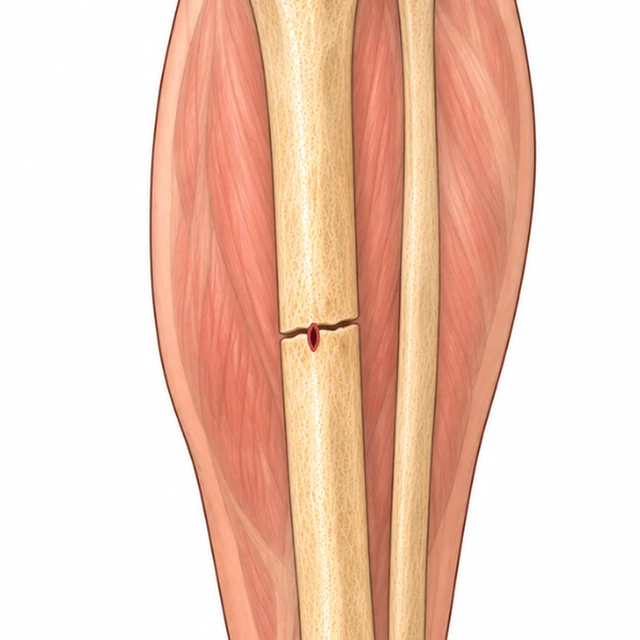
I · II
III
Open fracture: AO/OTA uses the OTA-OFC classification
If: Wound ≤ 1 cm (I) or > 1 cm without extensive damage (II)Cefazolin; debridement, fixation and closure Urgent
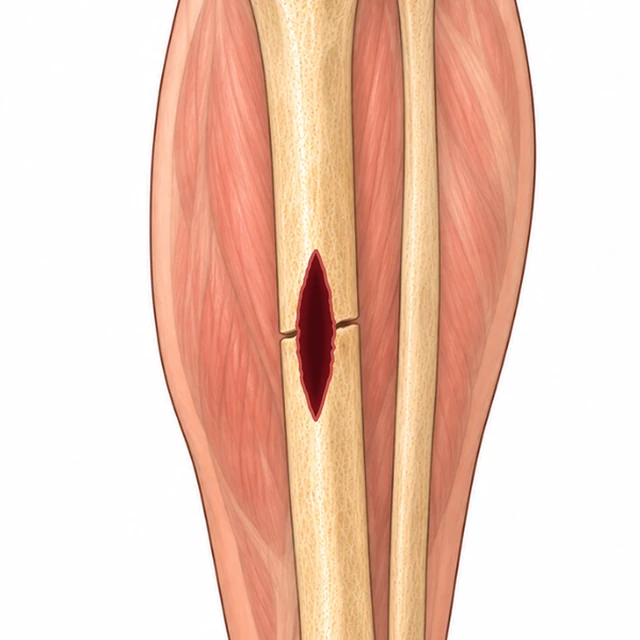
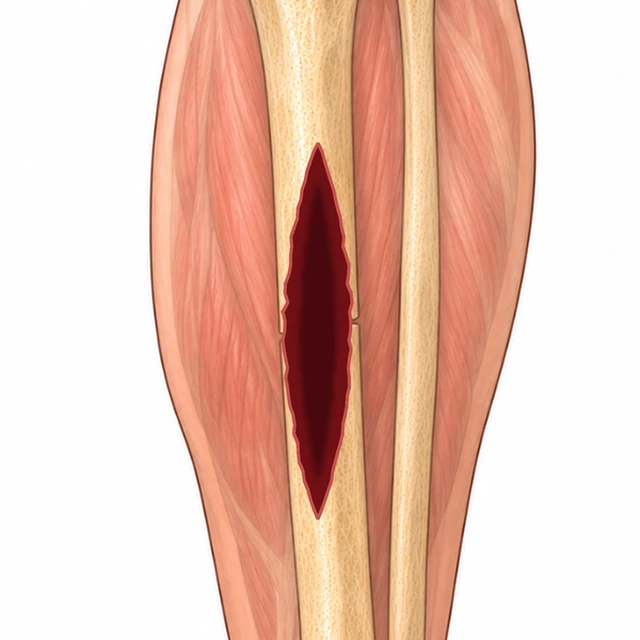
IIIA · IIIB
IIIAIIIB
AO: IIIA-IIIB: OTA-OFC
If: High energy (IIIA-IIIB)Cefazolin plus gentamicin; debridement within 12 h (immediately if highly contaminated) Urgent
If: ThenFixation and orthoplastic cover within 72 h Planned surgery
IIIC
IIIC
AO: IIIC: OTA-OFC (arterial injury)
If: Devascularised limbVascular shunt first, then stabilise and reconstruct Urgent
Sources differ. SECOT asks for debridement within 6-12 hours; NICE, immediately if highly contaminated, within 12 hours for high-energy fractures (IIIA-IIIB) and within 24 hours for the rest.
 MIROTECA