Knee osteoarthritis: Kellgren-Lawrence, Ahlbäck and stepwise treatment
On this page
MIROTECA medical team · Reviewed 23 Nov 2026 · 5 min read
Present in 50-60% of people aged 65-70 and 90% from age 80, although 40% of radiological osteoarthritis causes no symptoms. Mechanical pain that worsens with use. Treatment starts with exercise and weight loss; arthroplasty is for severe symptoms that do not respond12.
≥ 45 yearsclinical diagnosis without imaging (NICE)2
Must know
NICE diagnoses osteoarthritis without imaging from age 45 with activity-related pain and morning stiffness of no more than 30 minutes2.
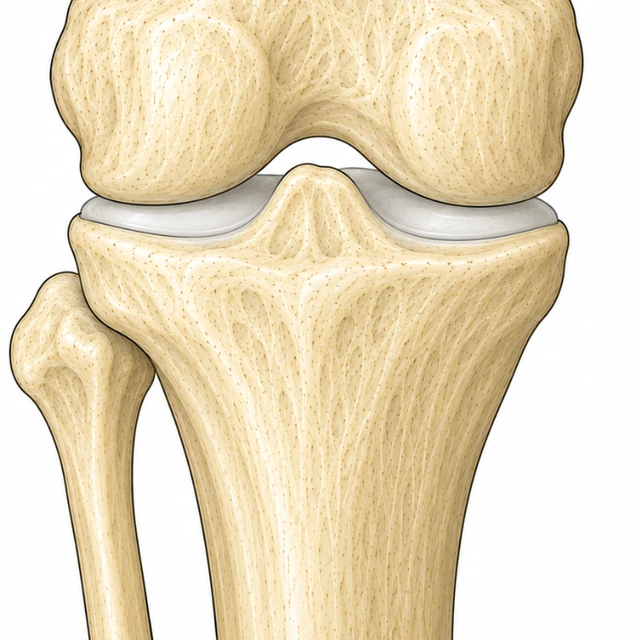
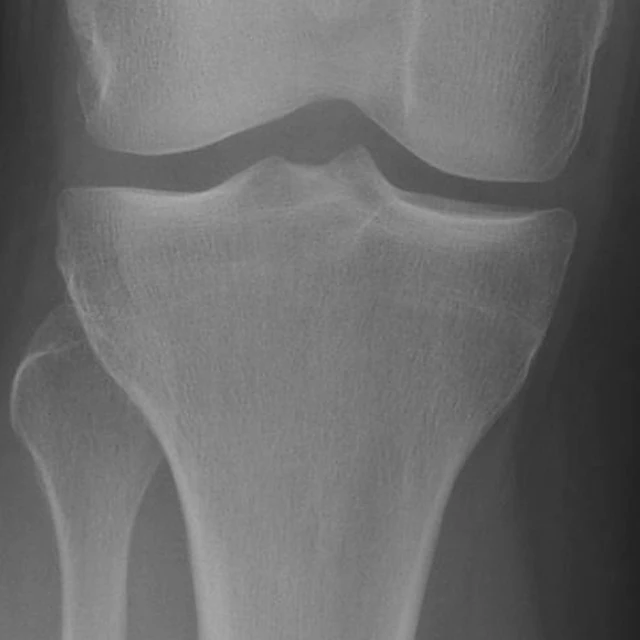
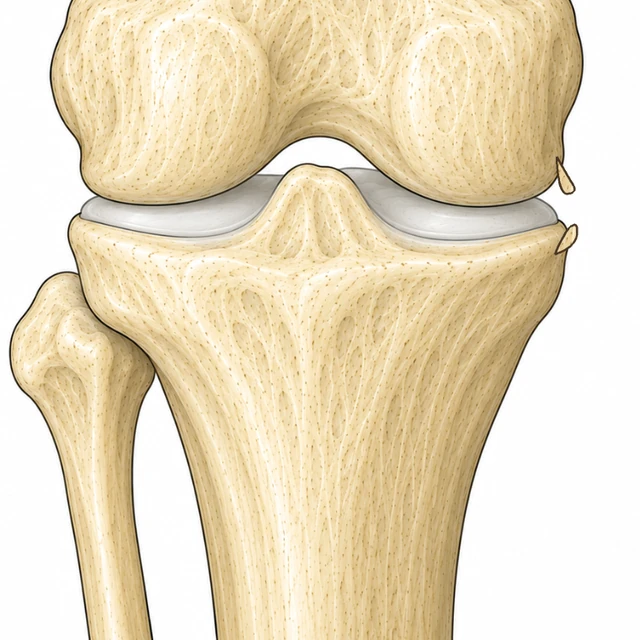
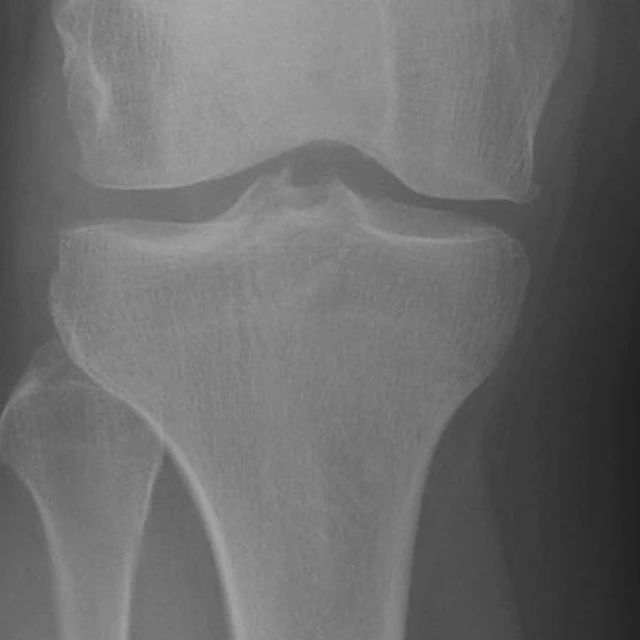
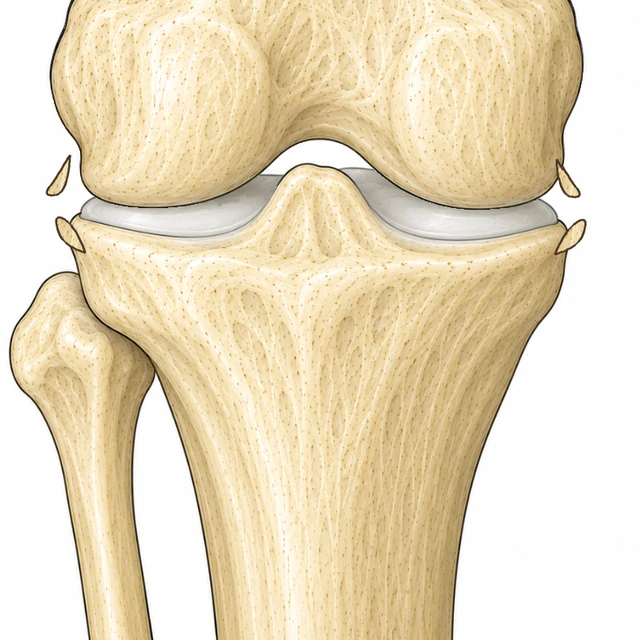
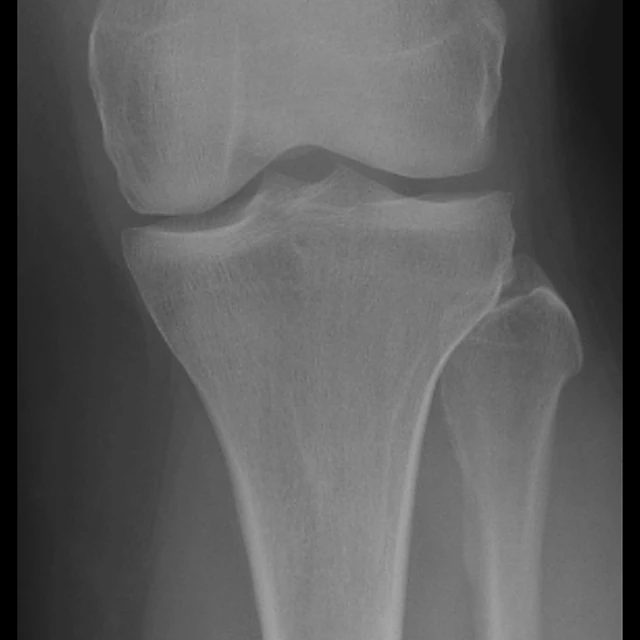
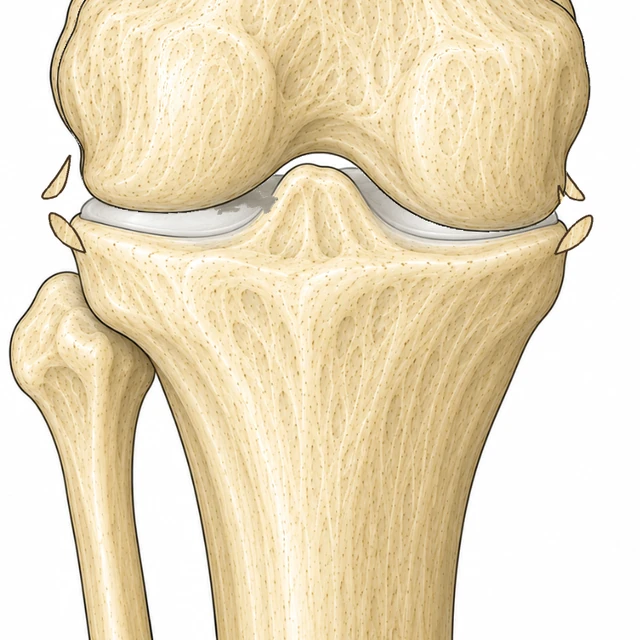
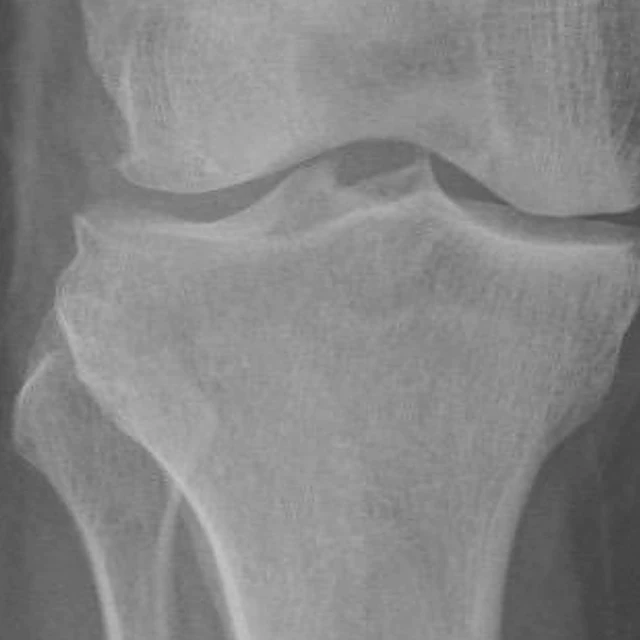
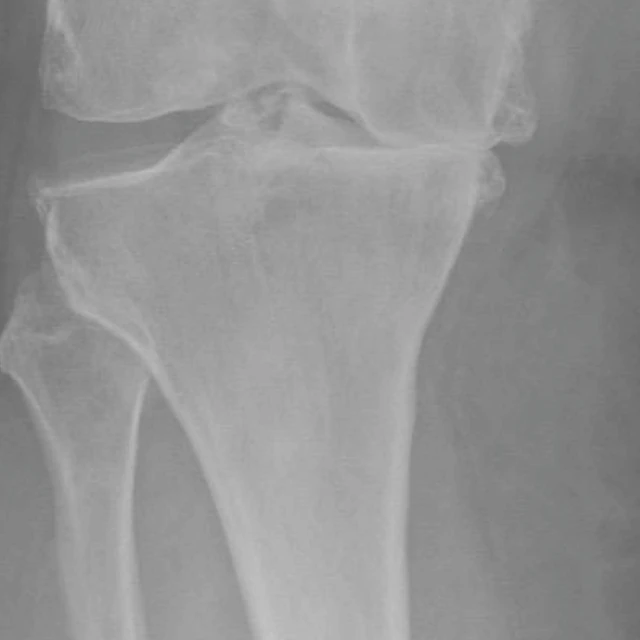
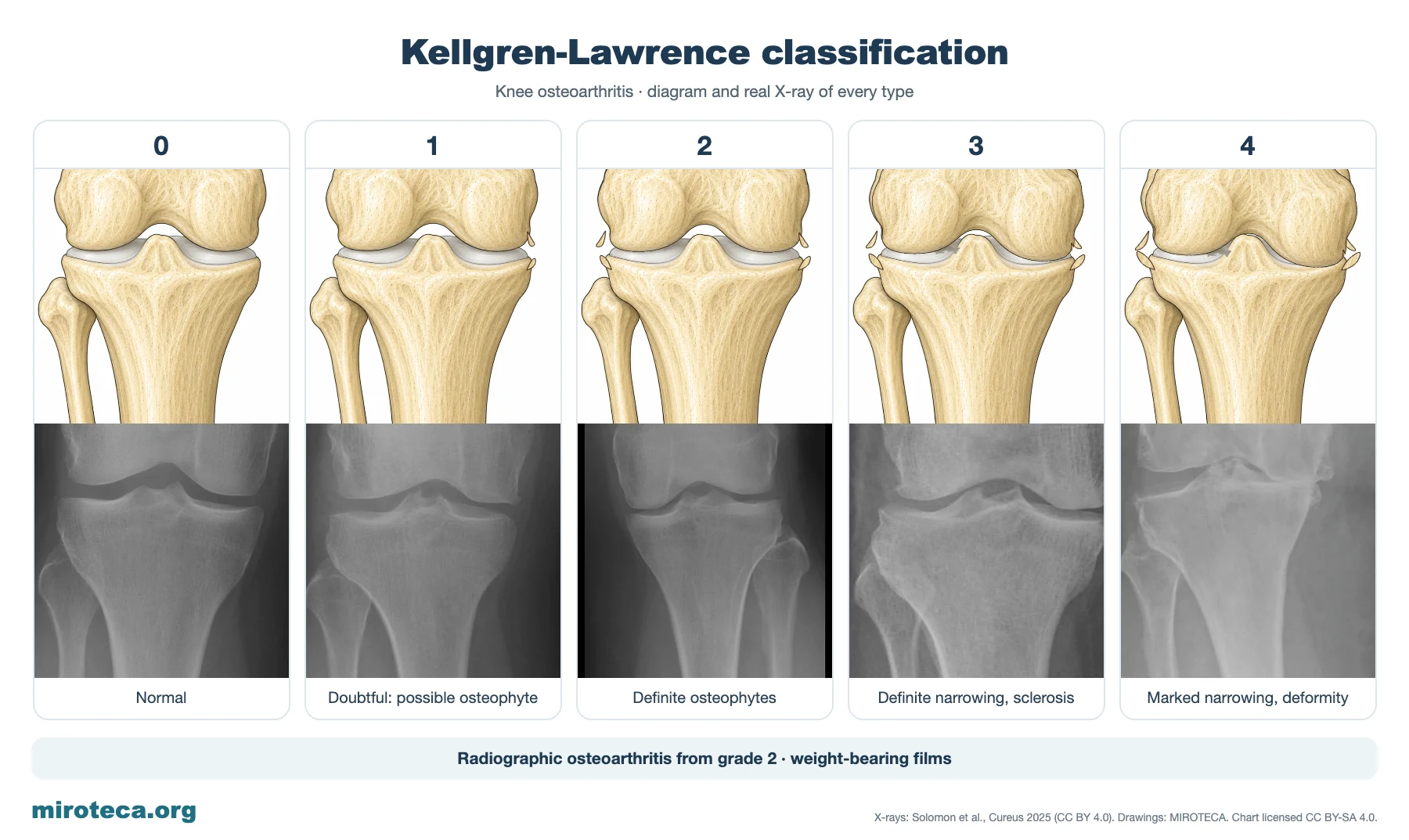
Weight-bearing X-ray: joint space narrowing (medial, patellofemoral, then lateral), subchondral sclerosis, cysts and osteophytes1.
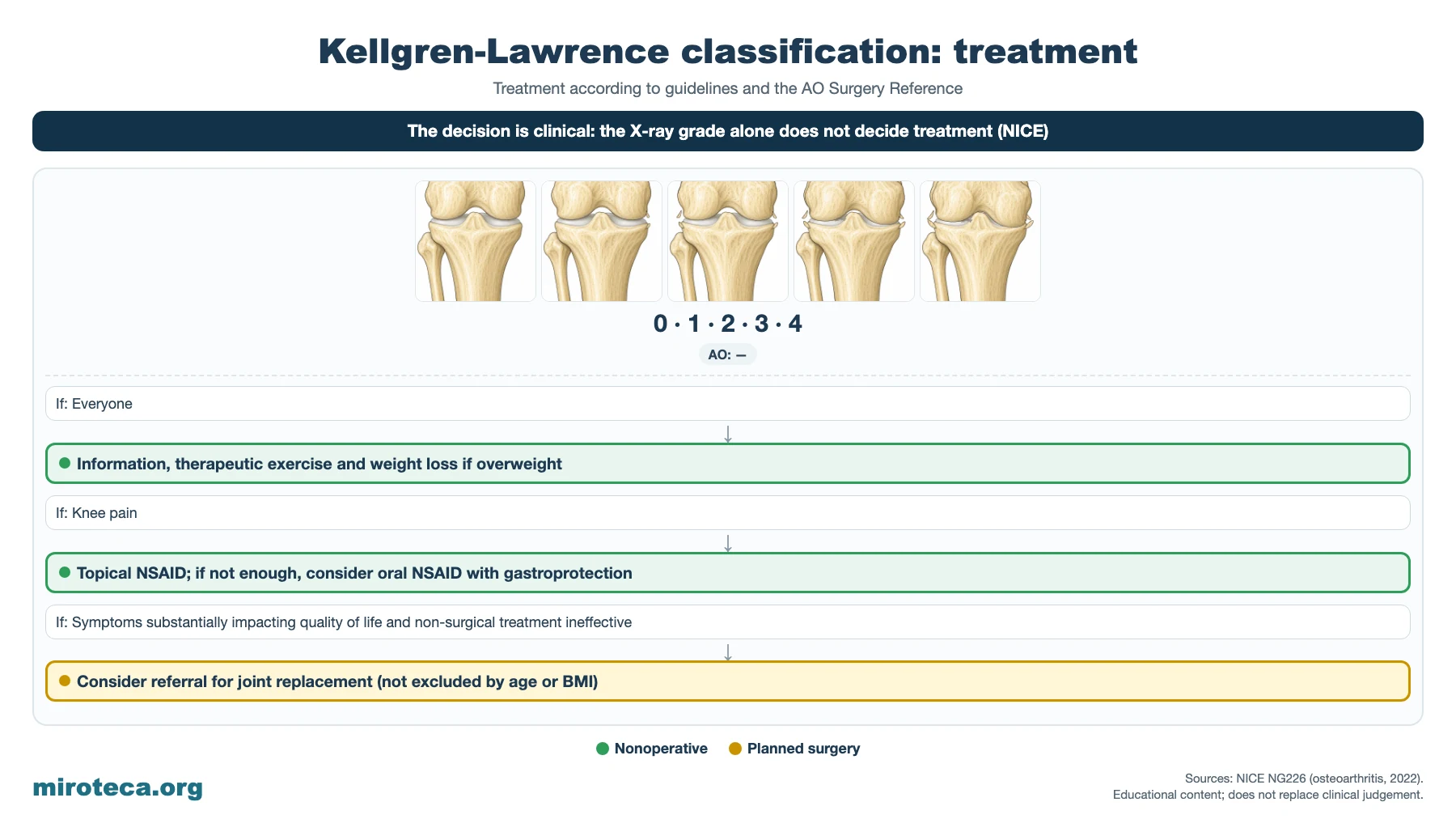
The radiological grade alone does not decide treatment: symptoms do2.
Arthroscopic lavage and debridement are not indicated for osteoarthritis124.
Absolute contraindications to arthroplasty: active infection and a deficient extensor mechanism1.
Cartilage and causes
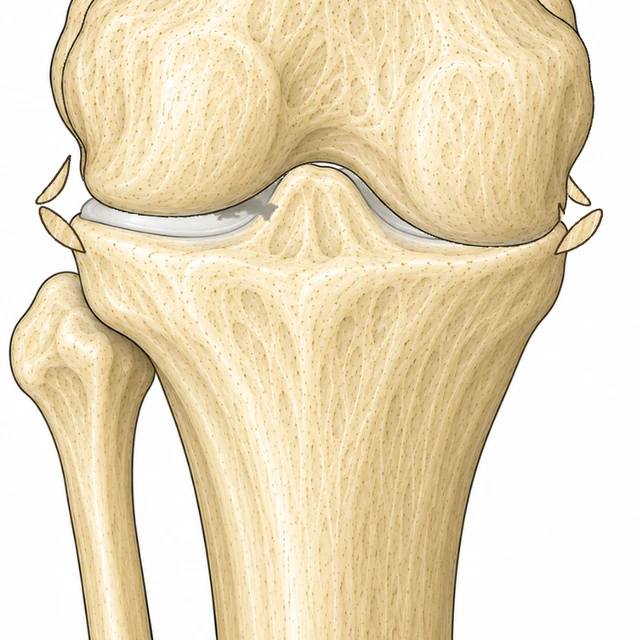
Articular hyaline cartilage (2-4 mm in the knee) has no vessels or nerves and heals poorly; its collagen is mainly type II1. Factors: age, BMI, family history, female sex, inflammatory arthritis, osteonecrosis, previous trauma (fractures, menisci, ligaments) and malalignment (varus or valgus)1.
X-rays from Wikimedia Commons and open-access articles (PubMed Central) under open licences, with author and licence on each; they are not owned by MIROTECA.
Mechanical pain that eases with rest and in advanced stages appears at rest or at night; short morning stiffness, crepitus, effusions, Baker's cyst, deformity and flexion contracture1. Strasser sign (pain on pressing the patella) and grind sign (crepitus on moving it laterally)1. ACR criteria: pain and at least 4 of 6 (over 55, morning stiffness > 30 min, crepitus, bony tenderness, bony enlargement and no warmth)1.
Ahlbäck (varus OA): 1 50% narrowing, 2 loss of joint space, 3 erosion < 0.5 cm, 4 0.5-1 cm, 5 > 1 cm or subluxation1.
Treatment
Simplified algorithm by type. Open it to see each type with its X-ray. Interactive version →
General principles
Nonoperative: stick or frame, exercise, weight loss, physiotherapy and stepwise analgesia (SECOT starts with paracetamol or metamizole, adds NSAIDs and then opioids; duloxetine is also effective). Injections: corticosteroid (short relief) and hyaluronic acid (transient effect)1.
Surgery
Osteotomy: young patients with unicompartmental OA and moderate deformity (tibial for varus, femoral for valgus), stable ligaments, no patellofemoral or other-compartment OA, flexion contracture < 15° and arc > 90°1.
Unicompartmental arthroplasty: 55-65, sedentary, single-compartment OA with good alignment and a stable knee1.
Total knee arthroplasty: the choice over 60 with pain and narrowing; tranexamic acid for bleeding1.
Complications
Of osteotomy
Compartment syndrome, common peroneal nerve palsy, nonunion, malunion, under- or over-correction and patella baja1.
Of arthroplasty
More serious adverse events than nonoperative care in the Skou trial (24 vs 6)3.
SECOT and NICE: drugs
Sources differ: SECOT lists paracetamol as the first step, chondroprotective agents (chondroitin and glucosamine) and intra-articular hyaluronic acid1; NICE does not routinely recommend paracetamol or weak opioids and advises against glucosamine and intra-articular hyaluronan2.
Key studies
Each card summarises the abstract of the study, with its link.
Prótesis frente a tratamiento no quirúrgico (Skou)Randomised trial
Patients
100 patients with moderate or severe OA eligible for arthroplasty
Result
At 12 months, more improvement with arthroplasty plus 12 weeks of nonoperative care (KOOS4 +32.5 vs +16.0), but more serious adverse events (24 vs 6). Only 26% of the nonoperative group had surgery within that year.
What it means
Arthroplasty works, but well-delivered nonoperative care avoids many operations.