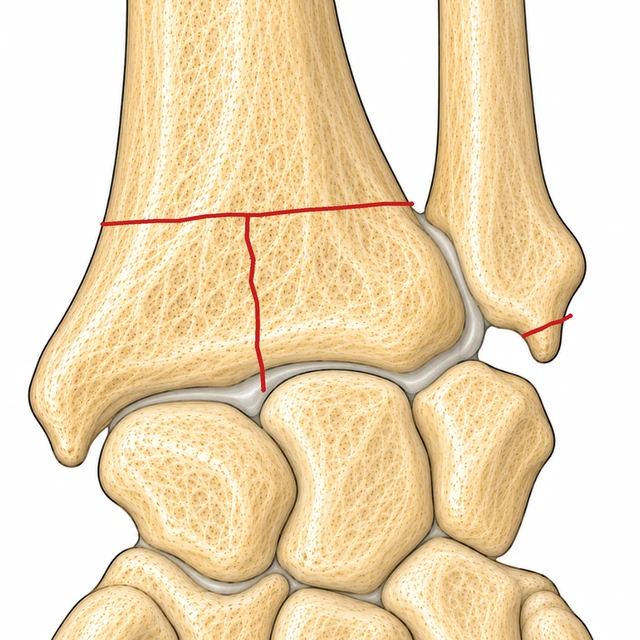
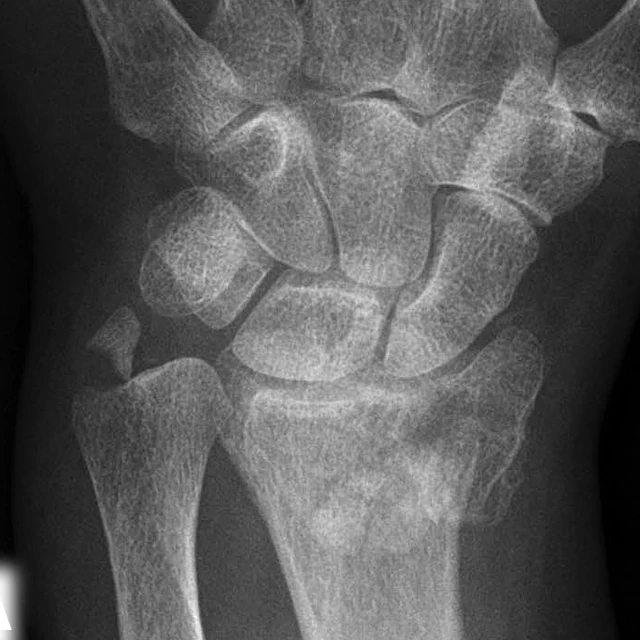
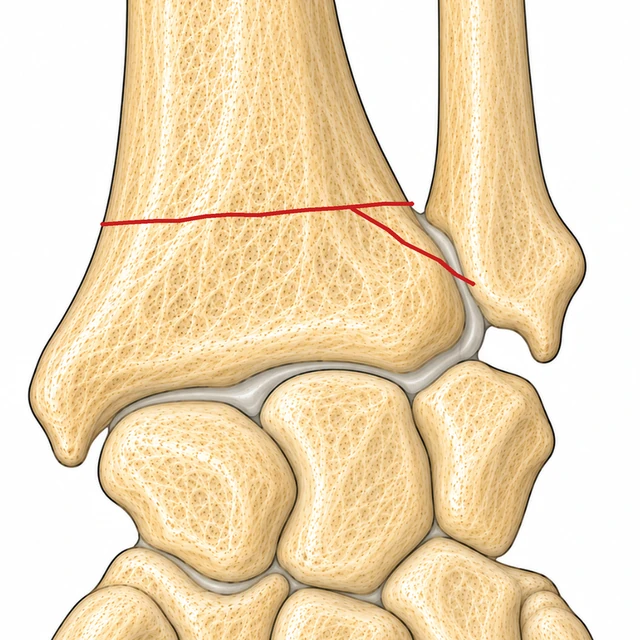
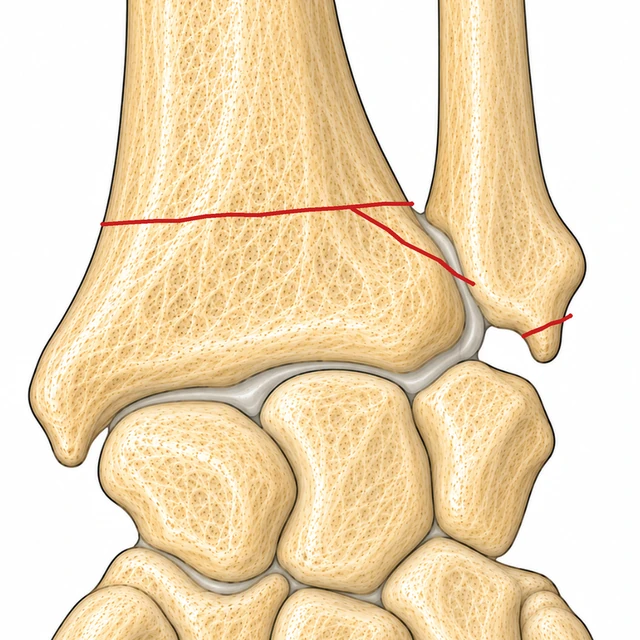
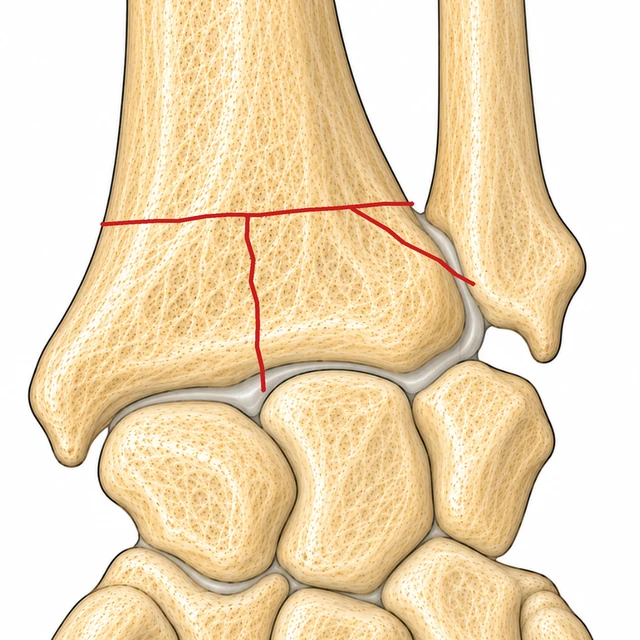
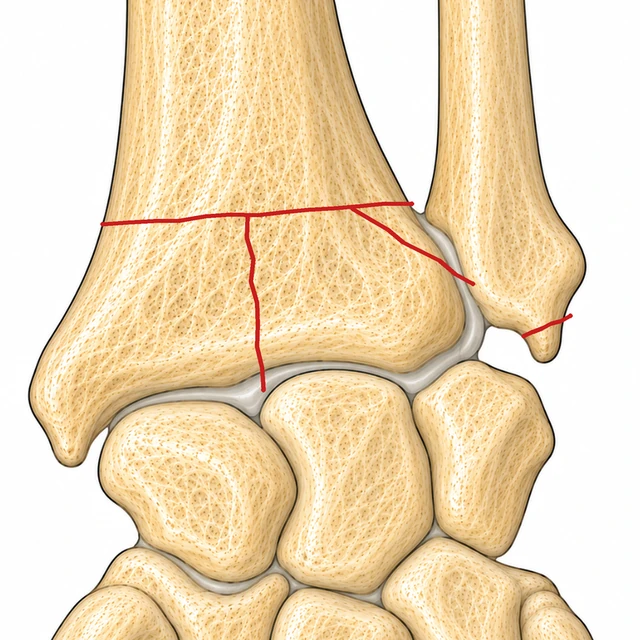
Frykman classification: treatment by type, age and patient data
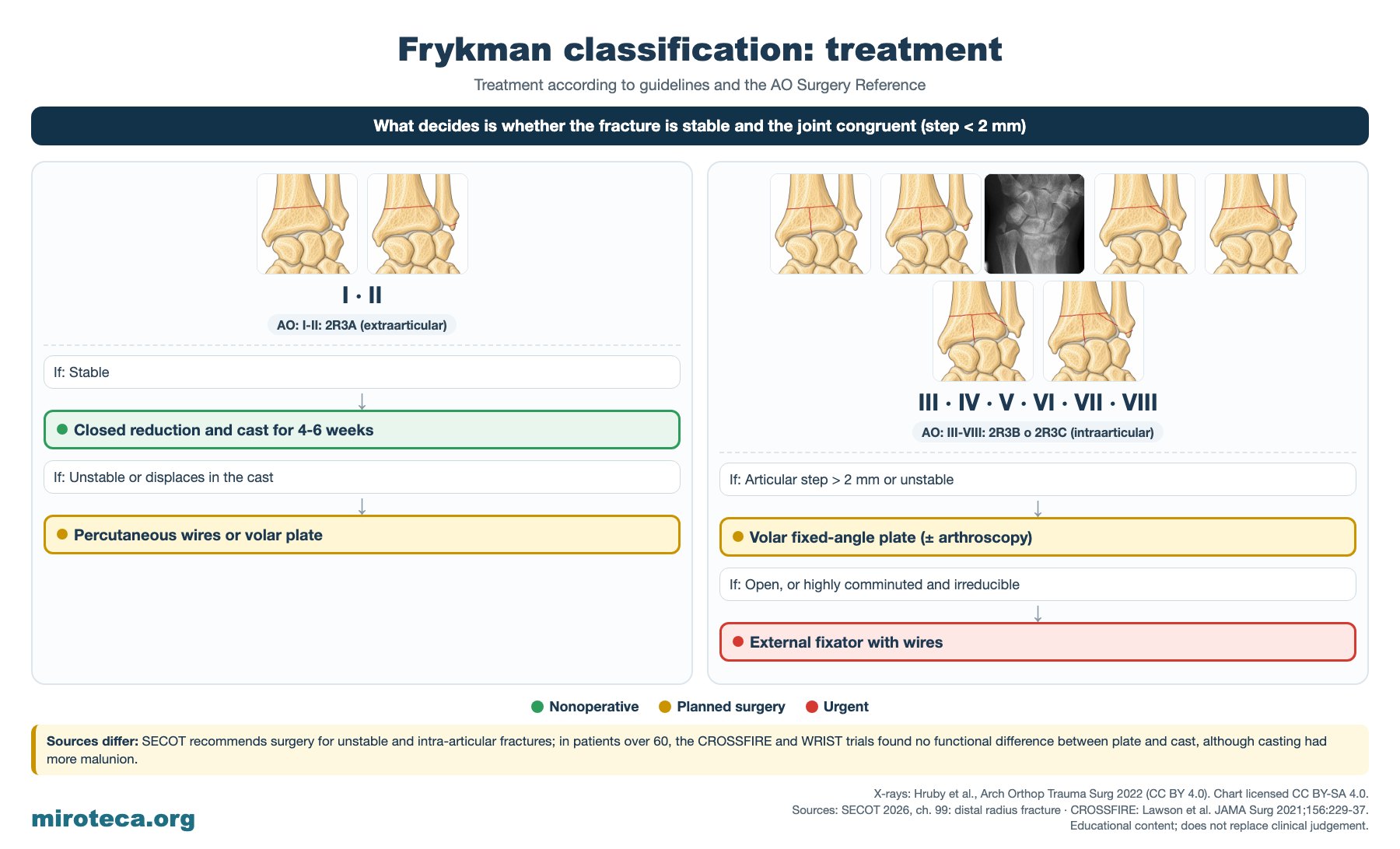
What decides is whether the fracture is stable and the joint congruent (step < 2 mm).
Educational content; does not replace clinical judgement. Download
Each type and its treatment
Tap an X-ray to enlarge it next to the diagrams.
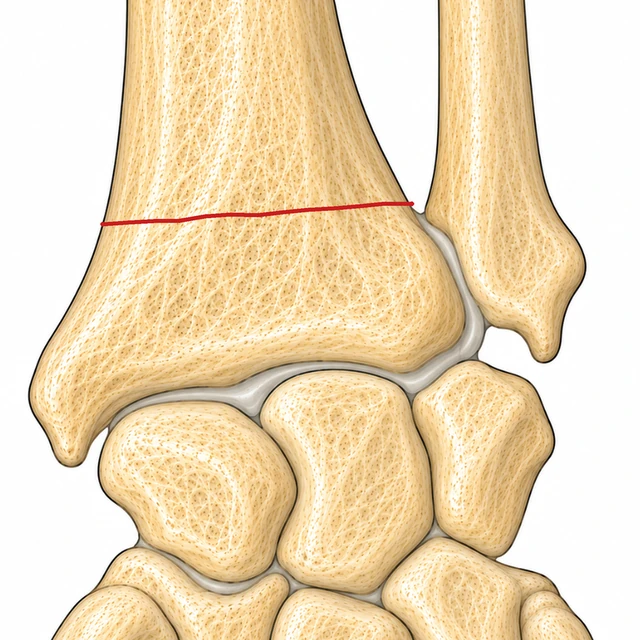
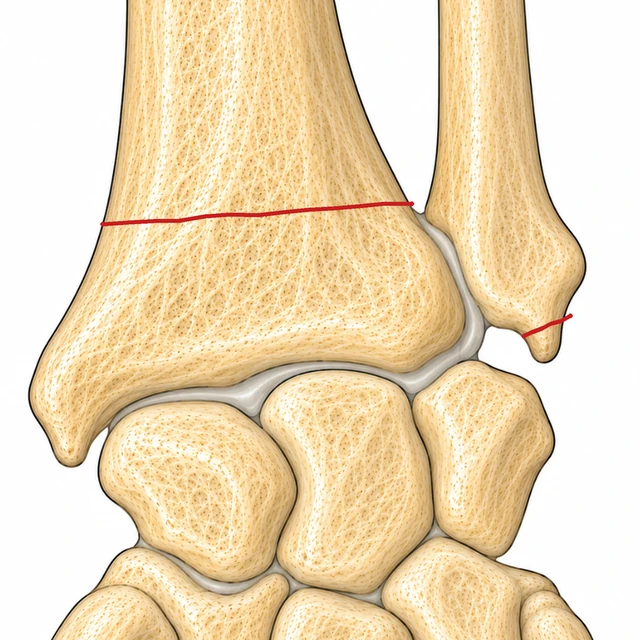
I · II
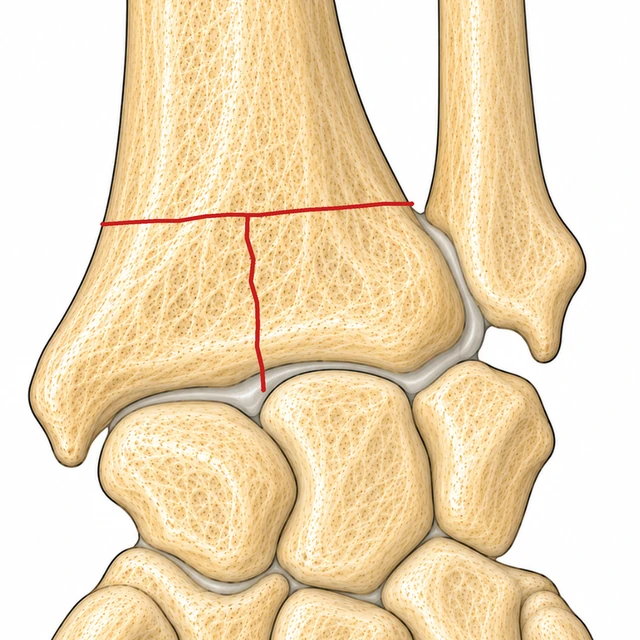
III
AO: I-II: 2R3A (extraarticular)
If: StableClosed reduction and cast for 4-6 weeks Nonoperative
If: Unstable or displaces in the castPercutaneous wires or volar plate Planned surgery
III · IV · V · VI · VII · VIII
IIIIVVVIVIIVIII
AO: III-VIII: 2R3B o 2R3C (intraarticular)
If: Articular step > 2 mm or unstableVolar fixed-angle plate (± arthroscopy) Planned surgery
If: Open, or highly comminuted and irreducibleExternal fixator with wires Urgent
Sources differ. SECOT recommends surgery for unstable and intra-articular fractures; in patients over 60, the CROSSFIRE and WRIST trials found no functional difference between plate and cast, although casting had more malunion.
 MIROTECA