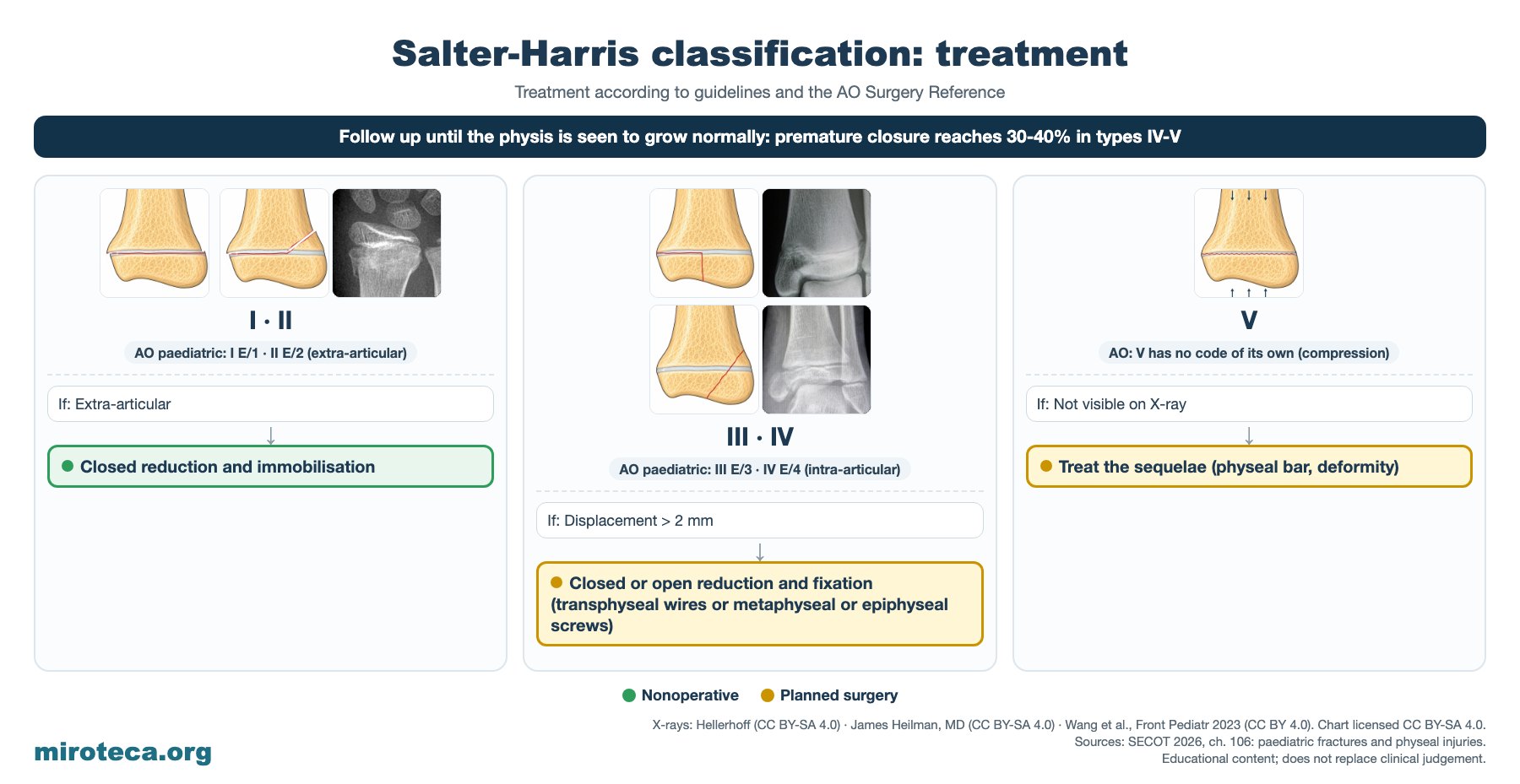
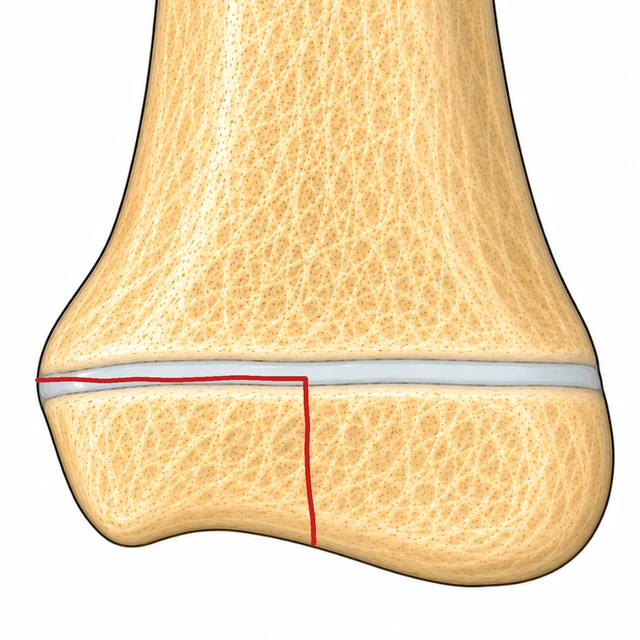
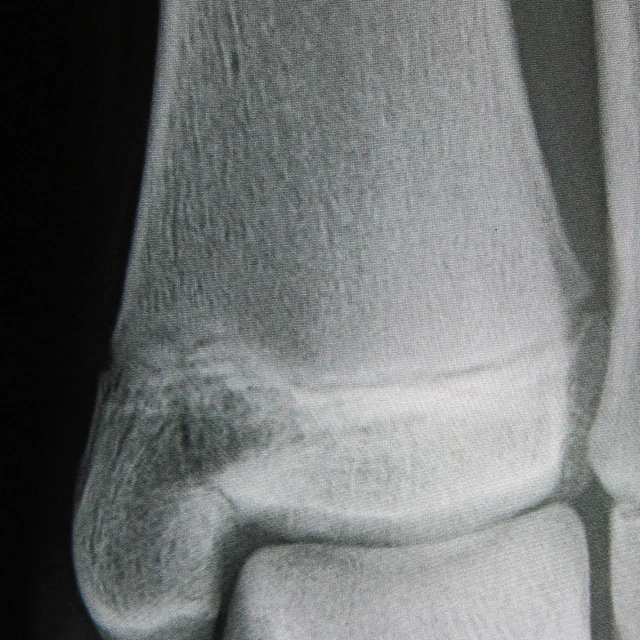
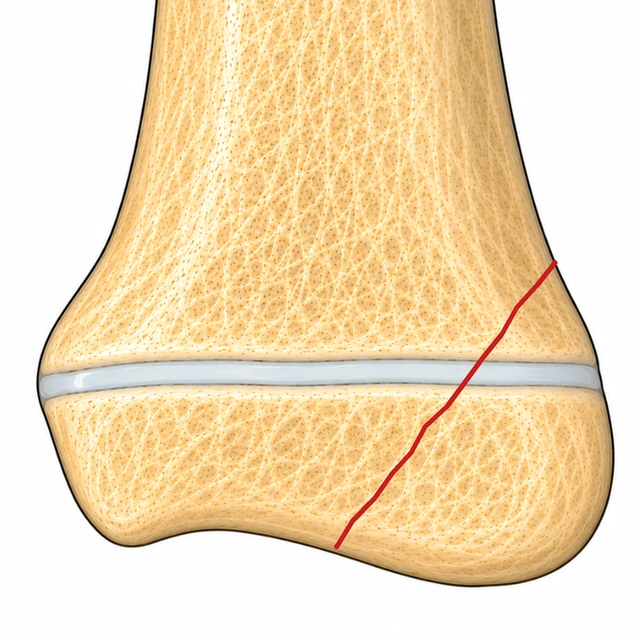
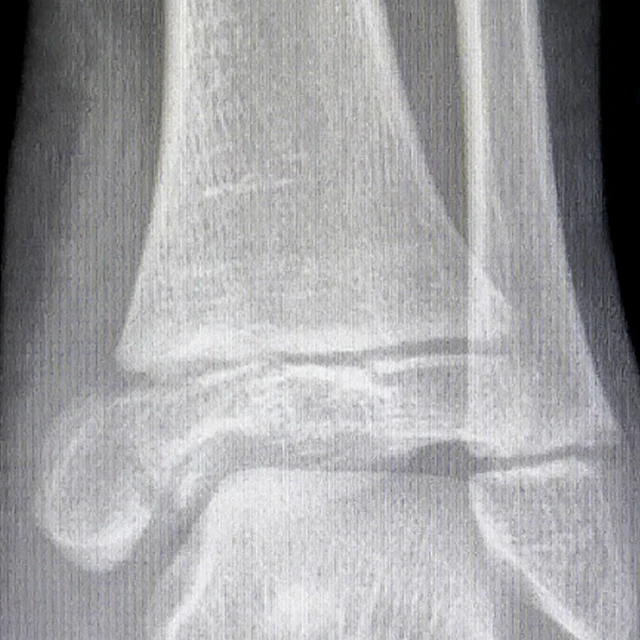
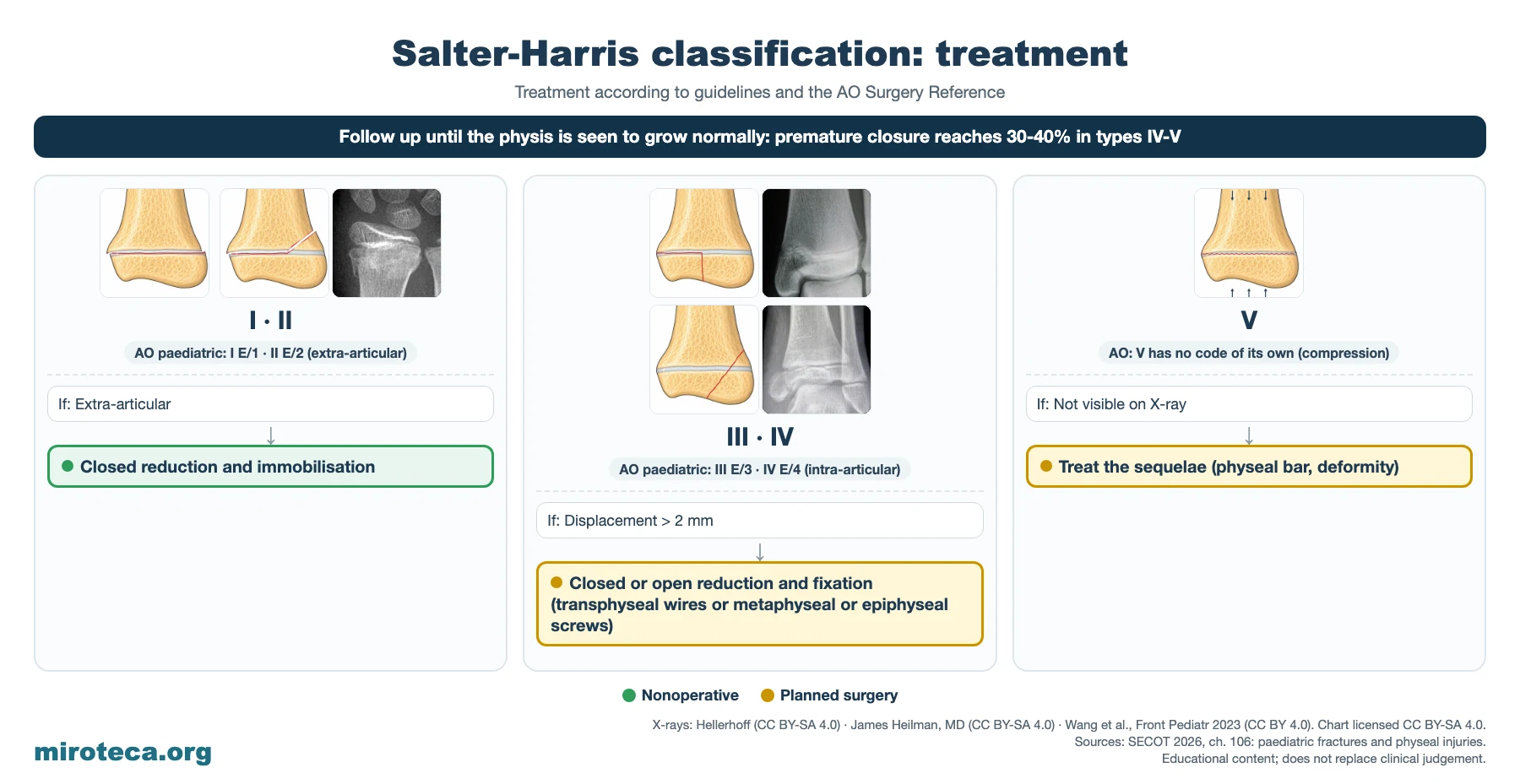
Follow up until the physis is seen to grow normally: premature closure reaches 30-40% in types IV-V.
 Educational content; does not replace clinical judgement. Download
Each type and its treatment
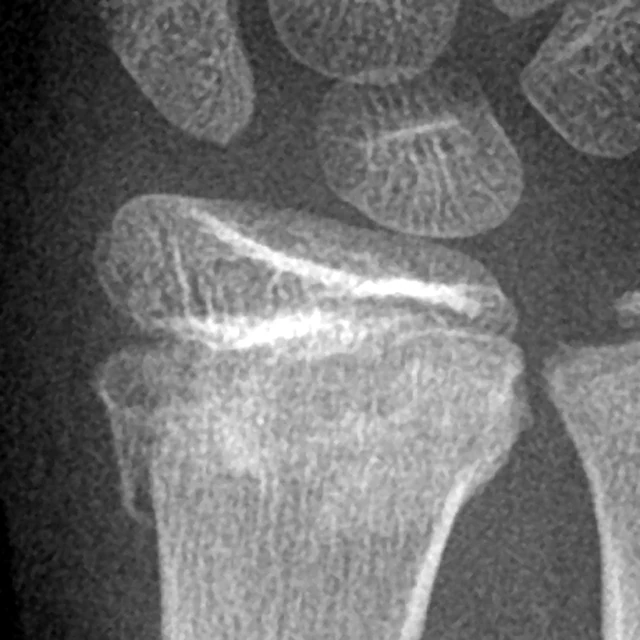
Tap an X-ray to enlarge it next to the diagrams.
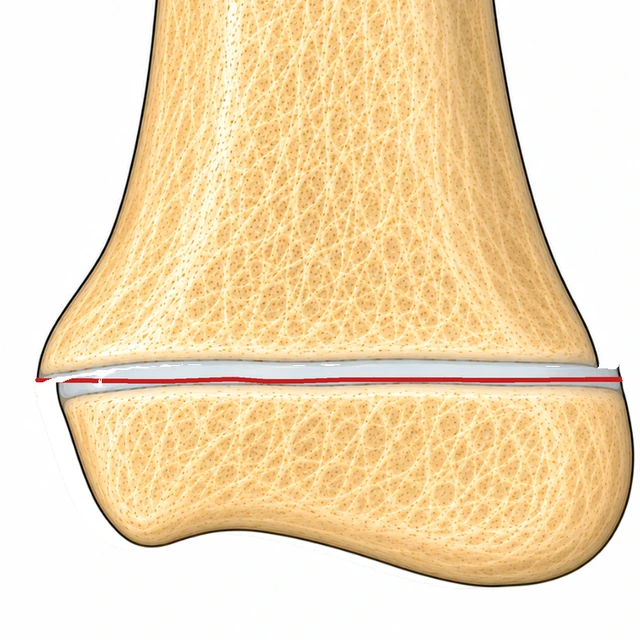
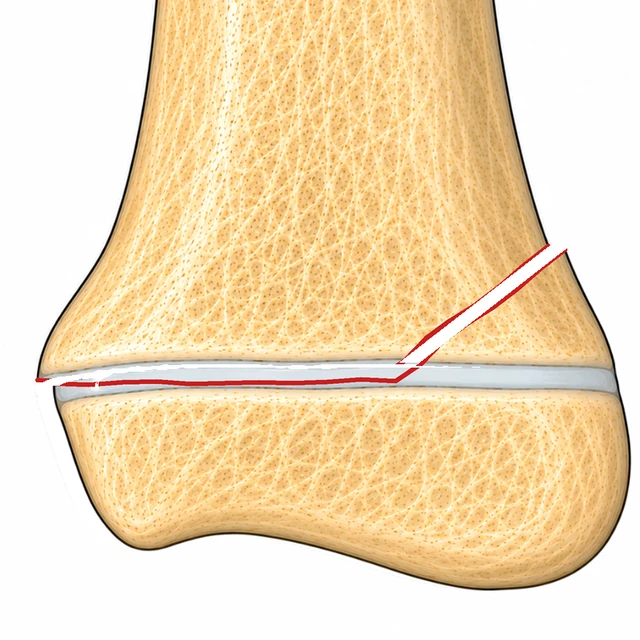
I · II
AO paediatric: I E/1 · II E/2 (extra-articular)
- If: Extra-articularClosed reduction and immobilisation Nonoperative
III · IV
AO paediatric: III E/3 · IV E/4 (intra-articular)
- If: Displacement > 2 mmClosed or open reduction and fixation (transphyseal wires or metaphyseal or epiphyseal screws) Planned surgery
V
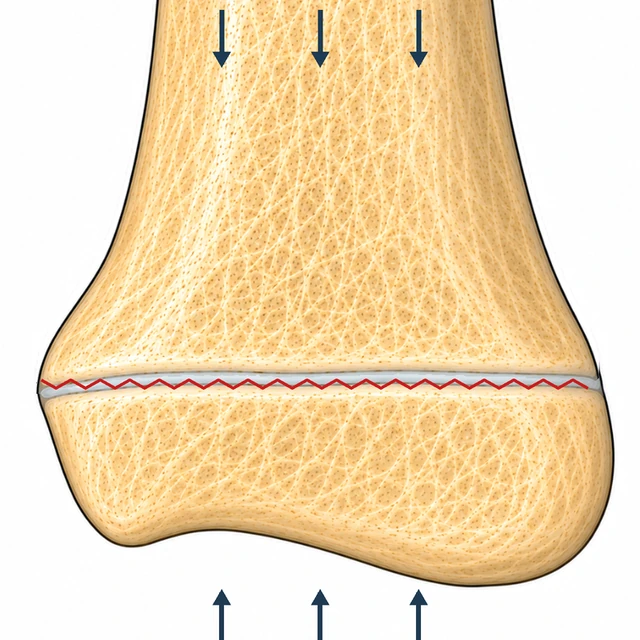 V
AO: V has no code of its own (compression)
- If: Not visible on X-rayTreat the sequelae (physeal bar, deformity) Planned surgery
Publicidad
MIROTECA medical team.
 MIROTECA