
What the diagram shows
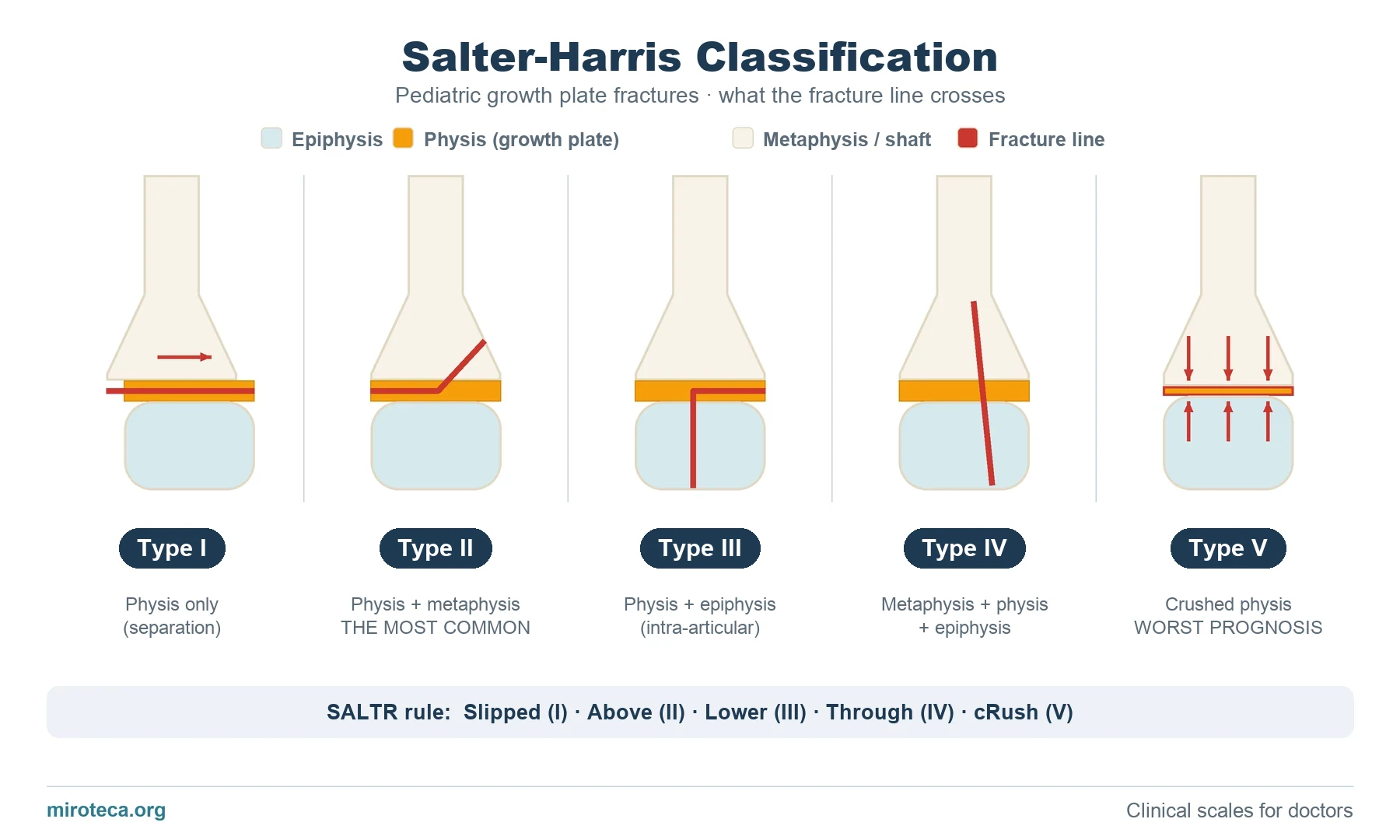
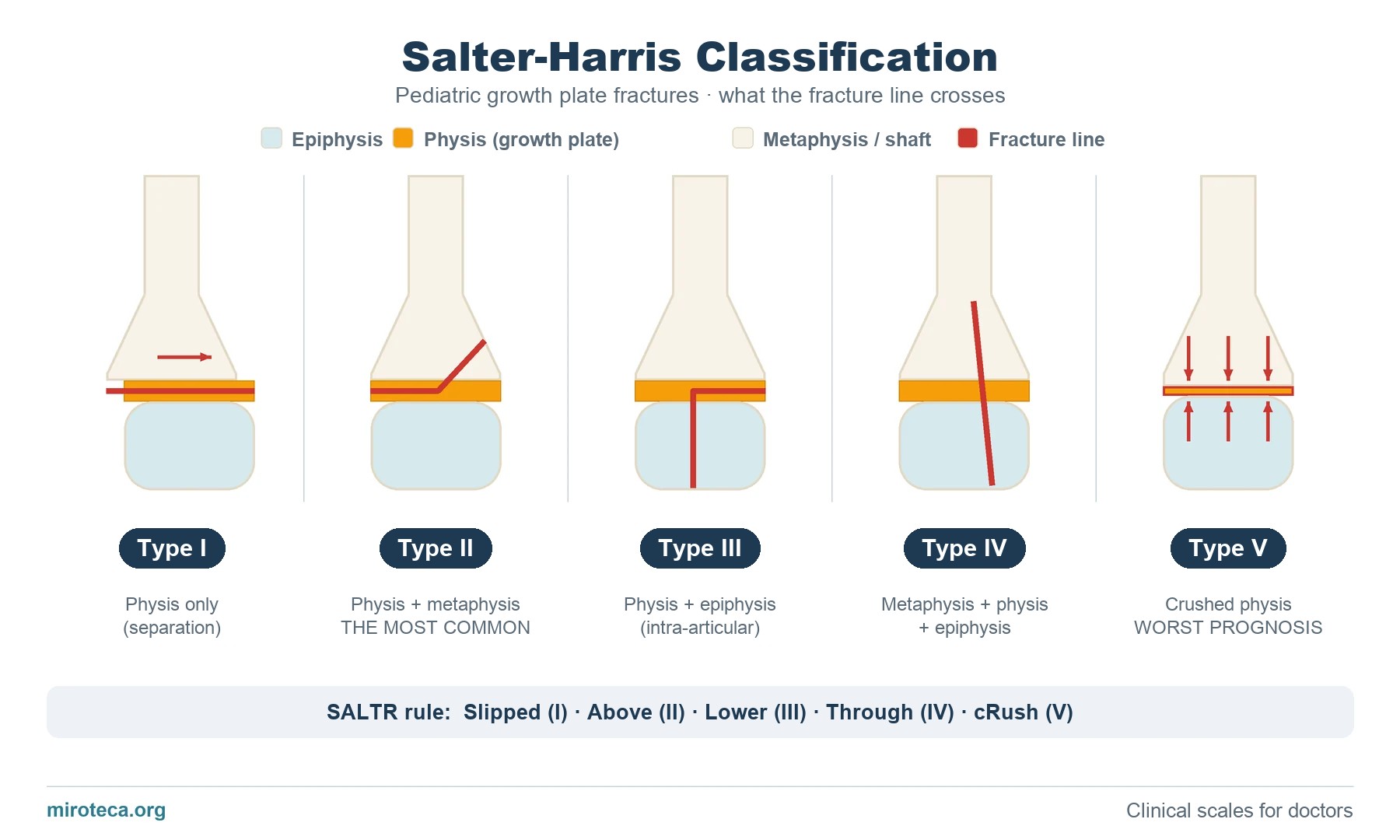
Salter-Harris is much easier to see than to read: the whole classification depends on where the line runs relative to three structures.
In the diagram, the physis (growth plate) is orange, the epiphysis is blue and the metaphysis is bone-colored. The fracture line is red.
The detail that settles it
The visual trick is to see where the line EXITS after crossing the physis: up into the metaphysis is a II, down into the epiphysis is a III, and both is a IV. With no line but crushing, it is a V. The SALTR rule says the same in words: Slipped, Above, Lower, Through, cRush.
Common mistakes
The classic mistake is missing type V, precisely because there is no line to find: the only clue is a physis thinner than on the healthy side, so it helps to compare.
The other is stopping at "it crosses the physis" without checking the exit, which is what separates a II from a III and changes the joint prognosis.
Keep practicing
This page is the visual summary. To test yourself with real clinical reasoning, Medicinedle, a Wordle-inspired game, gives you one clinical case a day: guess the diagnosis in six tries, with a new clue after every miss. It is free and available in English.