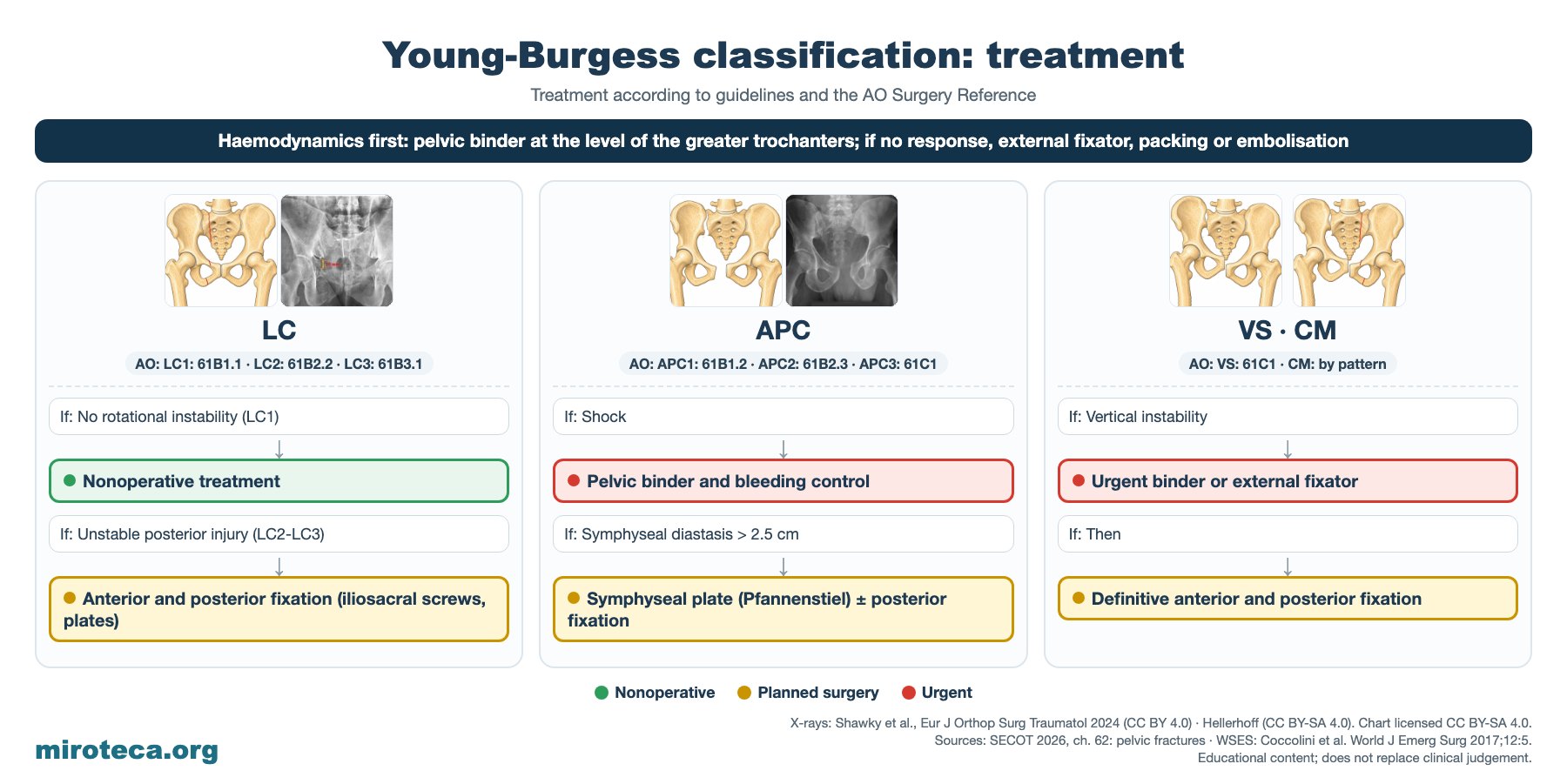
Haemodynamics first: pelvic binder at the level of the greater trochanters; if no response, external fixator, packing or embolisation.
 Educational content; does not replace clinical judgement. Download
Each type and its treatment
Tap an X-ray to enlarge it next to the diagrams.
LC
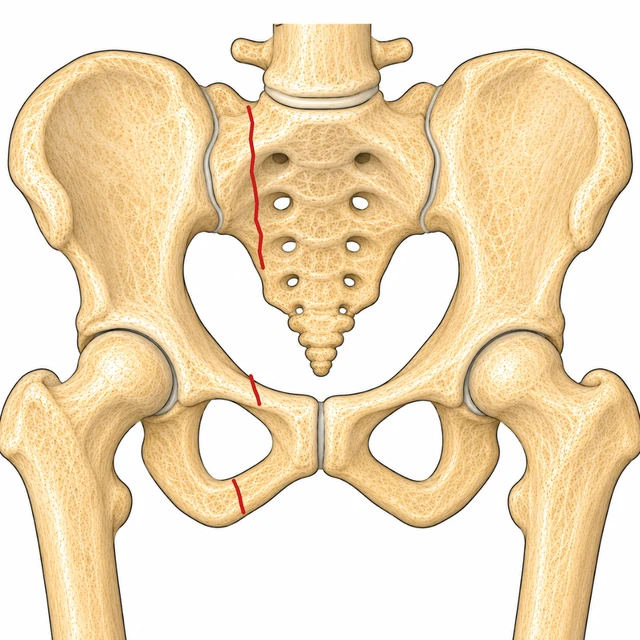
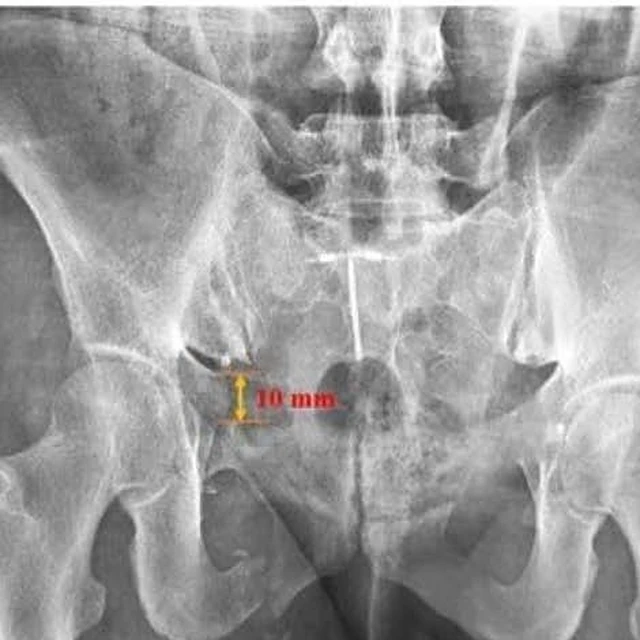 LC
AO: LC1: 61B1.1 · LC2: 61B2.2 · LC3: 61B3.1
- If: No rotational instability (LC1)Nonoperative treatment Nonoperative
- If: Unstable posterior injury (LC2-LC3)Anterior and posterior fixation (iliosacral screws, plates) Planned surgery
APC
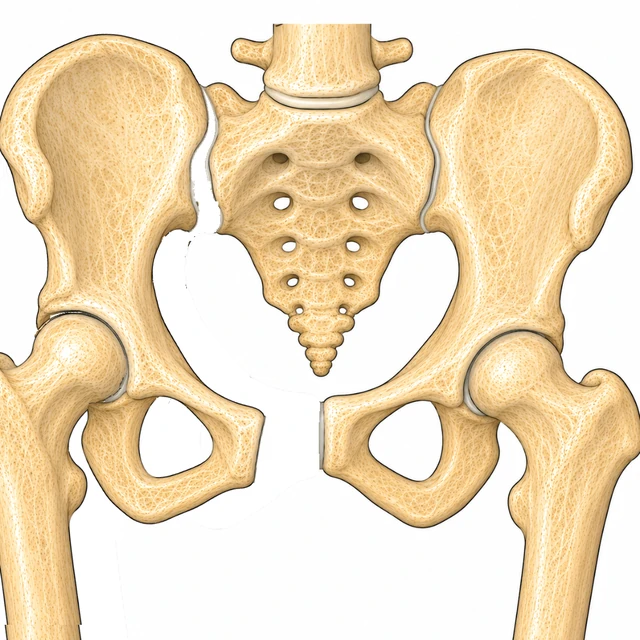
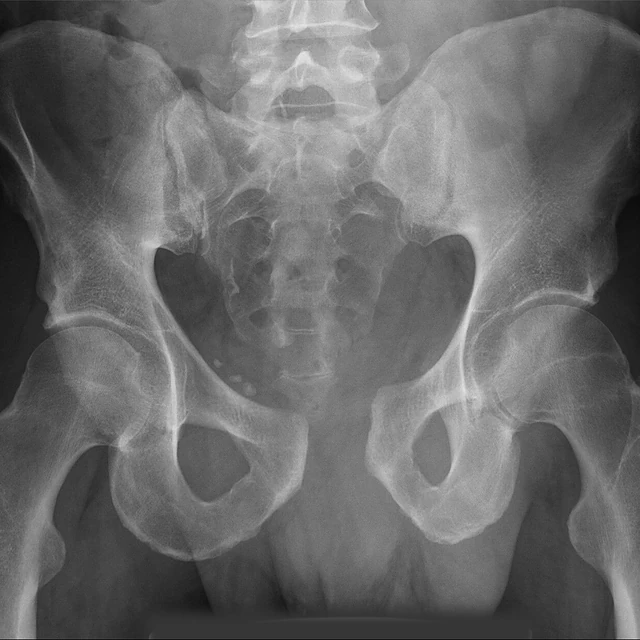 APC
AO: APC1: 61B1.2 · APC2: 61B2.3 · APC3: 61C1
- If: ShockPelvic binder and bleeding control Urgent
- If: Symphyseal diastasis > 2.5 cmSymphyseal plate (Pfannenstiel) ± posterior fixation Planned surgery
VS · CM
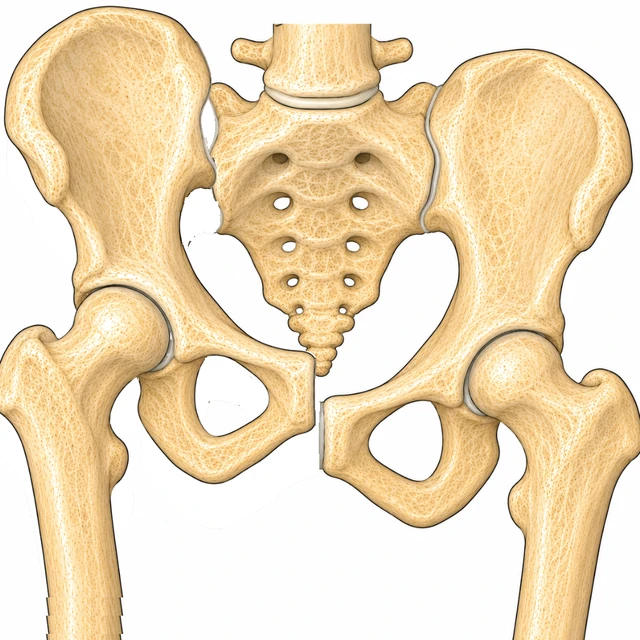 VS
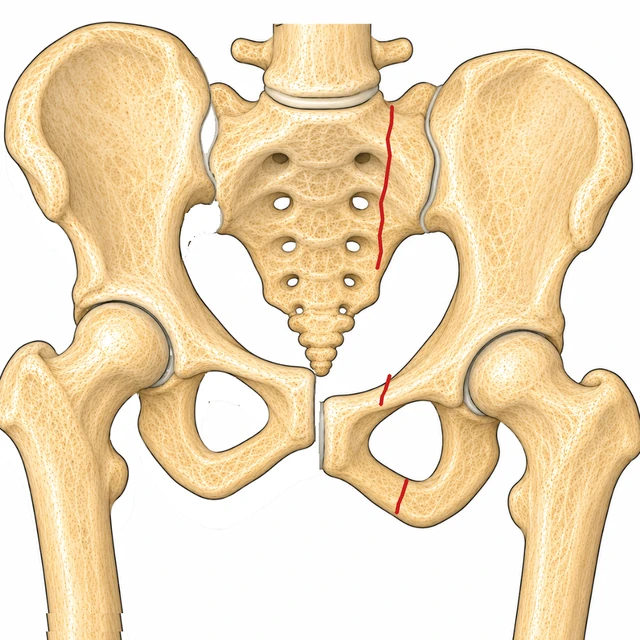 CM
AO: VS: 61C1 · CM: by pattern
- If: Vertical instabilityUrgent binder or external fixator Urgent
- If: ThenDefinitive anterior and posterior fixation Planned surgery
Publicidad
MIROTECA medical team.
 MIROTECA