Skip to content

Developmental dysplasia of the hip: Tönnis, Ortolani, Graf and age-based treatment

On this page

MIROTECA medical team · Reviewed 23 Nov 2026 · 5 min read

From acetabular dysplasia to dislocation. 1-6 per 1,000 newborns, mainly girls (10:1) and the left hip. Early diagnosis and treatment are key: Pavlik harness before 6 months, closed reduction between 6 and 18 months and open reduction after that1.

Key points

1-6/1,000newborns1
10:1girls to boys1
90%success with the Pavlik harness1
~10%of hip replacements are due to DDH1

Must know

  • Main risk factors: breech presentation, family history and clinical instability1.
  • Ortolani: a dislocated hip that reduces. Barlow: a reduced hip that dislocates. Examine within the first 72 hours1.
  • In infants, the most sensitive sign is limited abduction (< 80°); Galeazzi is positive if the knees are at different heights1.
  • Ultrasound at 4-6 weeks (not earlier) and up to 6 months; after that, X-ray1.
  • The harness within Ramsey's safe zone: about 100° flexion and 60° abduction; too much flexion harms the femoral nerve and too much abduction causes necrosis1.

Ultrasound and X-ray

  • Graf: alpha angle > 60° normal, < 50° dysplasia, 50-60° follow-up; beta angle < 55° normal1.
  • Hilgenreiner and Perkins: the normal nucleus lies in the inferomedial quadrant (Ombredanne)1.
  • Shenton: a broken line indicates dislocation1.
  • Acetabular index: up to 28° at birth and < 25° at 4 months1.
  • Wiberg (centre-edge): over age 5, normal > 15°1.

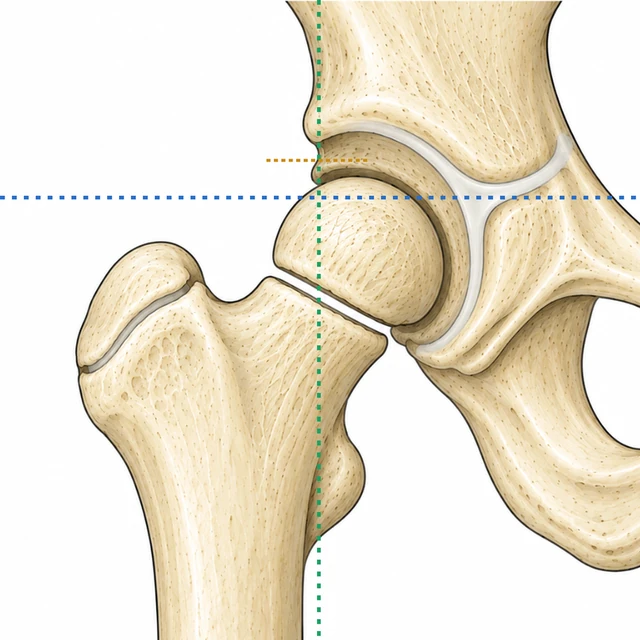
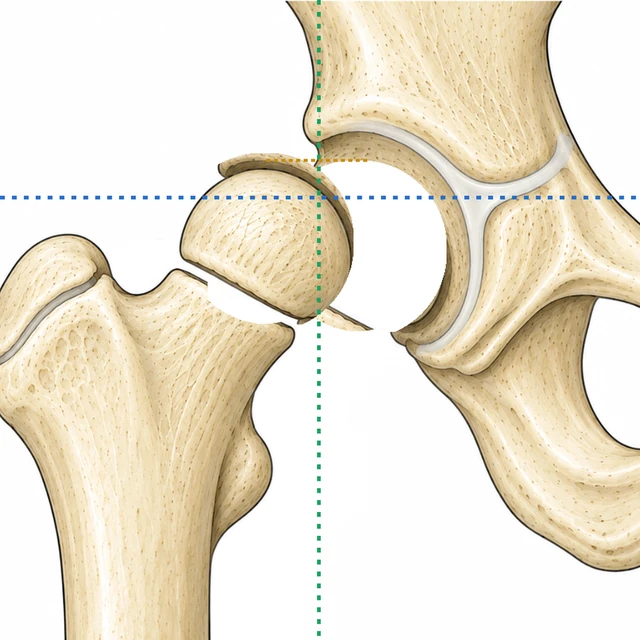
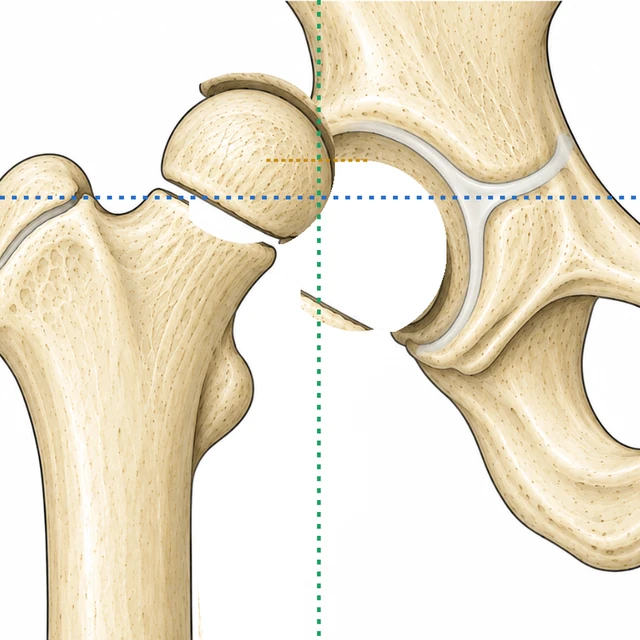
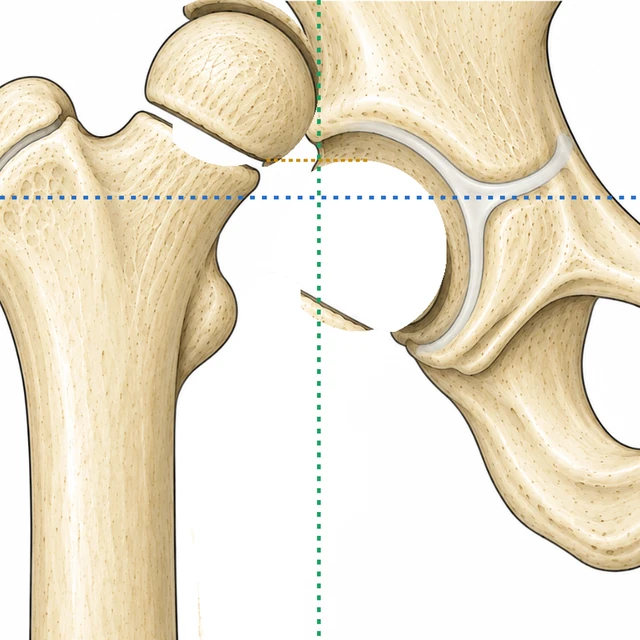
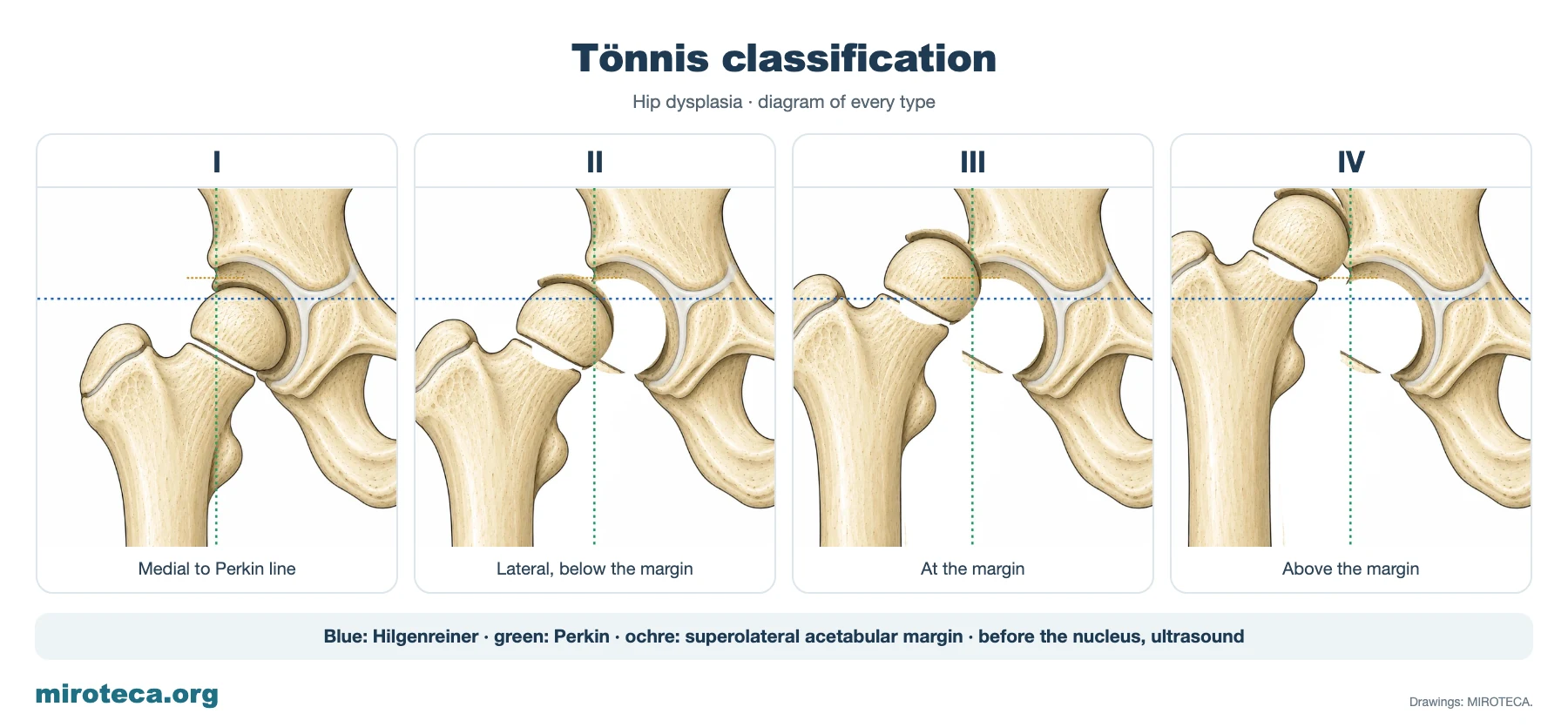
Tönnis locates the head nucleus: I medial to Perkins; II lateral, below the acetabular rim; III at the level of the rim; IV above it.

Classifications

Tönnis classification

Full classification chart →

  • ITönnis classification: I (medial to perkin line)Medial to Perkin line
  • IITönnis classification: II (lateral, below the margin)Lateral, below the margin
  • IIITönnis classification: III (at the margin)At the margin
  • IVTönnis classification: IV (above the margin)Above the margin
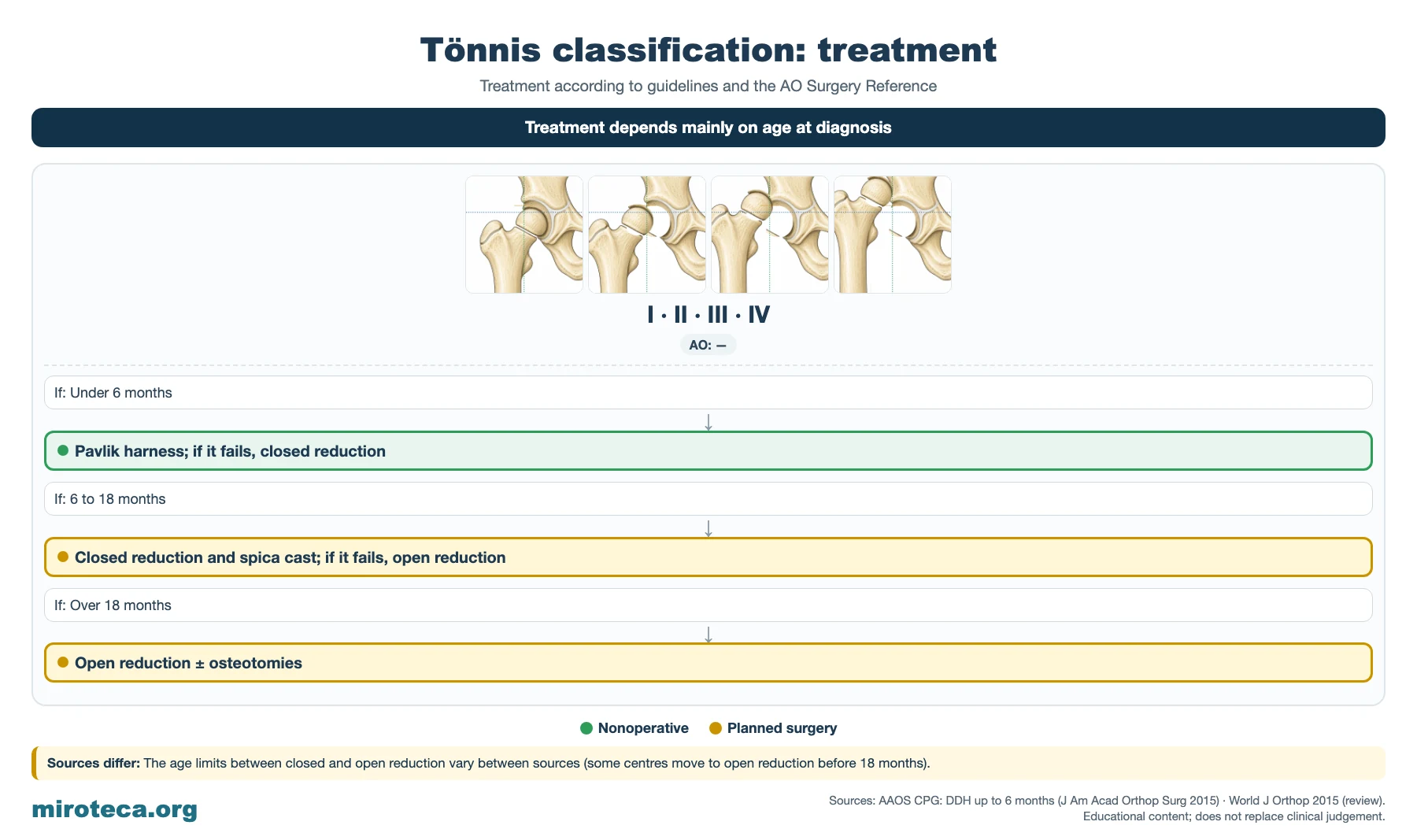
Tönnis classification: Full diagram of every typeFull diagram of every typeView, download and share (CC BY-SA) →Tönnis classification: treatment chart according to guidelinesTreatment chart according to guidelinesAge and patient data → treatment, with AO codes and sources →

AO code

Not a fracture: it has no AO/OTA code.

Publicidad

Treatment

Developmental dysplasia of the hip: treatment algorithm
Simplified algorithm by type. Open it to see each type with its X-ray. Interactive version →

General principles

Atraumatic, concentric and stable reduction, from least to most invasive: harness, closed reduction and open reduction1.

  • Up to 6 months: Pavlik harness; reduction by 3 weeks; 90% success (10% recurrence), better if started before 4 months. If it does not reduce in 3-4 weeks, closed reduction1.
  • 6-18 months: closed reduction in theatre with arthrography (± adductor tenotomy) and a spica cast for 12 weeks, changed at 6; if it fails, open reduction1.
  • Over 18 months: closed reduction is attempted, but open reduction ± osteotomies is usual1.

Osteotomies

They do not achieve reduction but stabilise it once achieved1.

  • Femoral: shortening (1 cm) if the head is under pressure, derotation and, over age 4, varus.
  • Redirection: Salter (18 months-6 years), triple (over 6), Ganz periacetabular (young patients with preserved cartilage).
  • Acetabuloplasties (open triradiate cartilage): Dega, San Diego, Pemberton.
  • Salvage (adolescents with severe dysplasia): Chiari and shelf1.

Complications

Avascular necrosis

With the harness, from excessive abduction; more frequent over age 31.

Harness failure

15% of cases; Pavlik disease (posterior wall erosion), obturator dislocation, femoral nerve palsy1.

Osteoarthritis

Arthroplasty in adulthood in 30-40% despite osteotomies1.

Key studies

Each card summarises the abstract of the study, with its link.

Guía AAOS hasta 6 mesesClinical practice guideline based on a systematic review
Patients
Infants up to 6 months
Result
Nine recommendations on detection and nonoperative management; endorsed by paediatric and radiology societies.
What it means
Reference for screening and the harness.
Limitation
Calls for more high-quality research.

J Am Acad Orthop Surg 2015;23:202-5 · PubMed 25656273

Exam-style questions

A newborn girl with a «clunk» on abducting the hip while pushing the trochanter forward. Which test and what does it mean?

Show the answer

Ortolani: a dislocated hip that reduces. Ortolani reduces a dislocated hip; Barlow dislocates a reduced one.

A 3-month-old with a reducible dislocated hip. Treatment of choice?

Show the answer

Pavlik harness. Up to 6 months, Pavlik harness.

Practise classifying real X-rays →

See also

Sources

  1. SECOT. Spanish Orthopaedic Resident Manual 2026, chapter 115: developmental dysplasia of the hip.
  2. Mulpuri K et al (AAOS). J Am Acad Orthop Surg 2015;23:202-5.

MIROTECA medical team. Educational content; it does not replace clinical judgement.