
What the chart shows
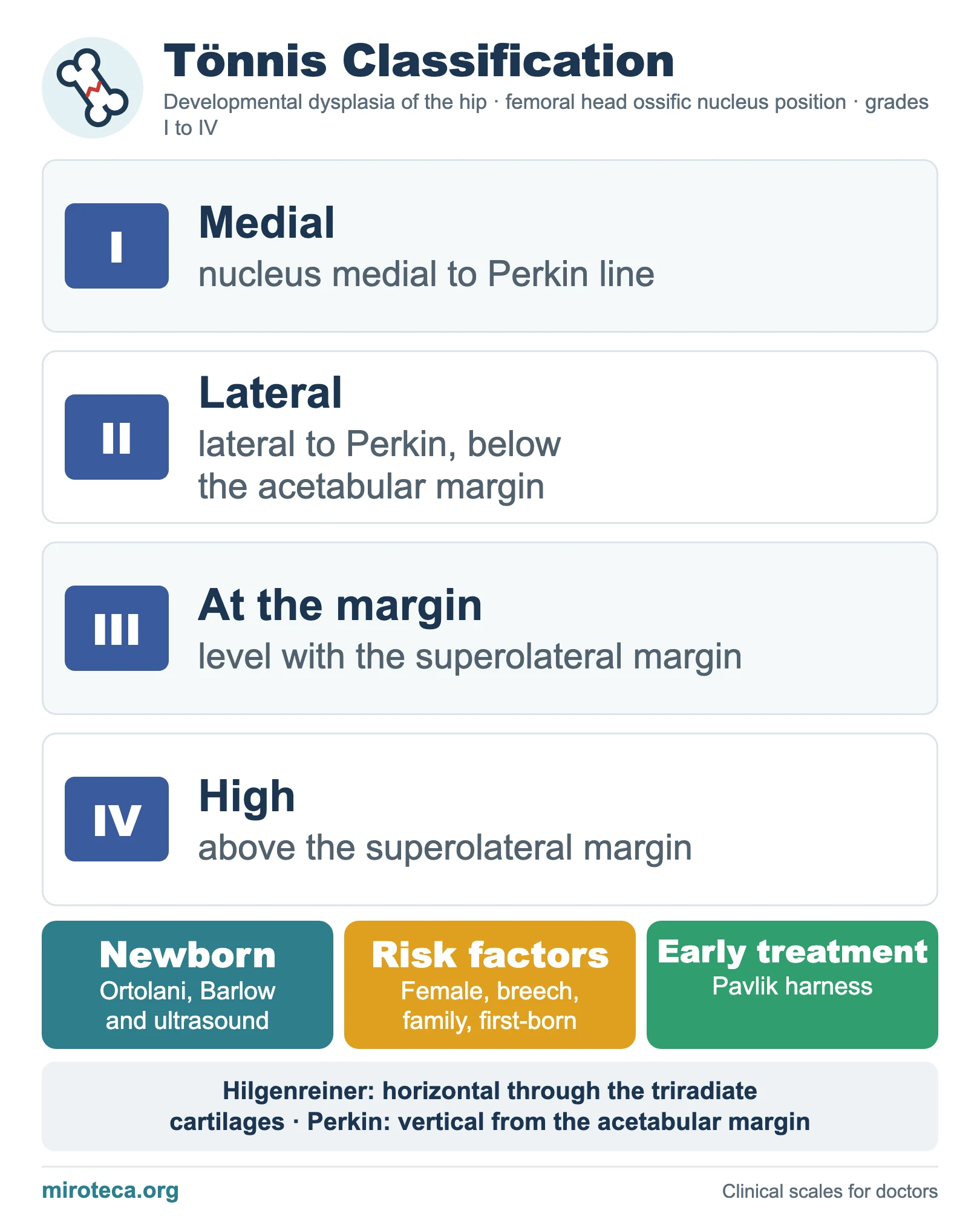
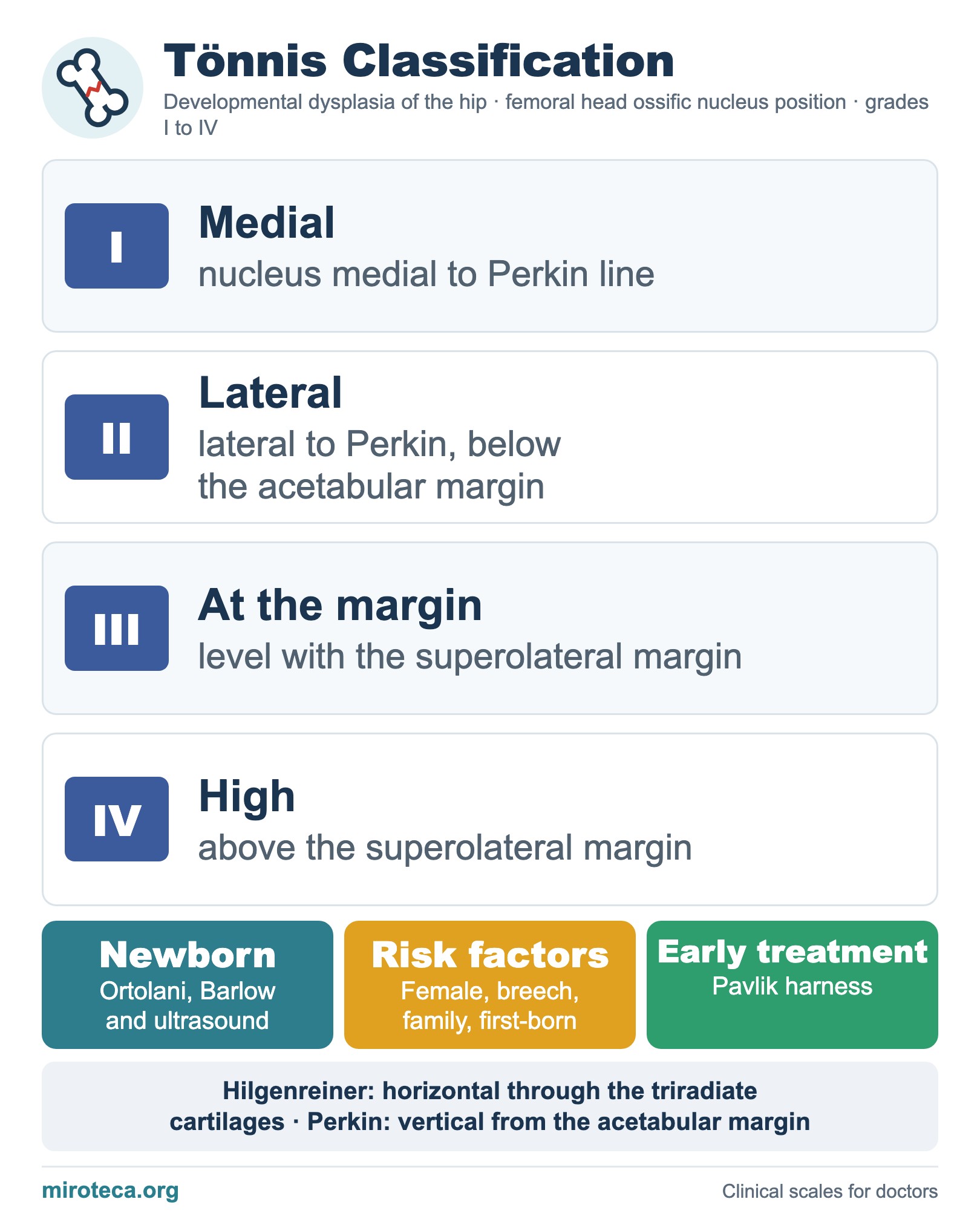
The Tönnis classification grades developmental dysplasia of the hip on an AP pelvis X-ray by the position of the femoral head ossific nucleus relative to Perkin line and the superolateral margin of the acetabulum. It only works once the nucleus is visible; before that, ultrasound is used, and the newer IHDI classification uses the metaphysis instead.
The detail that settles it
Grade I: nucleus medial to Perkin line. Grade II: lateral to Perkin line but below the superolateral acetabular margin. Grade III: at the level of the margin. Grade IV: above it. Higher grades tend to mean harder reductions and more complications, such as avascular necrosis after treatment. Tönnis also described osteoarthritis grades 0 to 3, which are a different system.
In exam questions
Risk factors: female sex, first-born, breech presentation, family history and oligohydramnios. In newborns, the Ortolani maneuver reduces a dislocated hip and the Barlow maneuver dislocates an unstable one; early treatment is the Pavlik harness. Hilgenreiner line is horizontal through the triradiate cartilages; Perkin line is vertical from the acetabular margin.
Keep practicing
This page is the visual summary. To test yourself with real clinical reasoning, Medicinedle, a Wordle-inspired game, gives you one clinical case a day: guess the diagnosis in six tries, with a new clue after every miss. It is free.
Prefer quick questions? The clinical scores quiz gives you 5 case-based questions in about a minute, with the answer explained.