
What the diagram shows
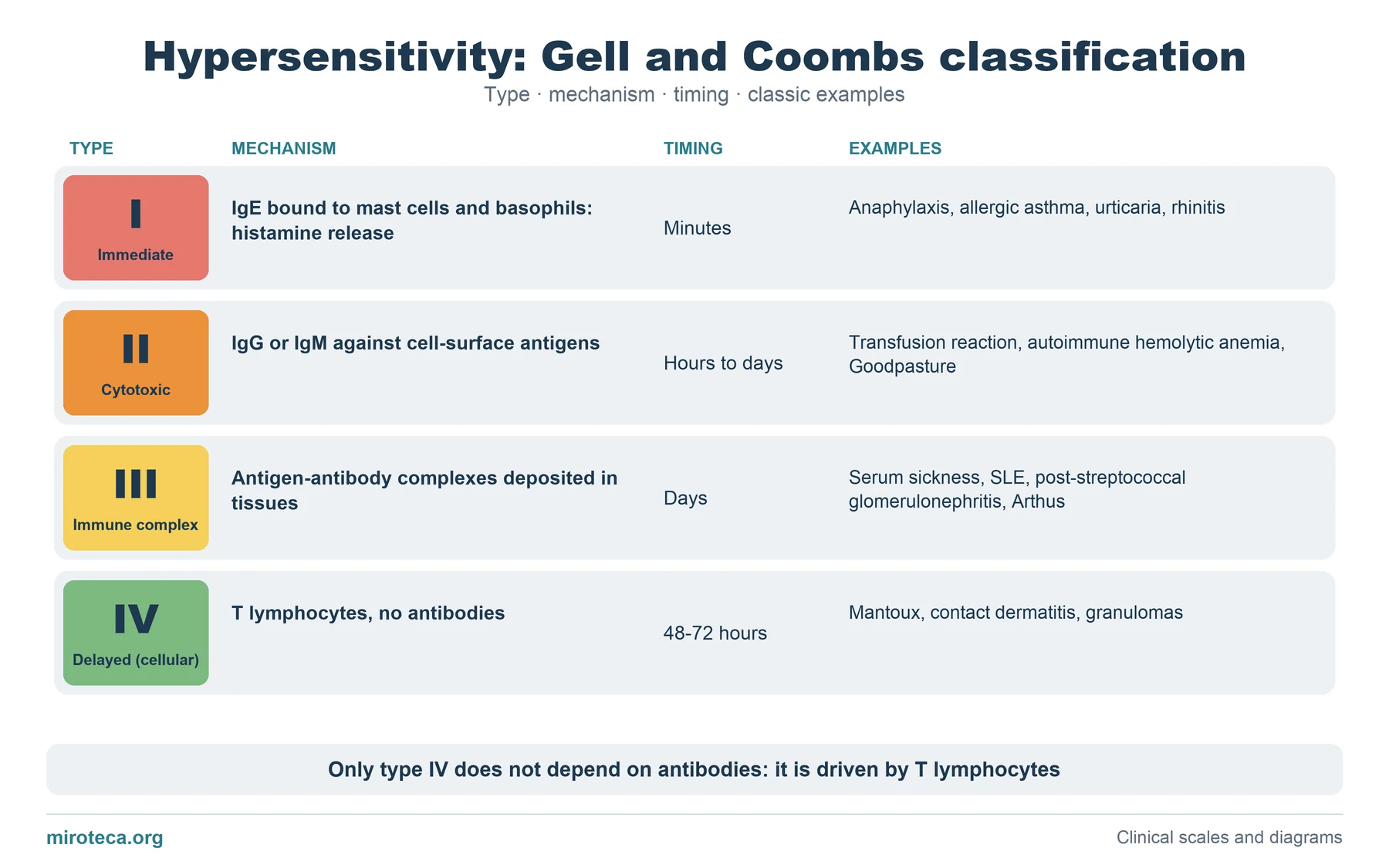
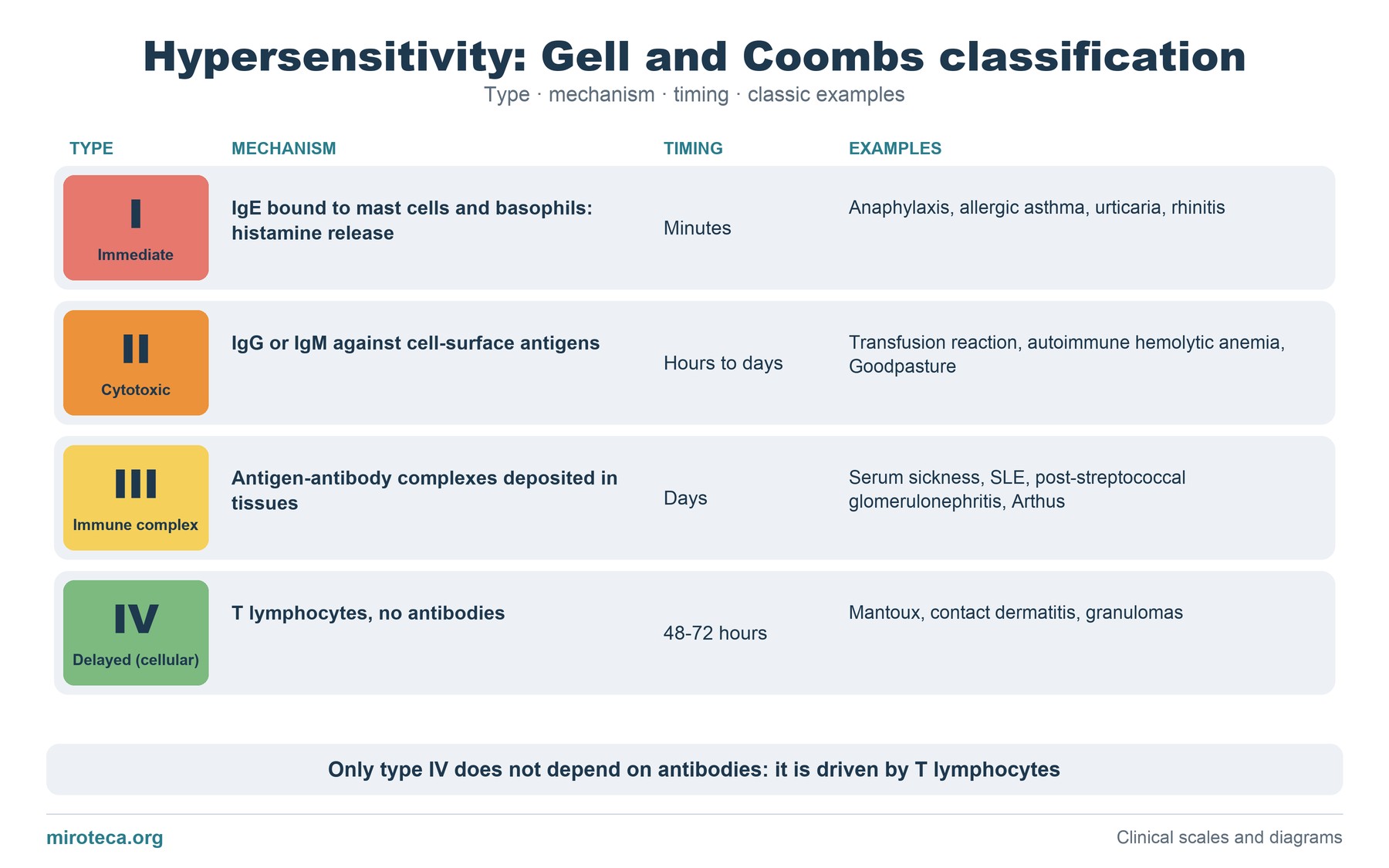
The table sorts hypersensitivity reactions by their immunological mechanism, with the time they take to appear and the examples asked most often.
Types I to III are antibody-mediated (IgE in type I; IgG or IgM in types II and III). Type IV is cell-mediated, by T lymphocytes, which is why it takes days.
The detail that settles it
The difference between type II and type III is where the antigen is. In type II the antibody binds to an antigen fixed on the surface of a cell or tissue (the red cell in hemolysis, the basement membrane in Goodpasture). In type III the antigen is free in the blood, forms complexes with the antibody, and these are deposited in vessels, joints or kidneys.
That is why type III produces systemic pictures (fever, arthralgia, vasculitis, glomerulonephritis) and usually consumes complement.
Common mistakes
A classic slip is placing the Mantoux test or contact dermatitis in type I because "they are allergies": they are type IV, delayed. Another is forgetting that one disease can combine mechanisms.
Some classifications add a type V for antibodies that stimulate a receptor, as in Graves' disease; in the original classification it is included within type II.
In exam questions
Questions usually give a disease or reaction and ask for the type, or the other way round. Thinking about who causes the damage (IgE, antibody against the cell, complexes or T lymphocytes) solves it.
Keep practicing
This page is the visual summary. To test yourself with real clinical reasoning, Medicinedle, the medical Wordle, gives you one clinical case a day: guess the diagnosis in six tries, with a new clue after every miss. It is free and available in English.