
What the diagram shows
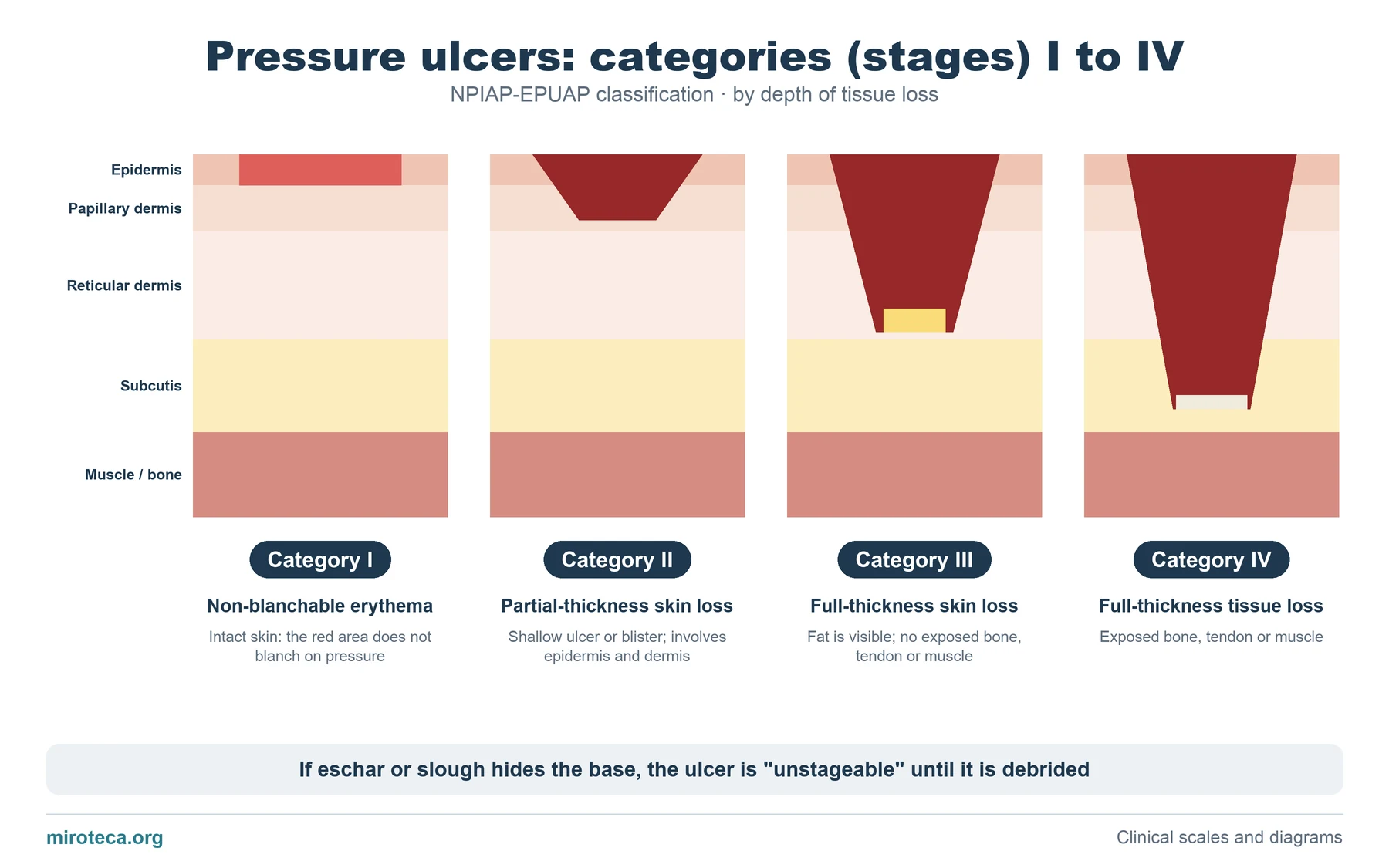
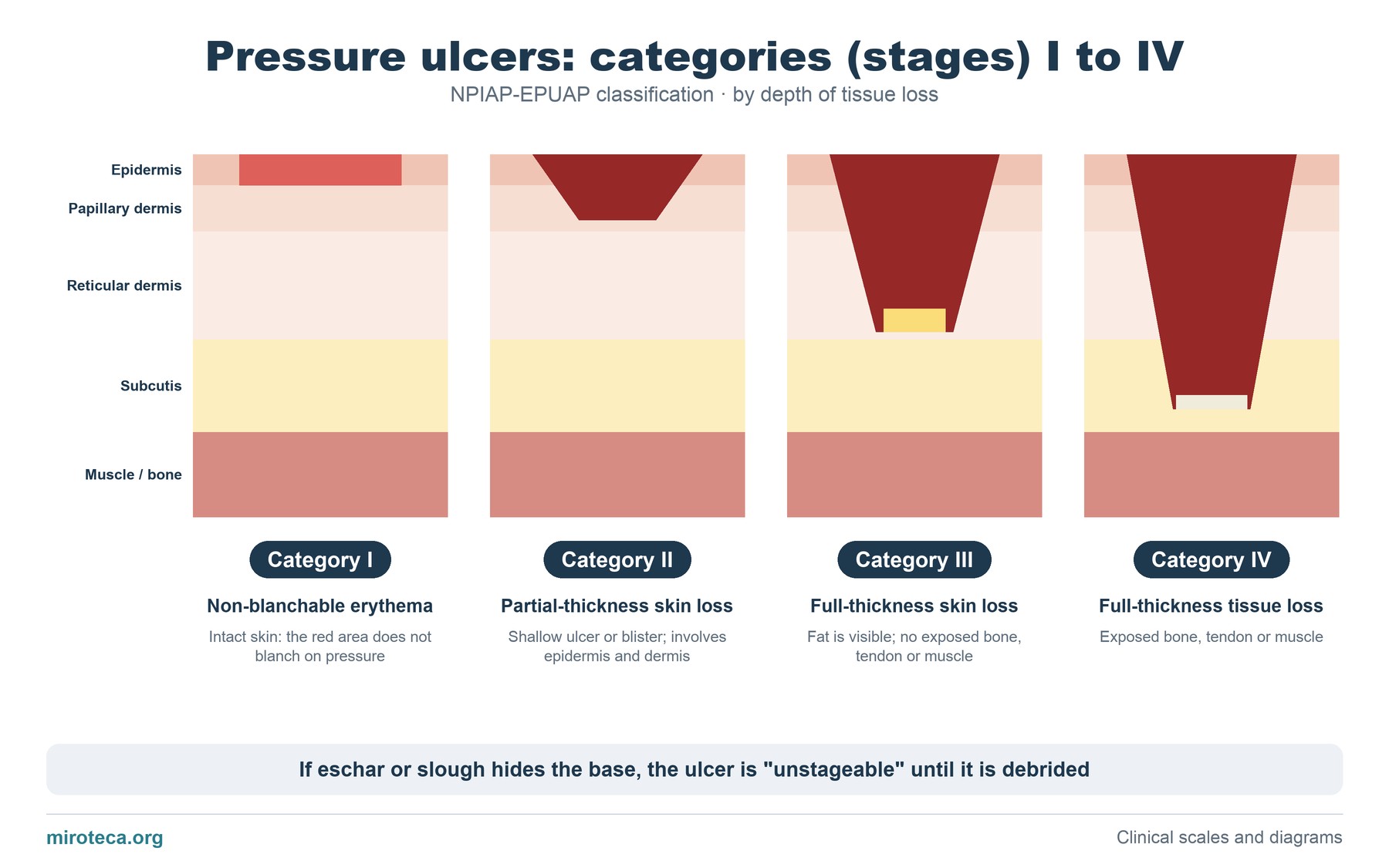
Four skin sections with the lesion becoming deeper. In category I the skin is intact and there is only a red area; from category II there is tissue loss, reaching the fat in III and muscle or bone in IV.
This is the classification of the international NPIAP-EPUAP panel, which now speaks of pressure injuries and of categories or stages.
The detail that settles it
Category I is recognized with the blanching test: the erythema is pressed gently with a finger and, if it does not blanch, it is a pressure injury. Erythema that does blanch is not yet one.
Besides the four categories there are two special situations: the unstageable ulcer, when eschar or slough hides the base, and the deep tissue injury, a purple area with intact skin hiding damage underneath.
Common mistakes
A frequent error is "downgrading" the category as the ulcer improves: a category IV ulcer that heals is still a healing category IV, it does not become III. Another is classifying moisture or friction lesions as category II, when they have a different cause.
Classification matters, but prevention pays off most: assessing risk with scales such as Braden or Norton, repositioning and pressure-relieving surfaces.
In exam questions
Questions usually describe the lesion (intact skin with erythema, visible fat, exposed bone) and ask for the category, or present a bedridden patient and ask about the risk scale.
Keep practicing
This page is the visual summary. To test yourself with real clinical reasoning, Medicinedle, the medical Wordle, gives you one clinical case a day: guess the diagnosis in six tries, with a new clue after every miss. It is free and available in English.