
What the diagram shows
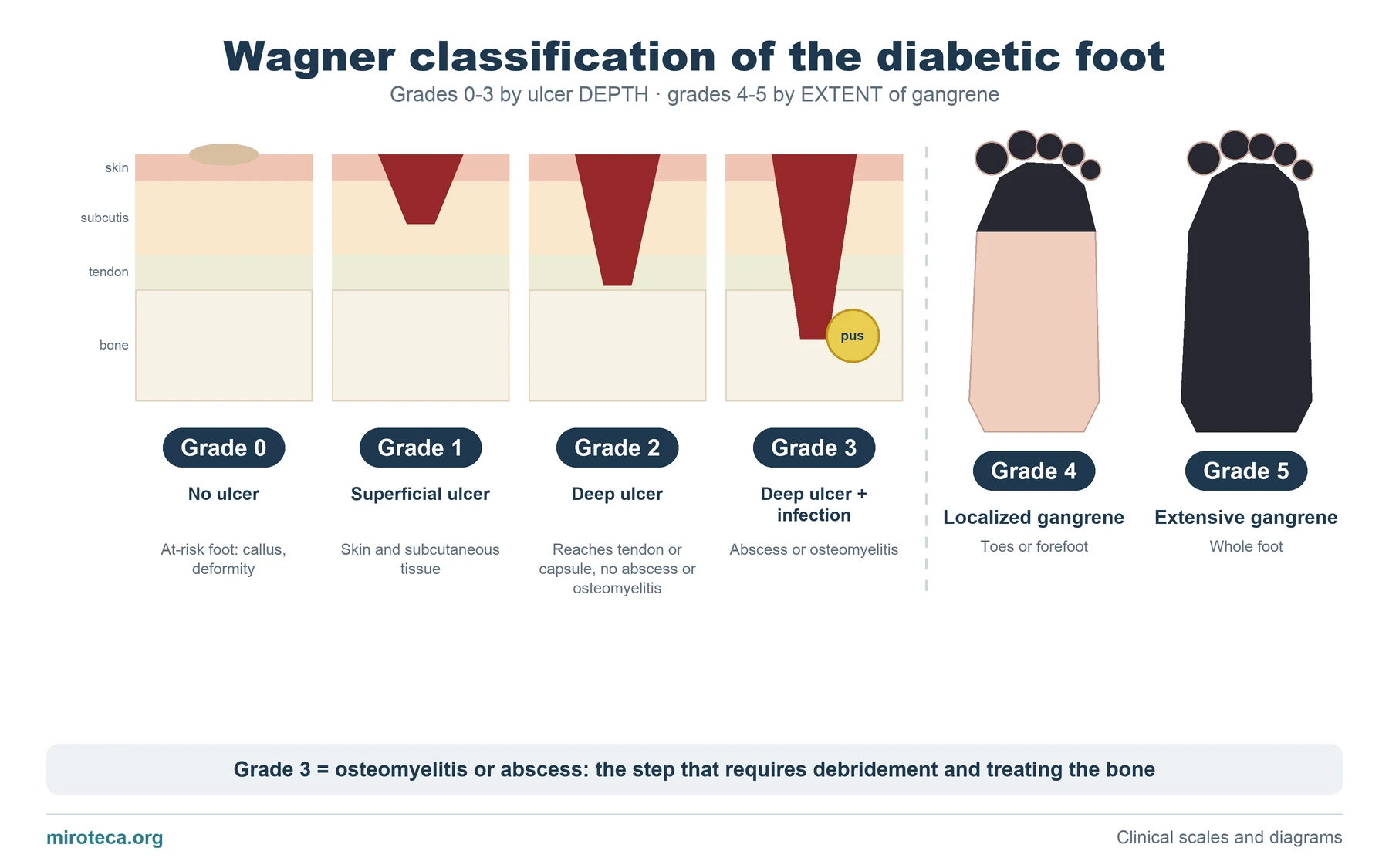
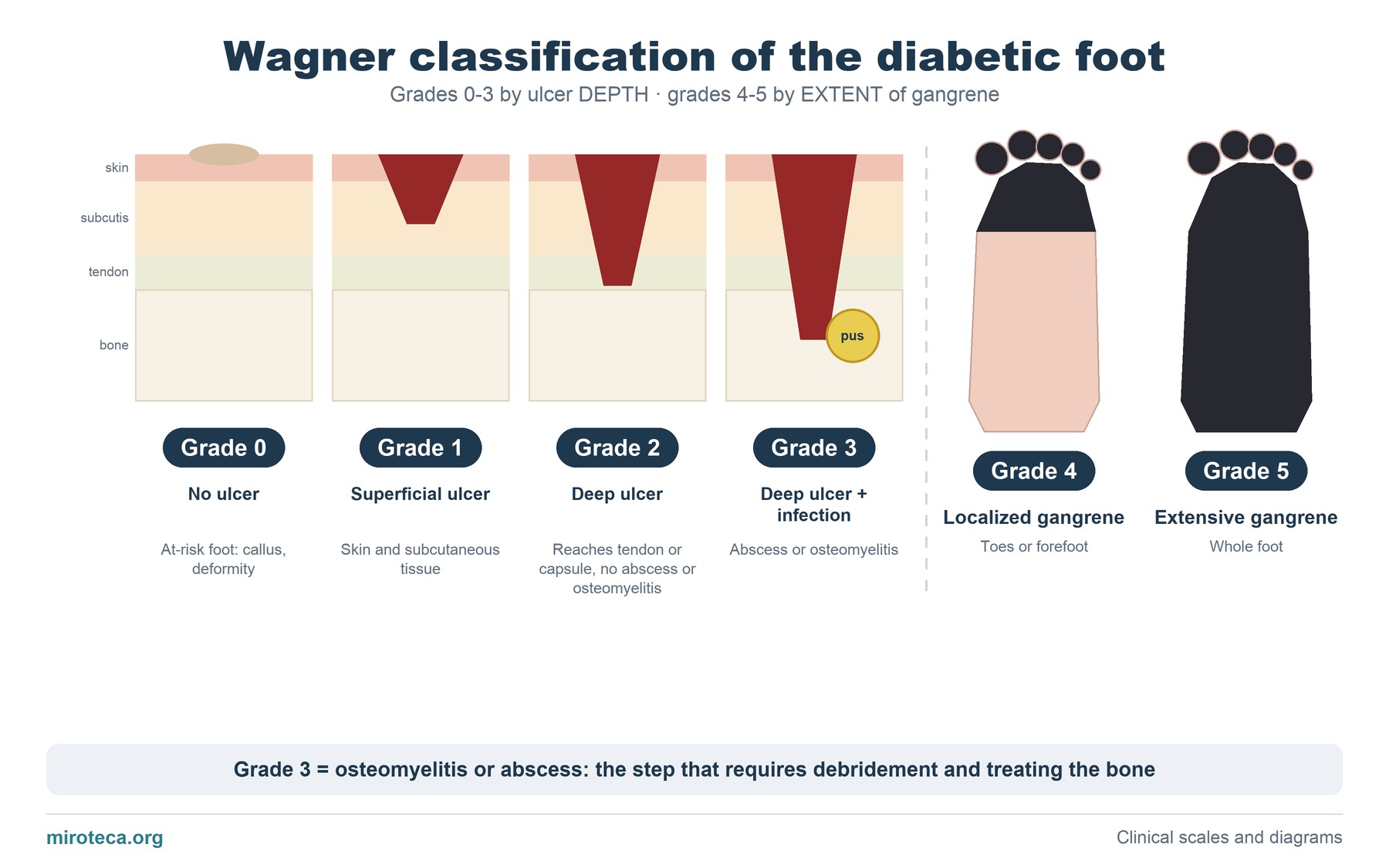
The first four drawings are sections of the sole of the foot with its layers (skin, subcutaneous tissue, tendon and bone) and an increasingly deep ulcer. The last two are the whole foot, with gangrene in black.
The Wagner classification is the best known for the diabetic foot and combines two criteria: depth of the lesion in the lower grades and extent of necrosis in the higher ones.
The detail that settles it
The key step is from grade 2 to 3: it is not marked by depth but by deep infection (abscess or osteomyelitis). An ulcer through which bone can be seen or probed raises suspicion of osteomyelitis, and that changes treatment: debridement, bone culture and prolonged antibiotics.
Grades 4 and 5 usually have significant ischemia behind them; assessing the circulation and the need for revascularization or amputation is essential.
Common mistakes
Wagner does not consider ischemia or superficial infection separately, which is why it is complemented by other systems, such as the University of Texas classification, which crosses depth with infection and ischemia.
Another frequent slip is forgetting grade 0: a foot without an ulcer but with deformities, calluses or neuropathy is already an at-risk foot, and that is where prevention pays off most (footwear, skin care and regular checks).
In exam questions
Questions usually describe the ulcer (deep, with purulent discharge, with palpable bone) and ask for the grade or the management. If bone or an abscess appears, the answer is grade 3.
Keep practicing
This page is the visual summary. To test yourself with real clinical reasoning, Medicinedle, the medical Wordle, gives you one clinical case a day: guess the diagnosis in six tries, with a new clue after every miss. It is free and available in English.