
What the diagram shows
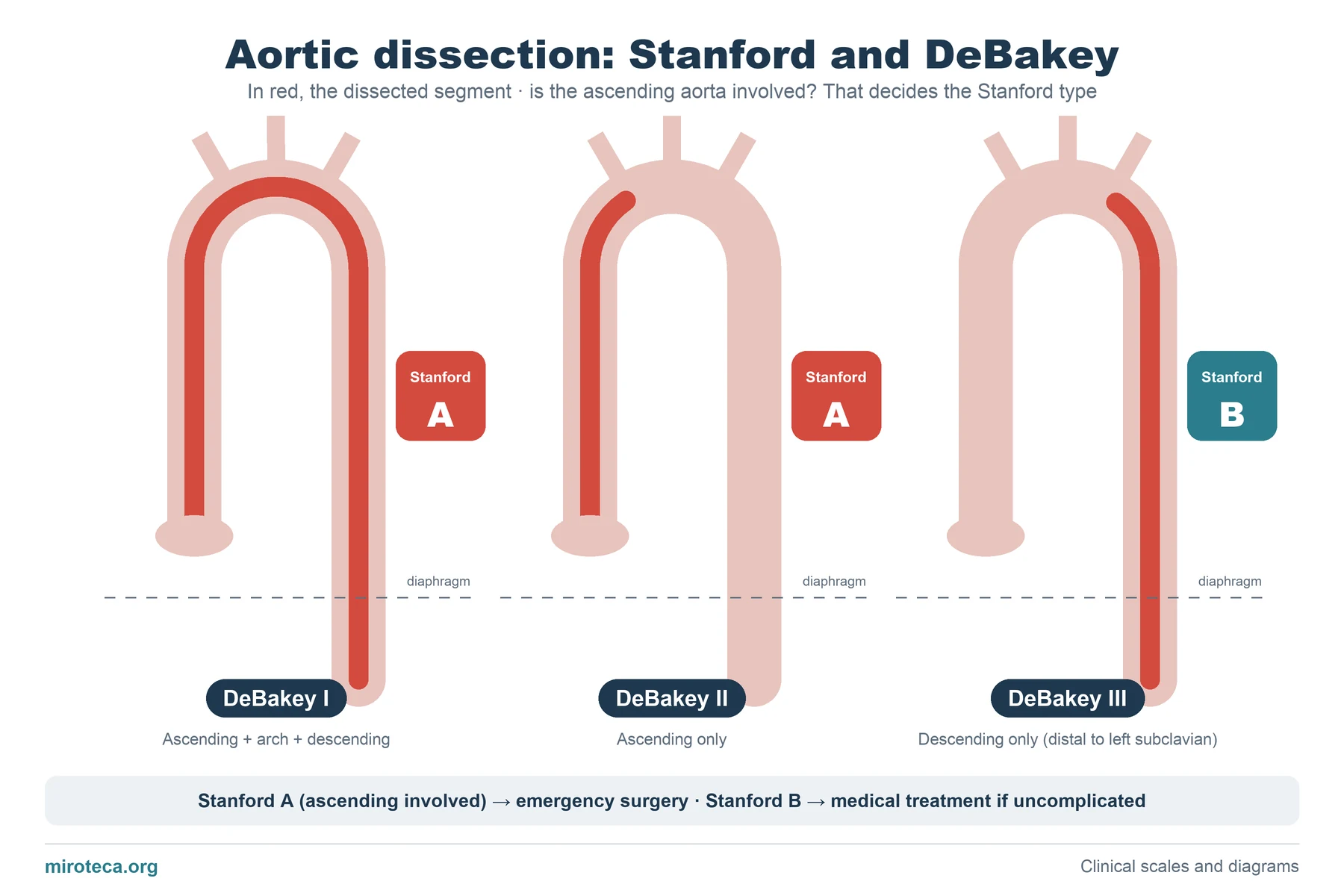
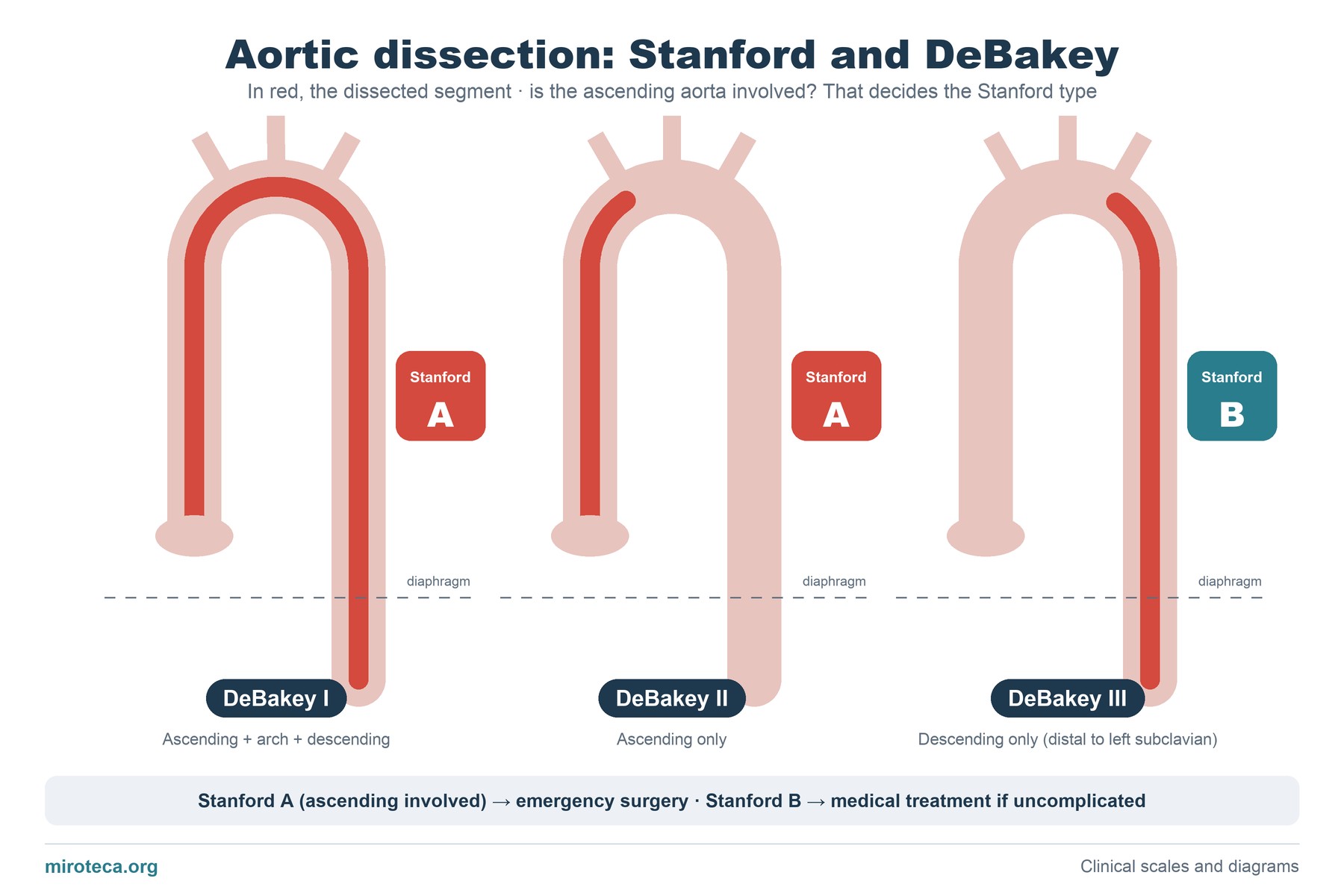
Each drawing is the thoracic aorta: the root at the bottom left, the ascending aorta, the arch with the supra-aortic vessels, and the descending aorta crossing the diaphragm. The dissected segment is in red.
The three drawings are the DeBakey types, which look at where the dissection starts and how far it extends. The colored box shows the Stanford type each one corresponds to.
The detail that settles it
Stanford is simpler and is the one that decides treatment: if the dissection involves the ascending aorta, wherever it starts, it is type A; if not, type B. DeBakey I and II are Stanford A; DeBakey III is Stanford B.
Type A is a surgical emergency, because of the risk of rupture into the pericardium (tamponade), acute aortic regurgitation and coronary involvement. Uncomplicated type B is treated initially with strict control of blood pressure and heart rate; if it becomes complicated (organ ischemia, rupture, refractory pain), it is treated with intervention.
Common mistakes
The costliest error is classifying as type B a dissection that starts in the descending aorta but extends retrogradely into the ascending aorta: as soon as the ascending aorta is involved, it is type A.
Another mistake concerns the order of medical treatment: heart rate is controlled first with intravenous beta-blockers and only then, if needed, a vasodilator is added, to avoid a reflex tachycardia that increases wall stress.
In exam questions
The typical question gives tearing chest pain with a CT image and asks for management: if the ascending aorta is involved, the answer is emergency surgery.
Keep practicing
This page is the visual summary. To test yourself with real clinical reasoning, Medicinedle, the medical Wordle, gives you one clinical case a day: guess the diagnosis in six tries, with a new clue after every miss. It is free and available in English.