
What the diagram shows
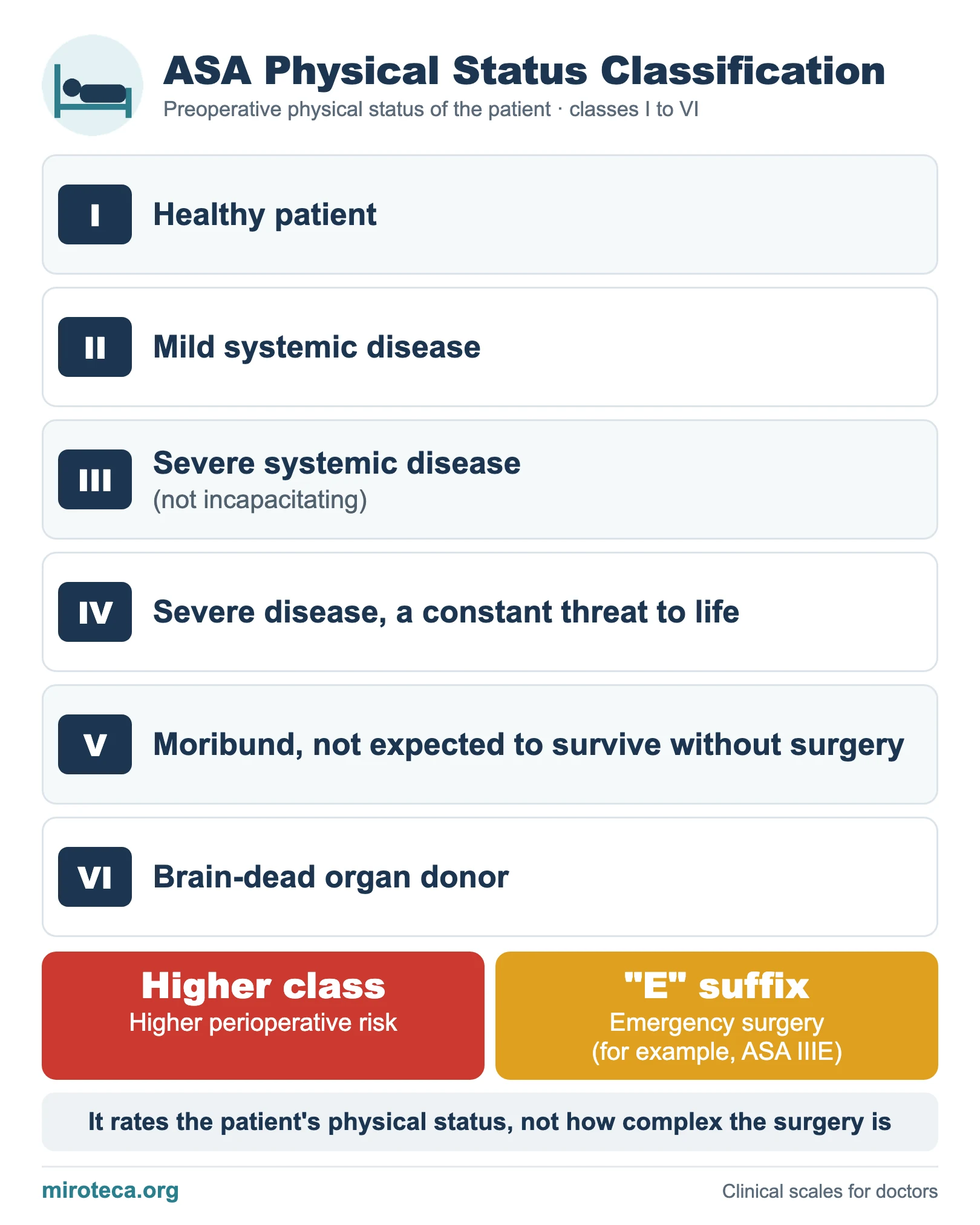
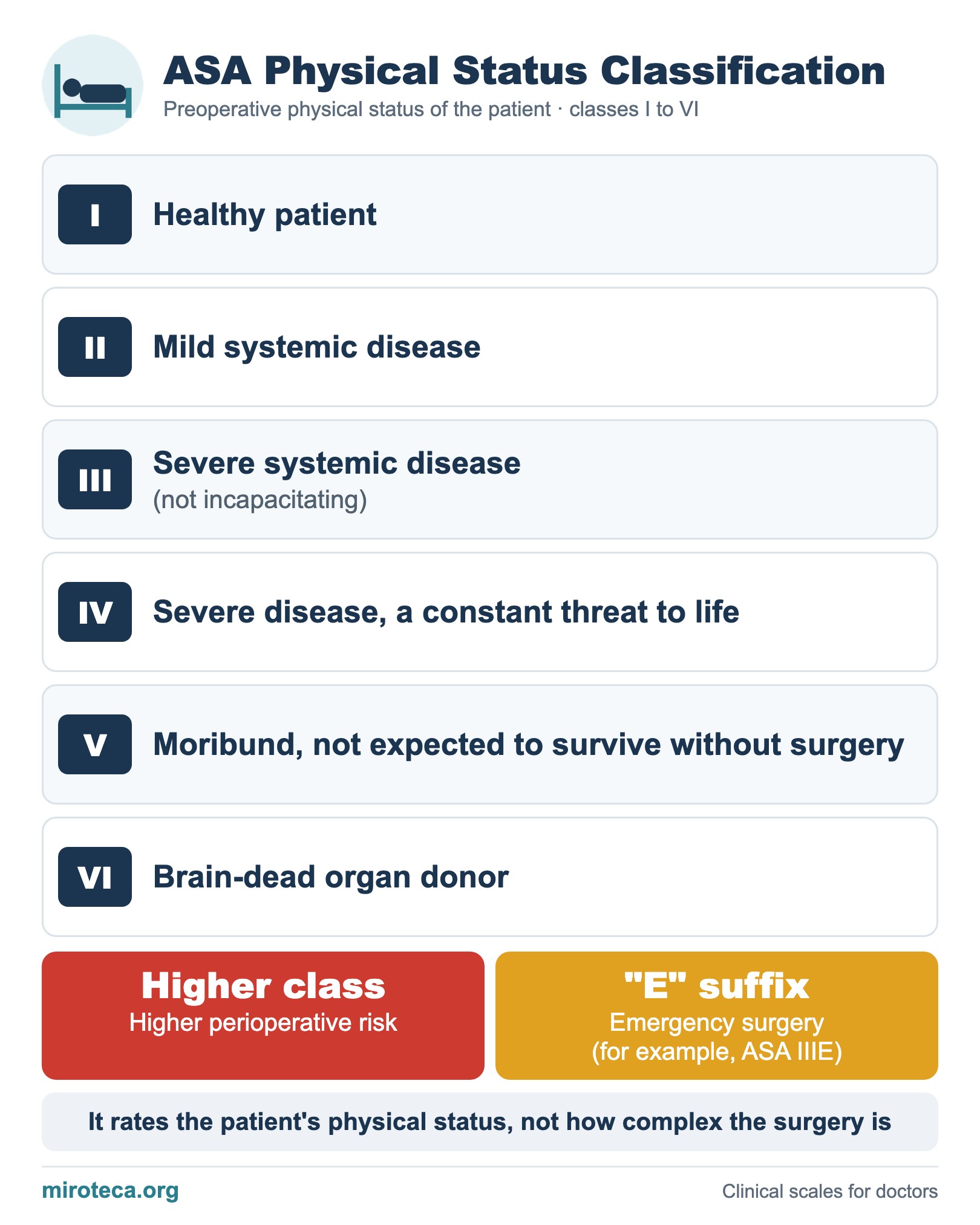
The ASA classification describes the physical status of the patient before anesthesia, from class I (healthy) to class VI (brain-dead organ donor). A higher class means a higher perioperative risk.
The detail that settles it
It rates the physical status, not how difficult the surgery is. The "E" suffix marks emergency surgery (for example, ASA IIIE).
Common mistakes
Thinking it measures the complexity of the operation: it measures the state of the patient.
In exam questions
Questions usually describe a patient with a few chronic conditions and ask for the class. The key step is deciding whether the systemic disease is mild (II) or severe (III).
Keep practicing
This page is the visual summary. To test yourself with real clinical reasoning, Medicinedle, a Wordle-inspired game, gives you one clinical case a day: guess the diagnosis in six tries, with a new clue after every miss. It is free and available in English.