
What the chart shows
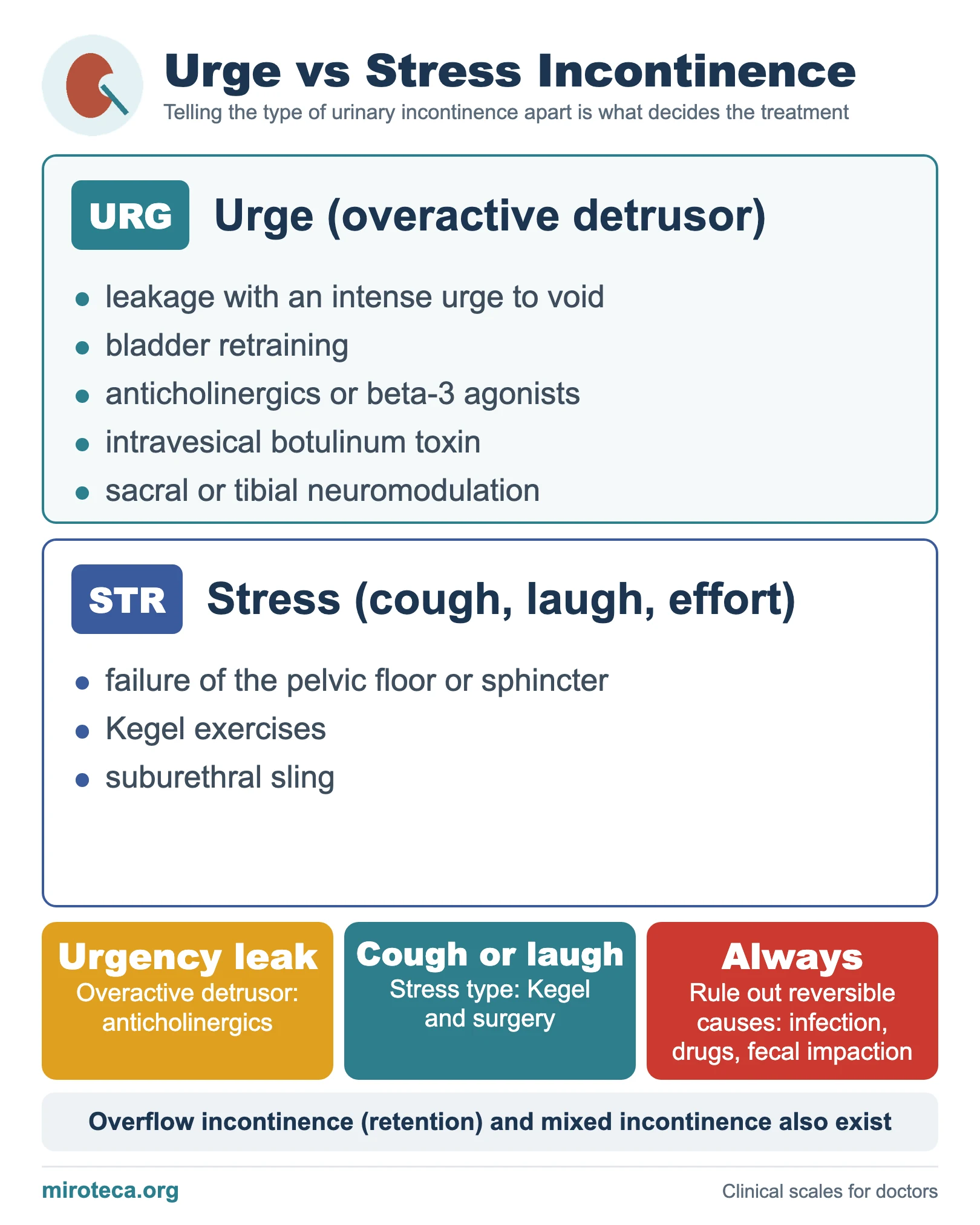
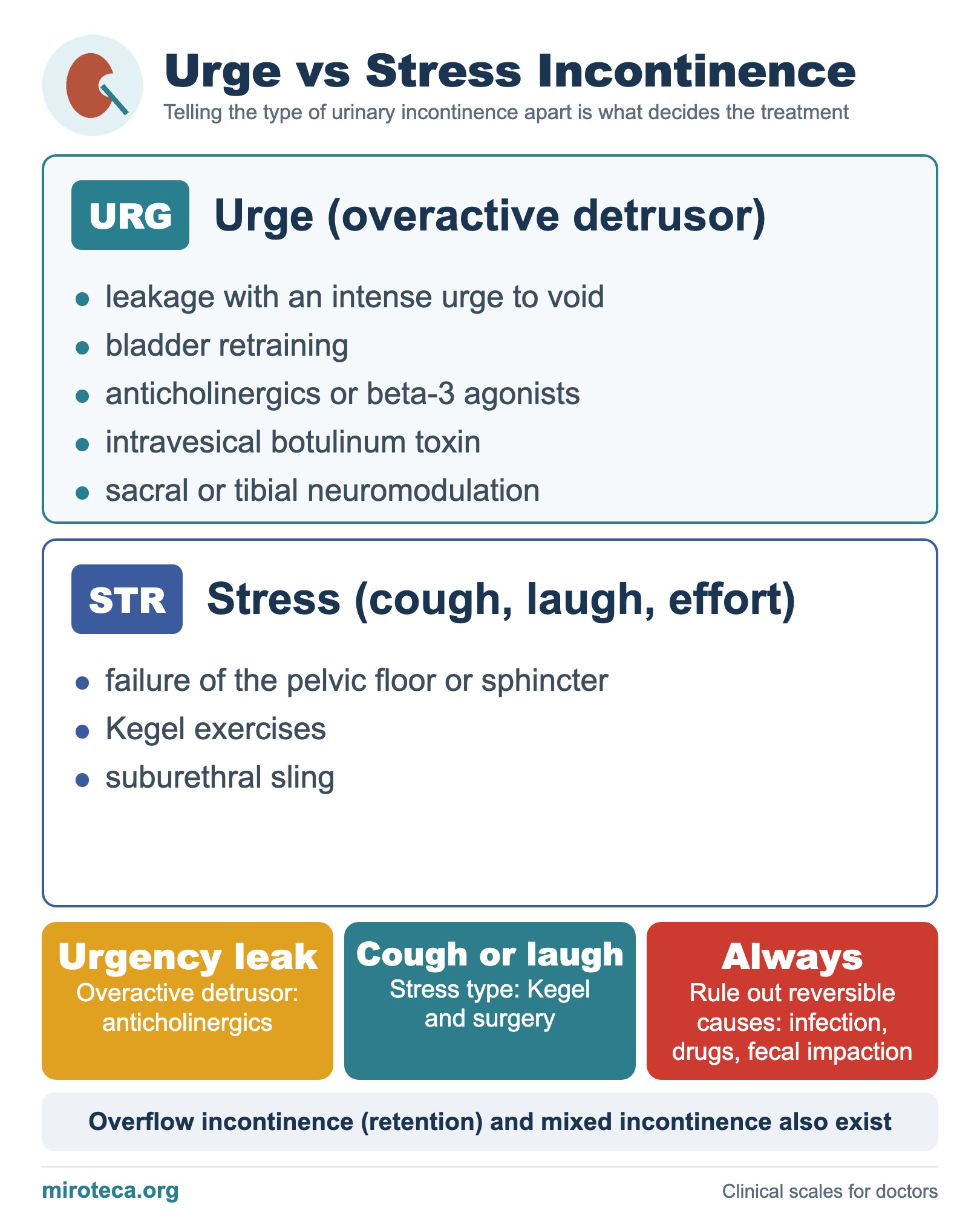
Distinguishing the type of urinary incontinence is what decides the treatment, and it is a frequent question in geriatrics and urology. The chart gives the mechanism and treatment of urge and stress incontinence.
The detail that settles it
Urge incontinence is due to an overactive detrusor (leakage with an intense urge to void): it is treated with bladder retraining, anticholinergics or beta-3 agonists, botulinum toxin or neuromodulation. Stress incontinence appears on coughing, laughing or effort (failure of the pelvic floor or sphincter): the treatment is Kegel exercises and the suburethral sling. Overflow incontinence (retention) and mixed incontinence also exist.
In exam questions
Short rules: leakage with urgency points to an overactive detrusor and anticholinergics; leakage on coughing or laughing points to stress incontinence, with Kegel exercises and surgery; reversible causes (infection, drugs, fecal impaction) should always be ruled out.
Keep practicing
This page is the visual summary. To test yourself with real clinical reasoning, Medicinedle, a Wordle-inspired game, gives you one clinical case a day: guess the diagnosis in six tries, with a new clue after every miss. It is free and available in English.