
What the chart shows
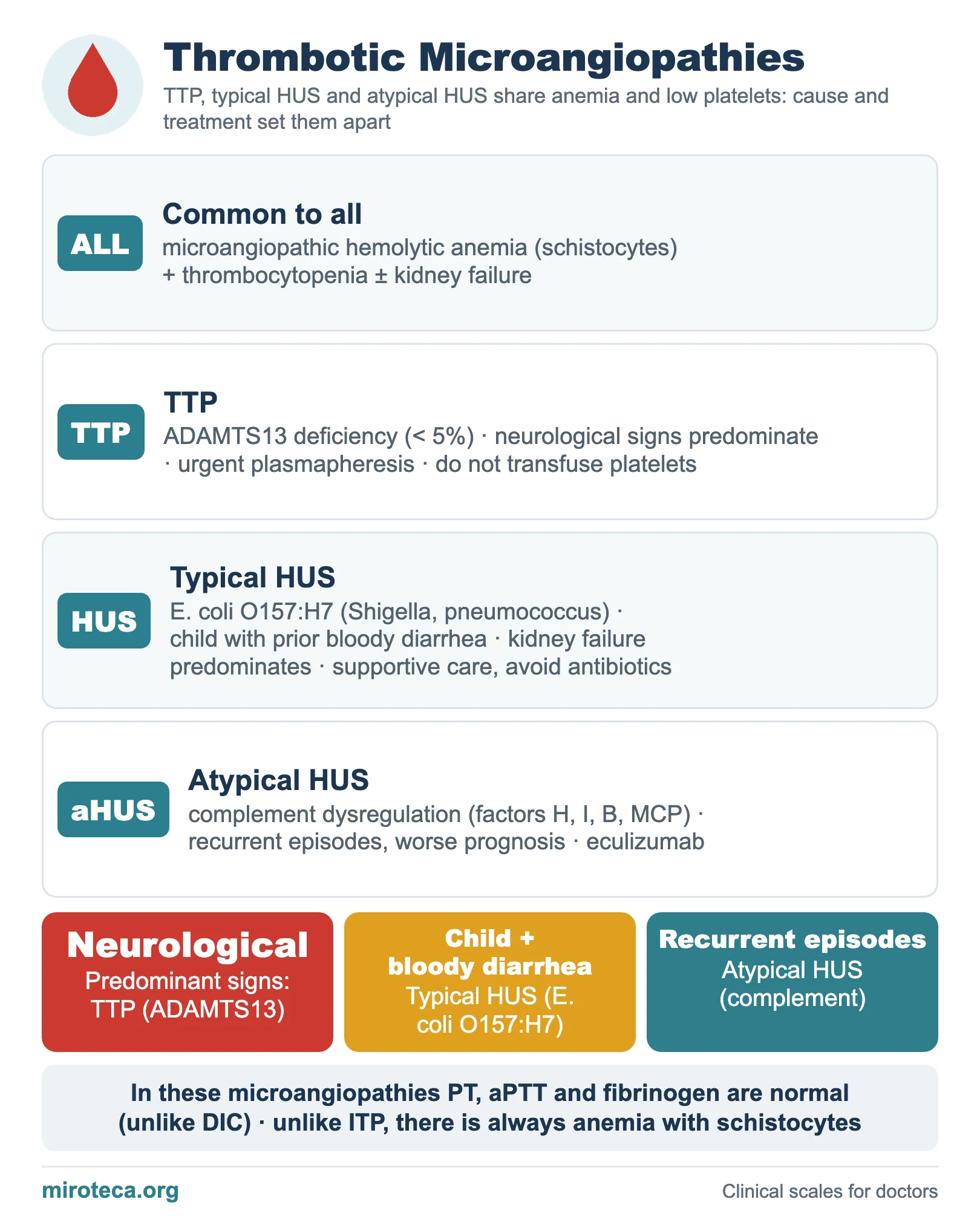
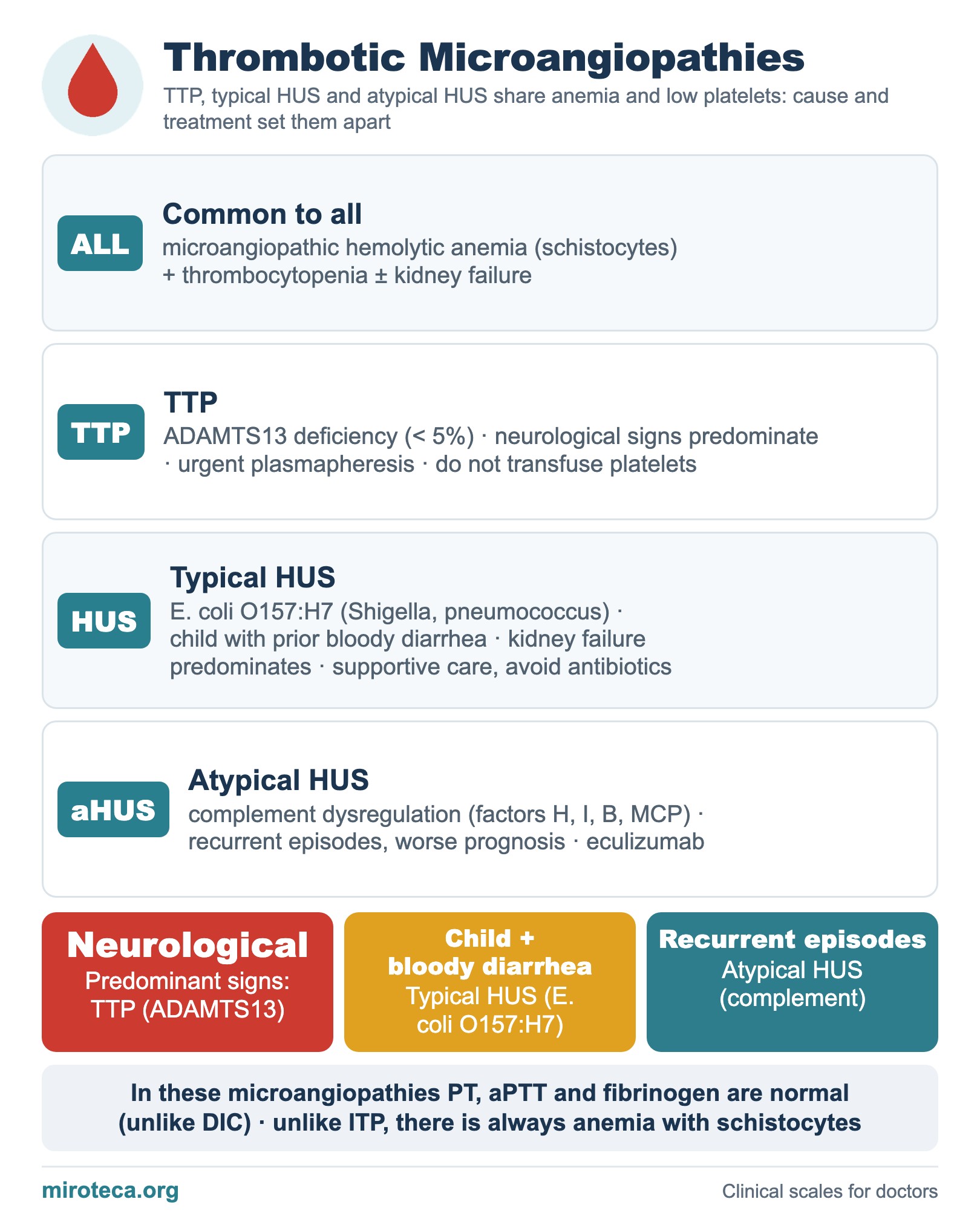
The thrombotic microangiopathies share hemolytic anemia and low platelets, but the cause and the treatment differ greatly. The chart sets TTP, typical HUS and atypical HUS side by side. For the simpler comparison of isolated low platelets, see ITP vs TTP.
The detail that settles it
All of them show microangiopathic hemolytic anemia (with schistocytes), thrombocytopenia and, at times, kidney failure. What separates them, and what exam questions ask, is the cause and the treatment.
TTP is due to ADAMTS13 deficiency, predominantly neurological, and is treated with urgent plasmapheresis; platelets are NOT transfused because it worsens the thrombosis. Typical HUS follows bloody diarrhea from E. coli O157:H7 in a child, kidney failure predominates and care is supportive (antibiotics can worsen it). Atypical HUS comes from complement dysregulation, with recurrent episodes, and is treated with eculizumab.
A trick to avoid confusing them with DIC: in these microangiopathies the coagulation tests (PT, aPTT, fibrinogen) are normal, while in DIC they are altered. Against ITP (low platelets only, no hemolysis), there is always anemia with schistocytes here. See also platelet count.
In exam questions
Short rules: neurological predominance means TTP (ADAMTS13) and plasmapheresis; a child with previous bloody diarrhea means typical HUS; recurrent episodes mean atypical HUS; in TTP, avoid transfusing platelets.
Keep practicing
This page is the visual summary. To test yourself with real clinical reasoning, Medicinedle, a Wordle-inspired game, gives you one clinical case a day: guess the diagnosis in six tries, with a new clue after every miss. It is free and available in English.