
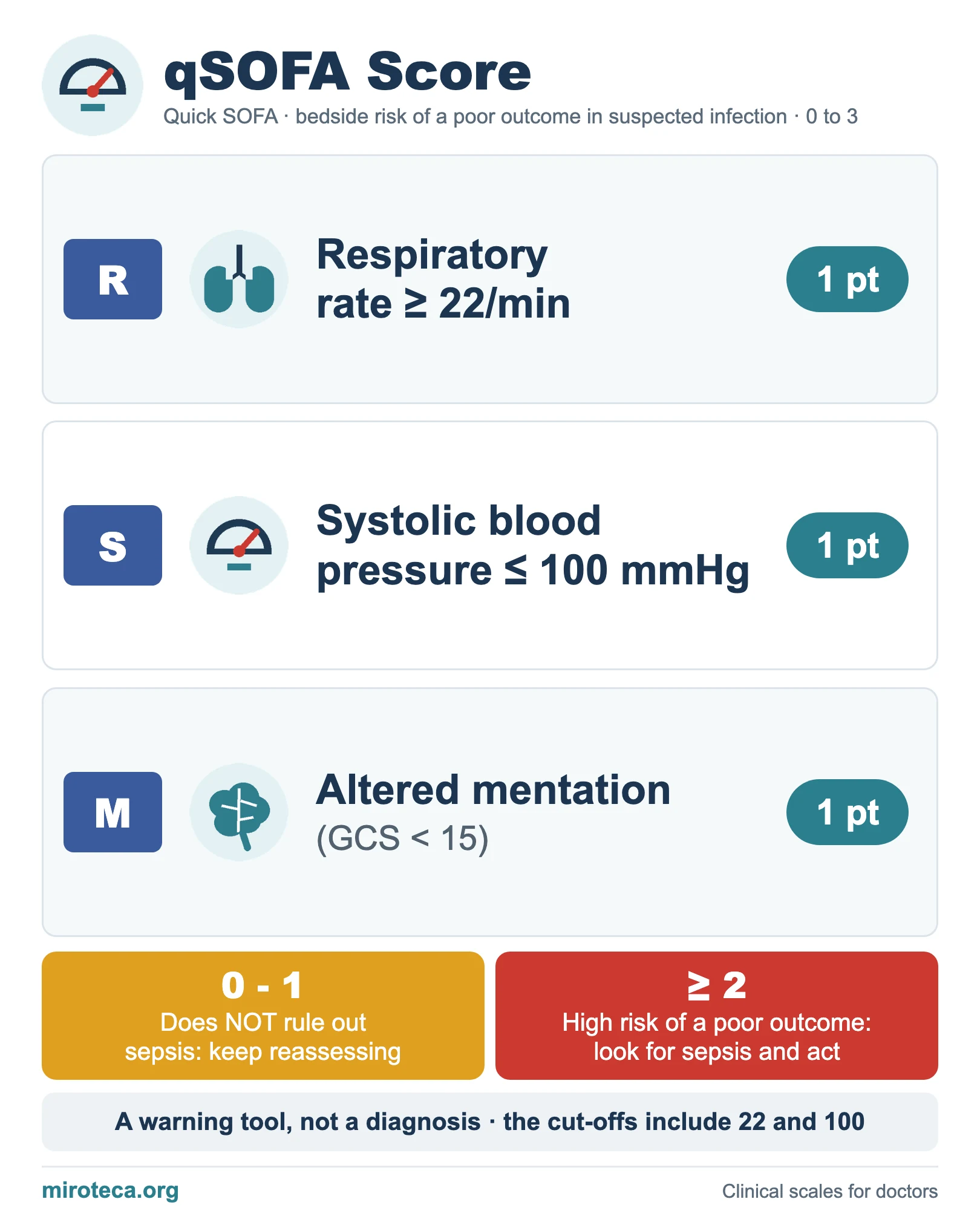
What the diagram shows
qSOFA (quick SOFA) uses three bedside findings to flag patients with infection at high risk of a poor outcome (death or a prolonged ICU stay). Each criterion adds 1 point, from 0 to 3.
The cut-off values are included: a respiratory rate of exactly 22 and a systolic pressure of exactly 100 already score.
The detail that settles it
It is a warning tool, not a diagnosis: a qSOFA of 2 or more should trigger the work-up (lactate, blood cultures) and early treatment. It largely replaced the old SIRS criteria for predicting a poor outcome.
Common mistakes
The most serious conceptual error is using it to rule out sepsis: a low qSOFA does not exclude sepsis if the clinical picture is worrying.
Nor does it grade final severity; it only sounds the alarm.
In exam questions
Questions usually give vital signs and mental status in a patient with infection and ask for the score or the next step. Watch the cut-offs: 22 or more, and 100 or less.
Keep practicing
This page is the visual summary. To test yourself with real clinical reasoning, Medicinedle, a Wordle-inspired game, gives you one clinical case a day: guess the diagnosis in six tries, with a new clue after every miss. It is free and available in English.