
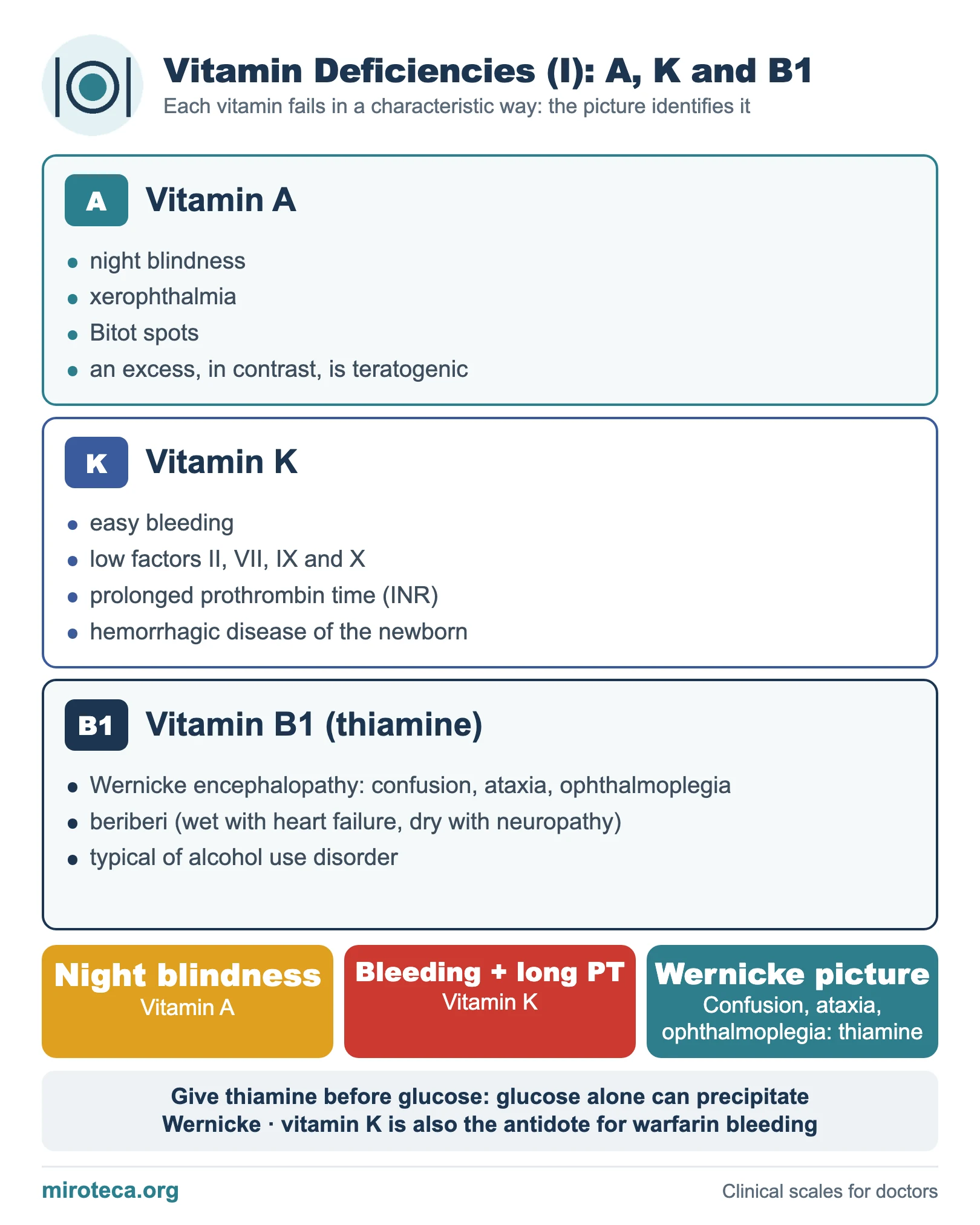
What the chart shows
Each vitamin deficiency has a characteristic syndrome. This first part gathers vitamin A, vitamin K and vitamin B1 (thiamine), which are very easy to ask about because of their "picture" presentations. The second part is niacin, vitamin C and vitamin D.
The detail that settles it
Vitamin A deficiency causes night blindness, xerophthalmia and Bitot spots; an excess, in contrast, is teratogenic. Vitamin K deficiency lowers factors II, VII, IX and X and prolongs the prothrombin time (INR); it is the basis of hemorrhagic disease of the newborn (hence its administration at birth) and the antidote for warfarin bleeding. See INR.
Vitamin B1 deficiency gives beriberi (wet, with heart failure; dry, with neuropathy) and Wernicke encephalopathy (confusion, ataxia and ophthalmoplegia), typical of alcohol use disorder.
In exam questions
Short rules: night blindness means vitamin A; bleeding with a prolonged PT means vitamin K; an alcoholic patient with confusion, ataxia and ophthalmoplegia means thiamine, which is given before glucose because glucose alone can precipitate the picture.
Keep practicing
This page is the visual summary. To test yourself with real clinical reasoning, Medicinedle, a Wordle-inspired game, gives you one clinical case a day: guess the diagnosis in six tries, with a new clue after every miss. It is free and available in English.