
What the diagram shows
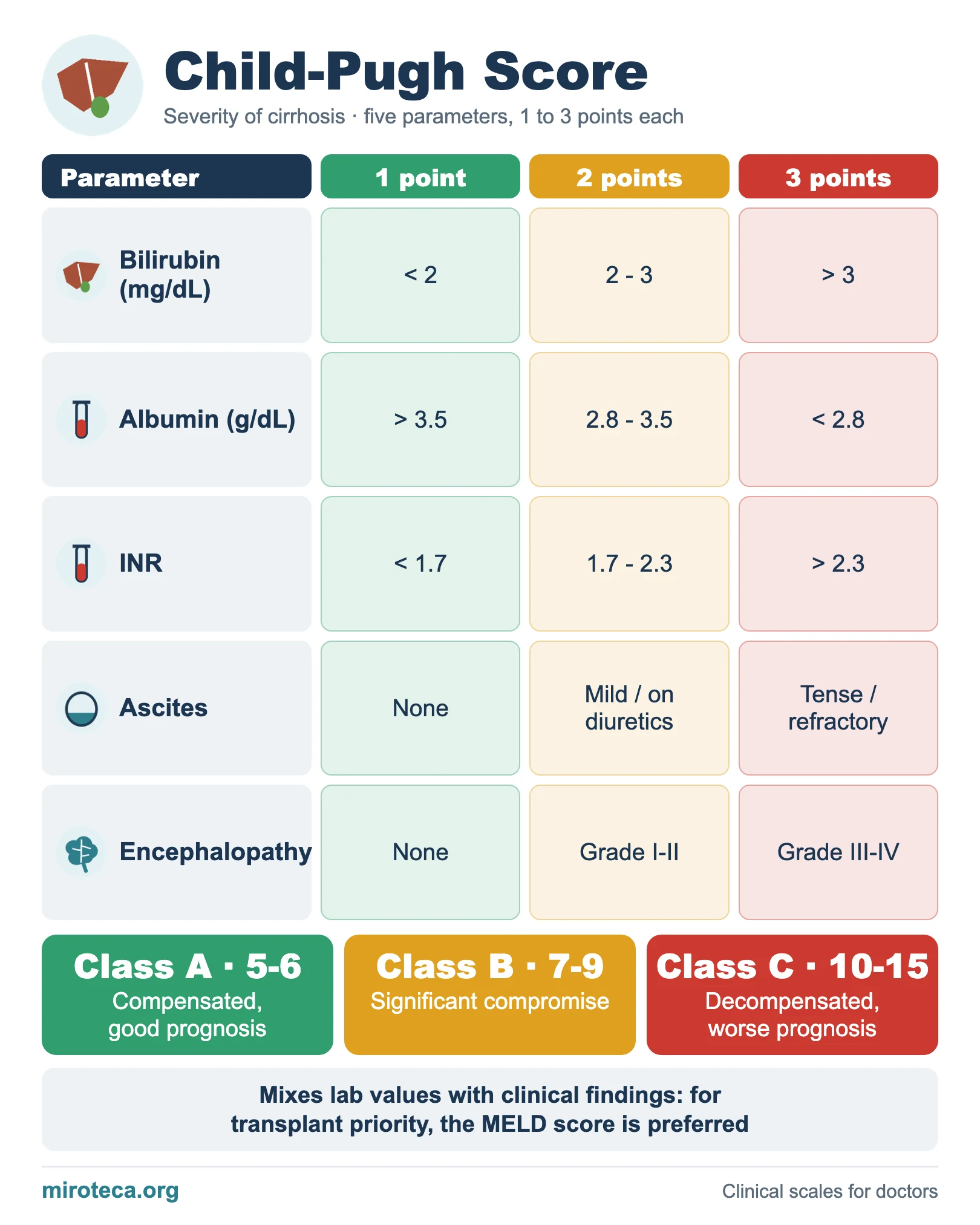
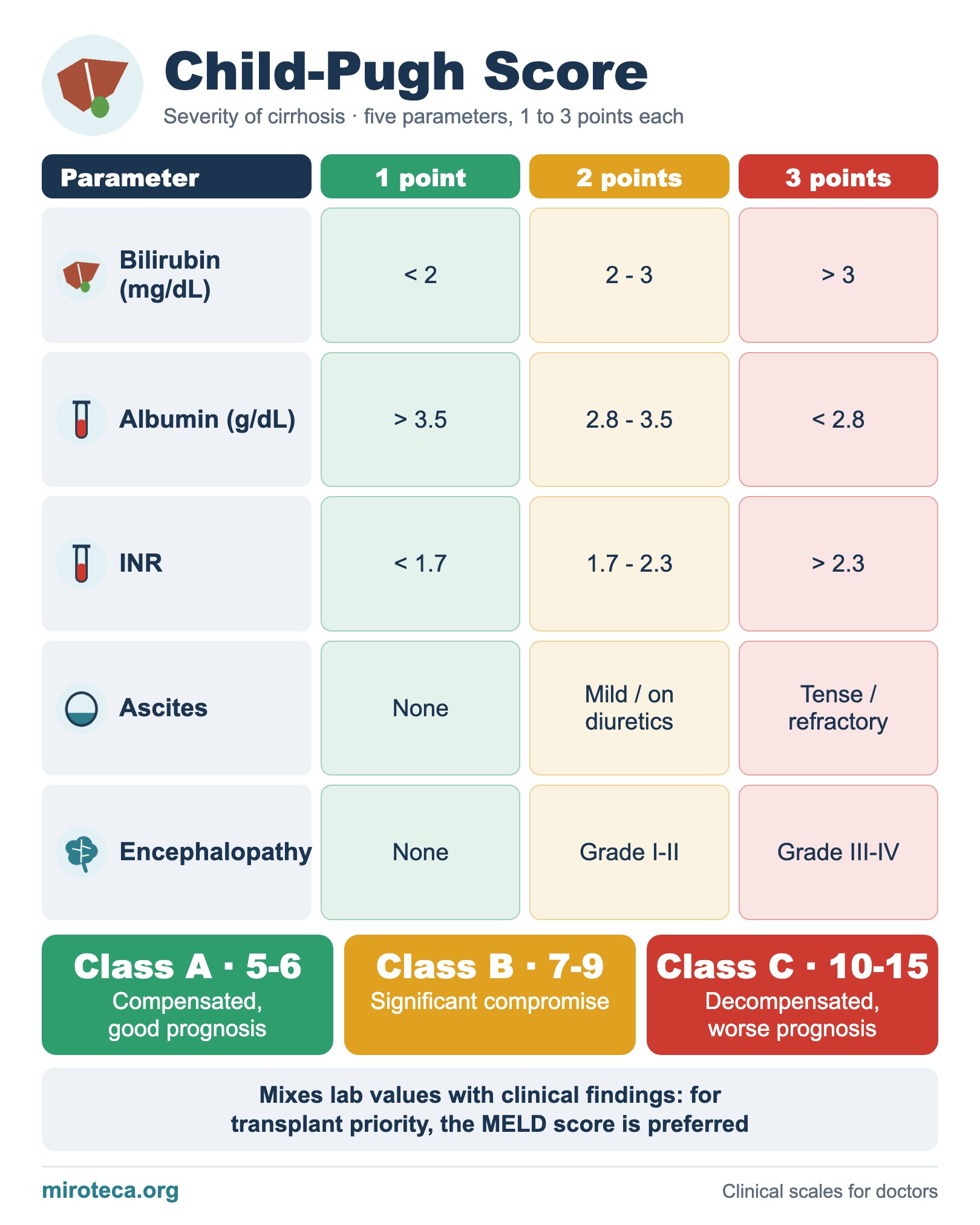
Child-Pugh grades the severity of cirrhosis with five parameters: three from the lab (bilirubin, albumin and INR) and two clinical (ascites and encephalopathy).
The columns show what each result is worth, from 1 to 3 points. Below, the sum becomes the three classes used to discuss prognosis and to make decisions on surgery or transplant referral.
The detail that settles it
The lowest possible score is 5, not 0, because every parameter is worth at least 1 point. That is why class A starts at 5.
Common mistakes
Watch the direction of each row: bilirubin and INR score higher as they rise, and albumin scores higher as it falls.
Another mistake is using it to prioritize transplant. Child-Pugh mixes lab values with somewhat subjective clinical findings such as ascites or encephalopathy; for that decision the MELD score, which uses lab values only, is preferred.
Keep practicing
This page is the visual summary. To test yourself with real clinical reasoning, Medicinedle, a Wordle-inspired game, gives you one clinical case a day: guess the diagnosis in six tries, with a new clue after every miss. It is free and available in English.