
What the chart shows
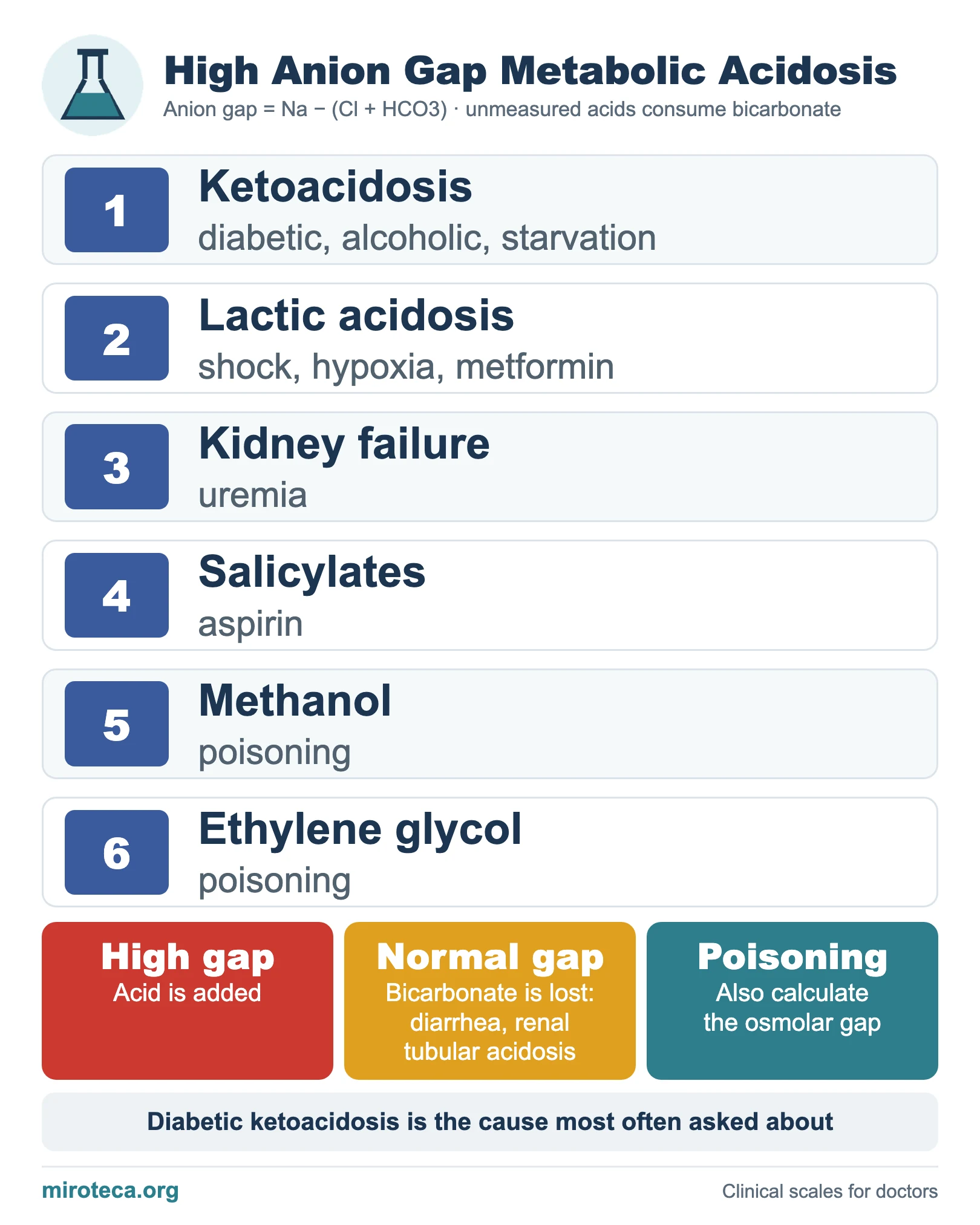
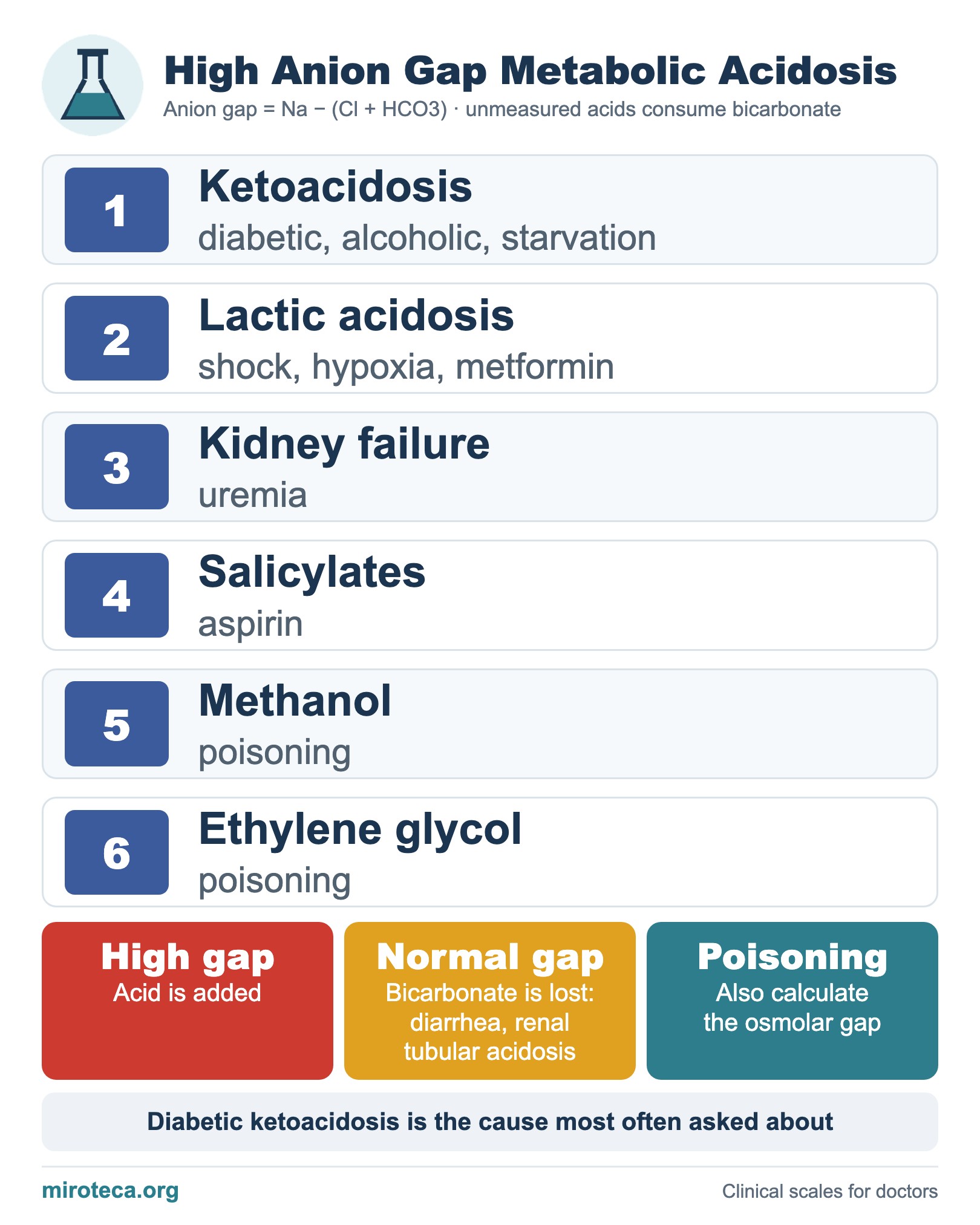
The anion gap, Na − (Cl + HCO₃), helps to classify metabolic acidoses (see the anion gap calculator and the arterial blood gas guide). It is elevated when "unmeasured" acids accumulate and consume bicarbonate.
The detail that settles it
The causes of metabolic acidosis with a high anion gap are summed up as ketoacidosis (diabetic, alcoholic or from starvation), lactic acidosis (shock, hypoxia, metformin), kidney failure (uremia) and poisonings (methanol, ethylene glycol, salicylates). Against them, the normal anion gap (hyperchloremic) acidoses are due to bicarbonate loss: diarrhea and renal tubular acidosis.
In an acidosis with a high gap and poisoning, the osmolar gap should also be calculated (methanol, ethylene glycol). Diabetic ketoacidosis is the cause asked about most.
In exam questions
The recurring question gives an acidosis with a calculated gap and asks for the cause: a high gap means acid has been added; a normal gap means bicarbonate has been lost.
Keep practicing
This page is the visual summary. To test yourself with real clinical reasoning, Medicinedle, a Wordle-inspired game, gives you one clinical case a day: guess the diagnosis in six tries, with a new clue after every miss. It is free and available in English.