
What the diagram shows
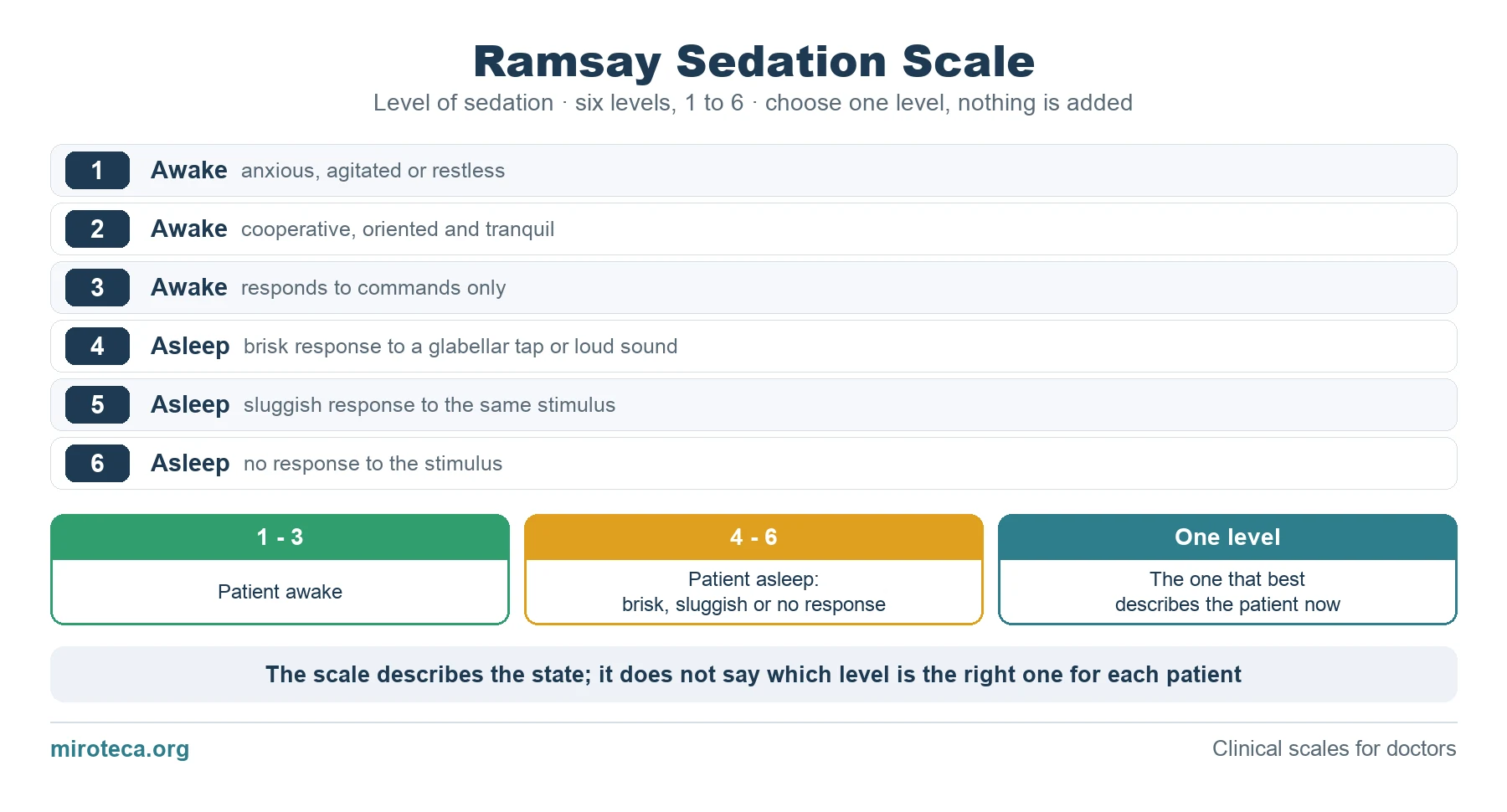
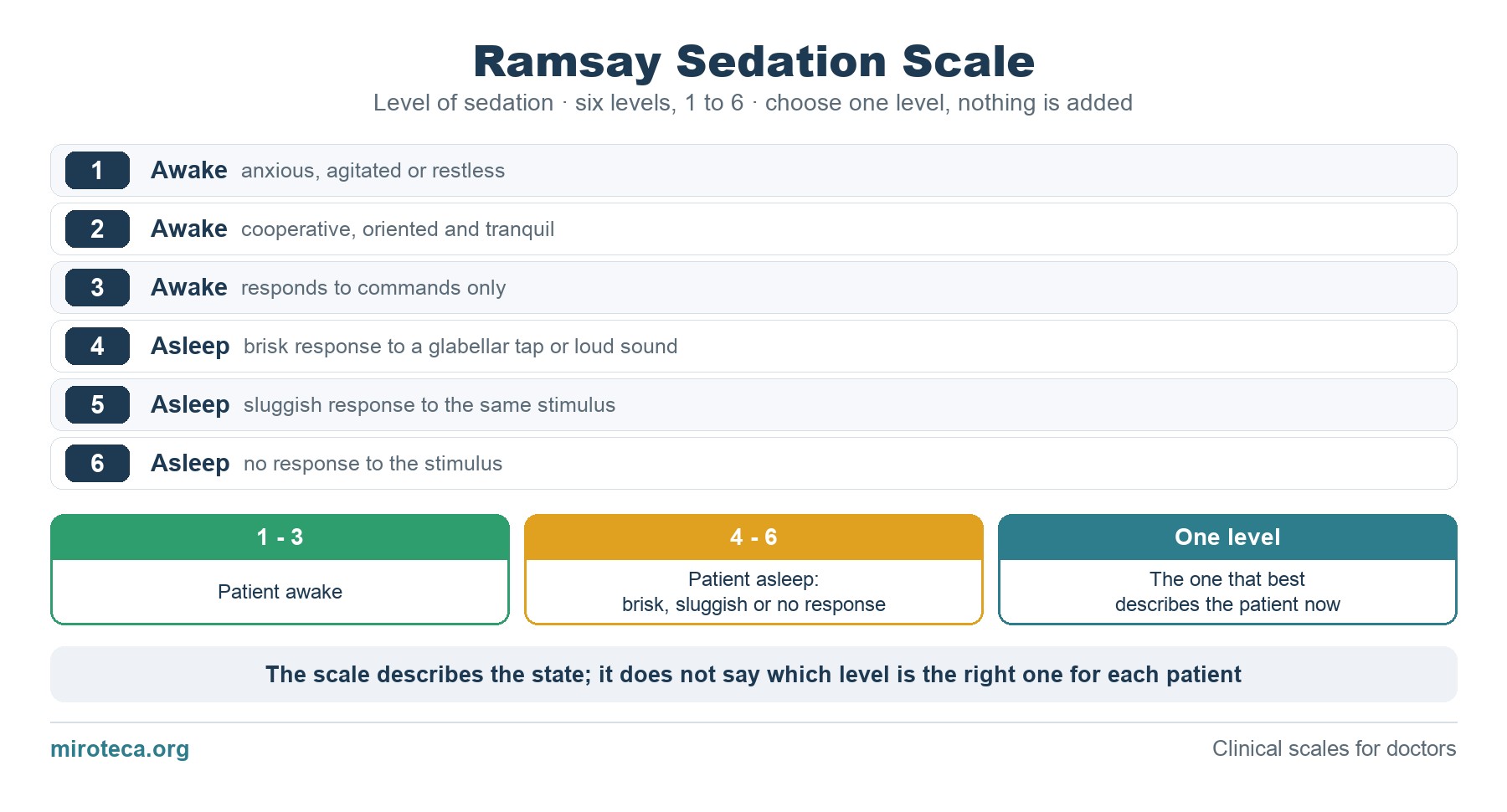
The Ramsay scale classifies the level of sedation of a patient into six levels, from 1 to 6. It was published in 1974 in the British Medical Journal in a study of controlled sedation and is still used in intensive care units and in sedation for procedures.
Levels 1 to 3 describe a patient who is awake and levels 4 to 6 a patient who is asleep, where what is assessed is whether the response is brisk, sluggish or absent.
The detail that settles it
Nothing is added: one single level is chosen. The stimulus for levels 4 to 6 is always the same, a light tap on the glabella or a loud sound; what changes is how fast the patient responds.
The level that is sought depends on the clinical situation and on the protocol of each unit: the scale describes the state, it does not say by itself which level is the right one.
Common mistakes
Confusing it with the modified versions, which have more levels (there is one with eight), and forgetting that one level is assessed rather than a sum.
Keep practicing
This page is the visual summary. To test yourself with real clinical reasoning, Medicinedle, a Wordle-inspired game, gives you one clinical case a day: guess the diagnosis in six tries, with a new clue after every miss. It is free and available in English.