
What the diagram shows
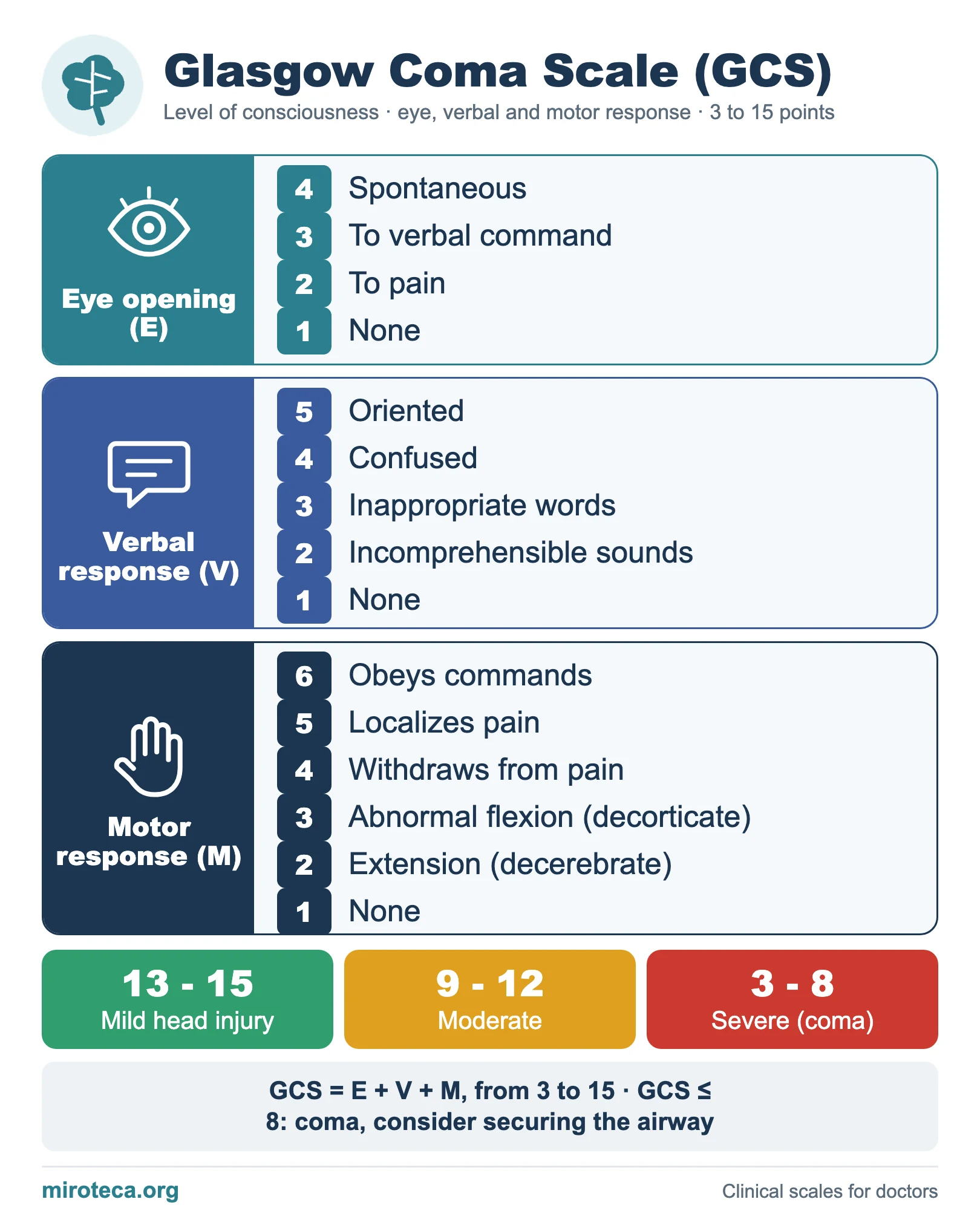
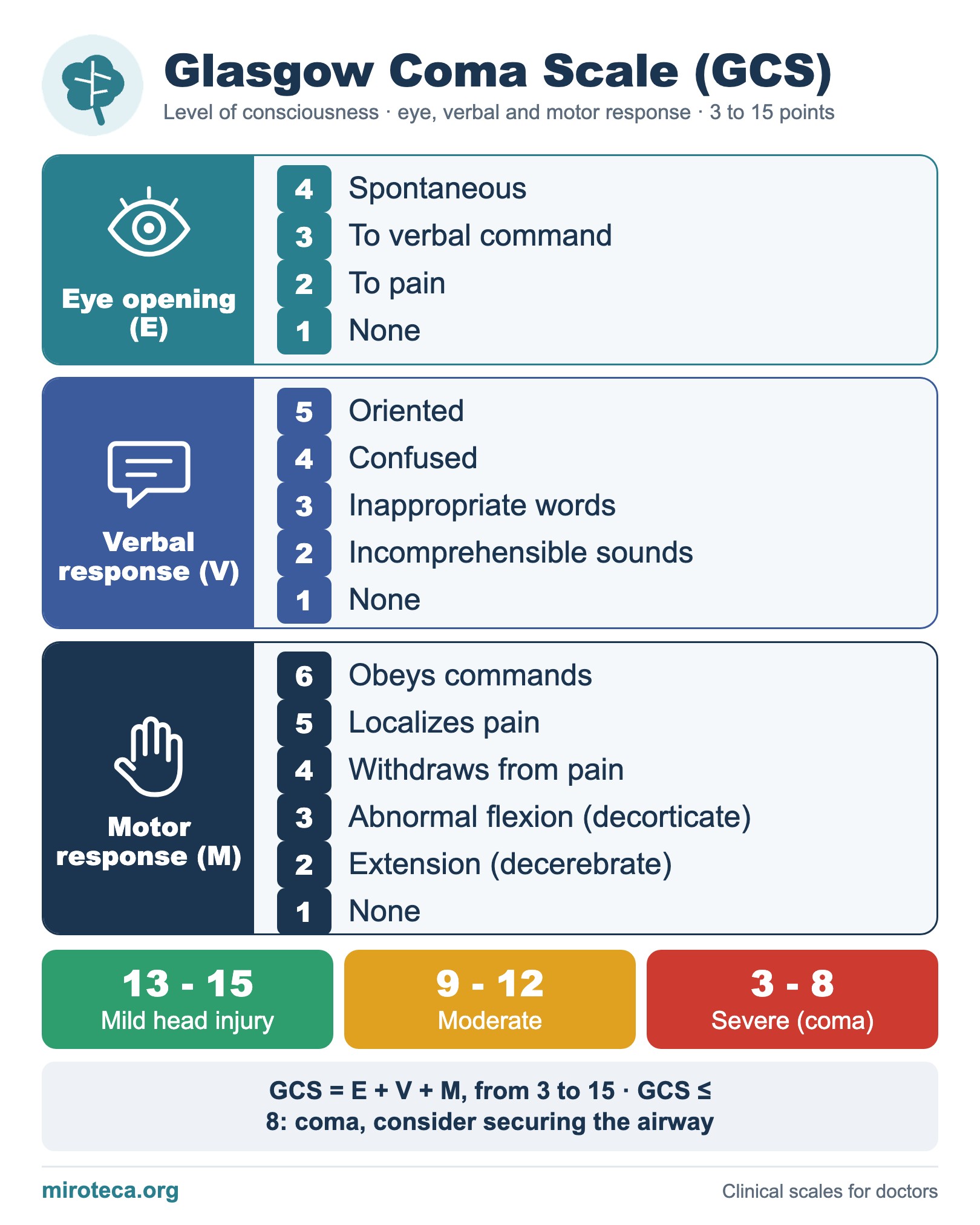
The Glasgow Coma Scale measures the level of consciousness by adding three responses: eye opening (E), verbal response (V) and motor response (M). The total runs from 3 to 15.
In head injury, the total sorts severity: 13 to 15 is mild, 9 to 12 moderate and 3 to 8 severe. A GCS of 15 is a normal level of consciousness.
The detail that settles it
A GCS of 8 or less means a comatose patient at risk of not protecting the airway: it is the classic threshold for considering endotracheal intubation.
The motor response is the component with the greatest prognostic value.
Common mistakes
In intubated patients the verbal response cannot be assessed: it is recorded with a "T" (for example, GCS 10T) instead of guessing a number.
Sedation, alcohol or hypoglycemia can lower the score without any structural brain damage, so the number is read together with its context.
In exam questions
Board-style questions (USMLE, NCLEX) usually describe what the patient does and ask for the total, or whether the airway needs to be secured. The motor items that are easiest to confuse are localizing pain (5) versus withdrawing from pain (4), and abnormal flexion (3) versus extension (2).
Keep practicing
This page is the visual summary. To test yourself with real clinical reasoning, Medicinedle, a Wordle-inspired game, gives you one clinical case a day: guess the diagnosis in six tries, with a new clue after every miss. It is free and available in English.