
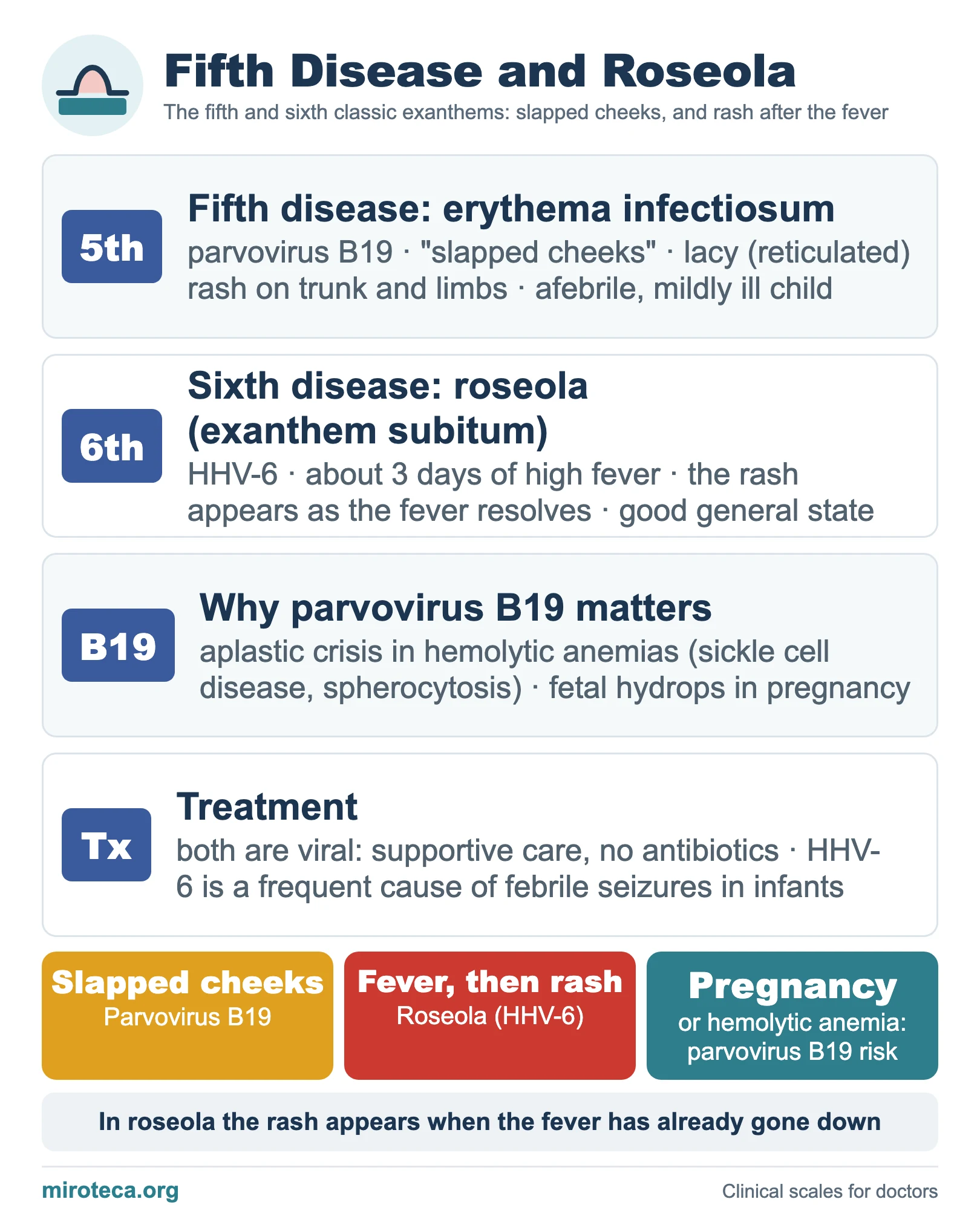
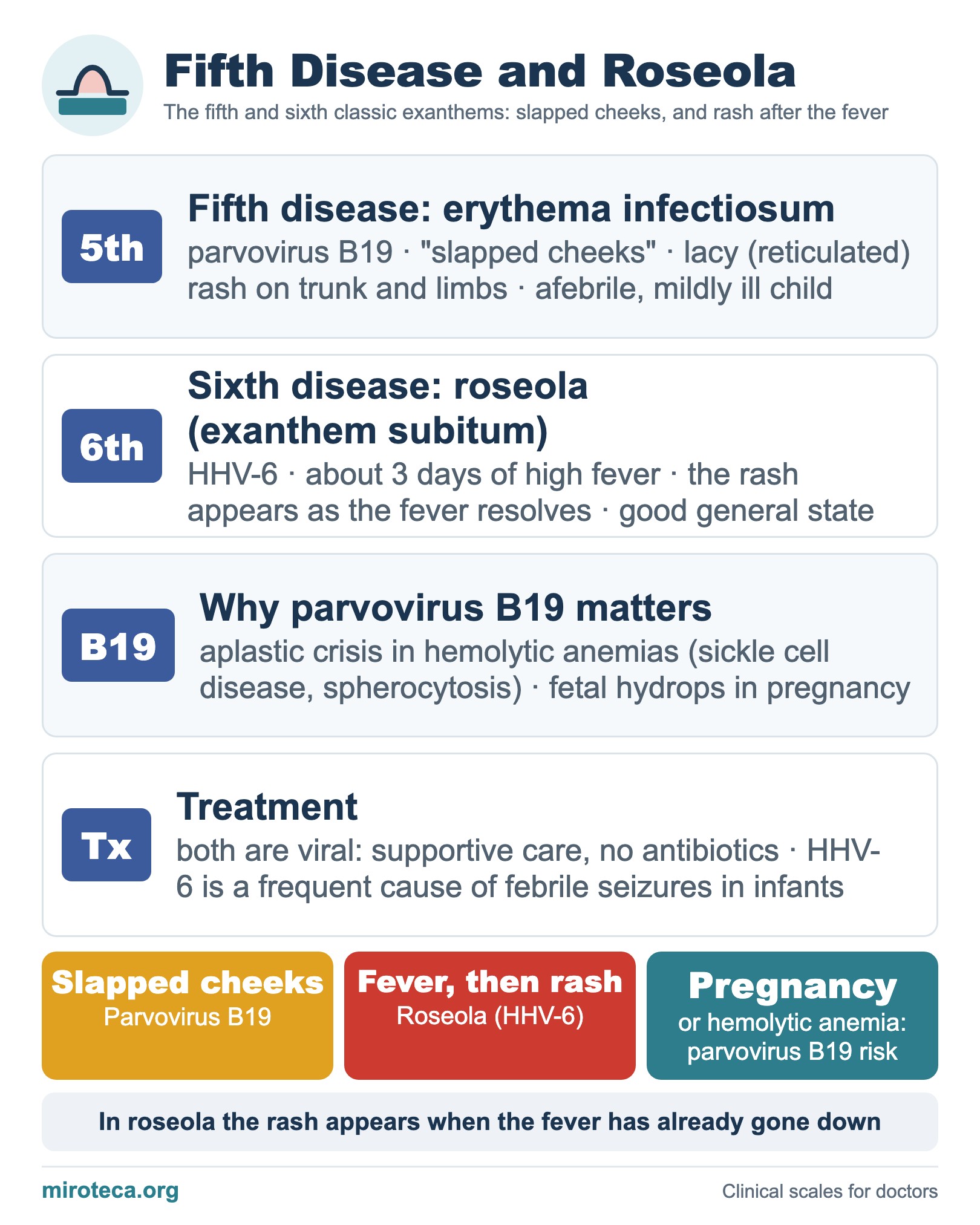
What the chart shows
The series closes with erythema infectiosum and exanthem subitum, two very typical pictures of infants and preschool children with very recognizable clues. The other pairs are first and second and third and fourth.
The detail that settles it
The fifth disease is erythema infectiosum, or megalerythema (parvovirus B19): "slapped" cheeks and a reticulated, "lacy" rash on the trunk and limbs, with the child already afebrile and mildly ill. The sixth disease is exanthem subitum or roseola (human herpesvirus 6): about three days of high fever in an infant with a good general state and, just when the fever ends, the rash appears.
Parvovirus B19 is dangerous in two settings: aplastic crisis in hemolytic anemias (sickle cell disease, spherocytosis) and fetal hydrops if it infects a pregnant woman. See also hemoglobin.
In exam questions
Short rules: slapped cheeks mean parvovirus B19; in roseola first comes the fever and, when it eases, the rash. HHV-6 is a frequent cause of febrile seizures in infants because of the high fever before the rash. Both are viral: treatment is supportive, without antibiotics.
Keep practicing
This page is the visual summary. To test yourself with real clinical reasoning, Medicinedle, a Wordle-inspired game, gives you one clinical case a day: guess the diagnosis in six tries, with a new clue after every miss. It is free and available in English.