
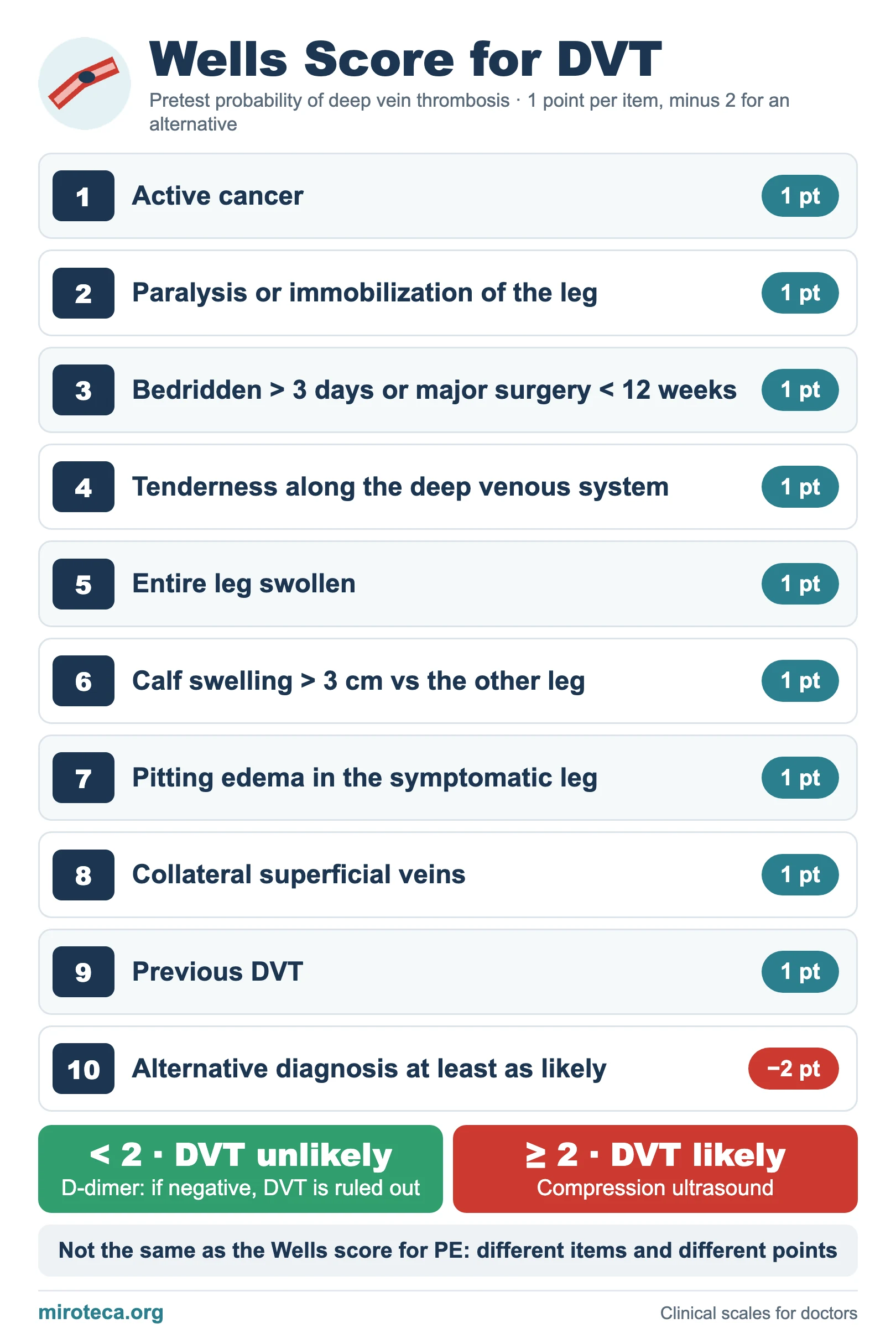
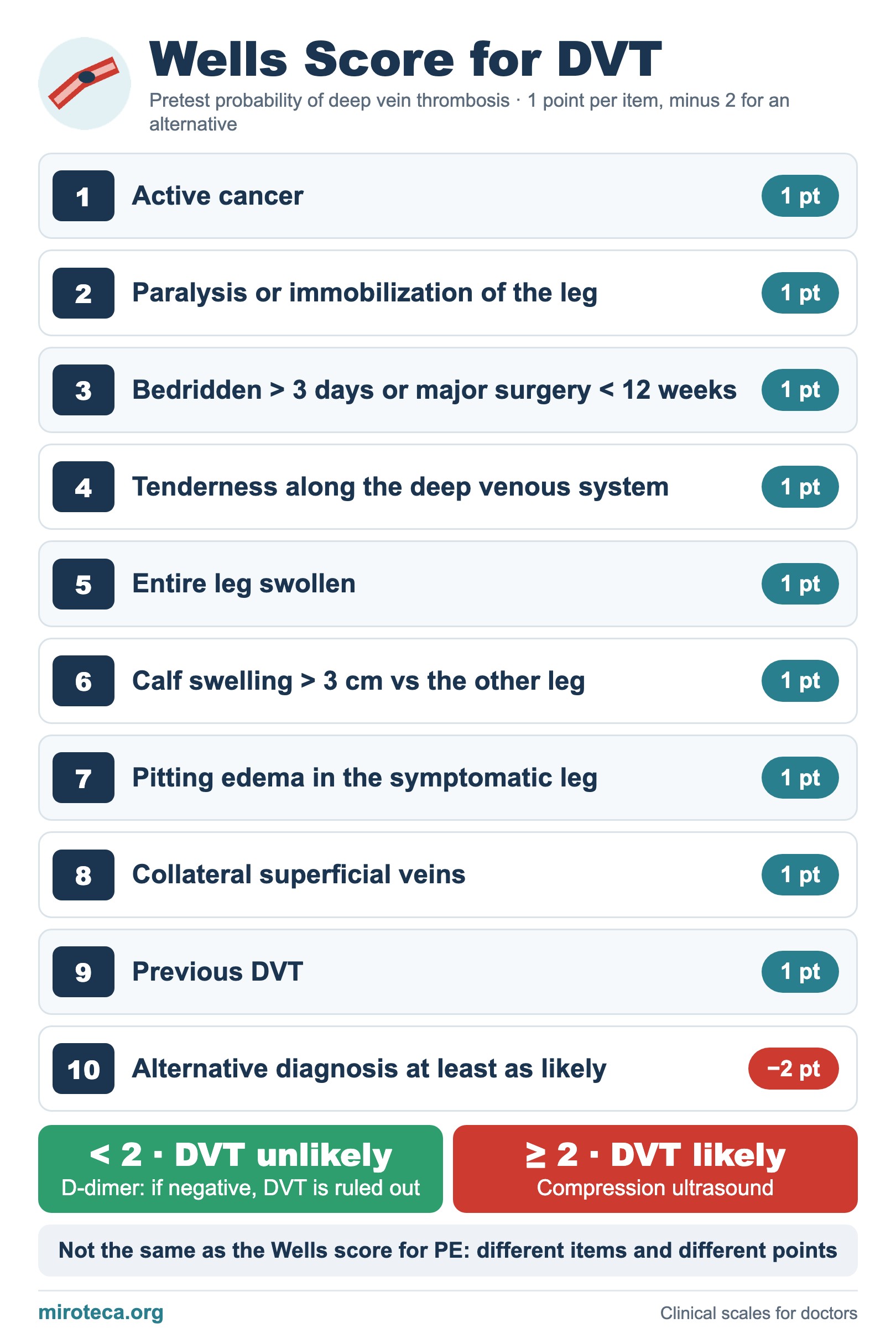
What the diagram shows
The Wells score for DVT estimates the probability of deep vein thrombosis in the leg. Each of nine findings adds 1 point, and an equally or more likely alternative diagnosis subtracts 2.
The cut-off is 2: from 2 points DVT is likely, below 2 it is unlikely.
The detail that settles it
With low probability, a negative D-dimer is enough to rule out DVT. If DVT is likely, the next step is an ultrasound.
Common mistakes
Forgetting to subtract 2 points when another diagnosis explains the picture as well or better.
Mixing it up with the Wells score for PE, which has other items and other points.
In exam questions
Questions usually describe a swollen leg with a few risk factors and ask for the next test. Count the points, remember the −2, and choose D-dimer below 2 and ultrasound from 2.
Keep practicing
This page is the visual summary. To test yourself with real clinical reasoning, Medicinedle, a Wordle-inspired game, gives you one clinical case a day: guess the diagnosis in six tries, with a new clue after every miss. It is free and available in English.