
What the chart shows
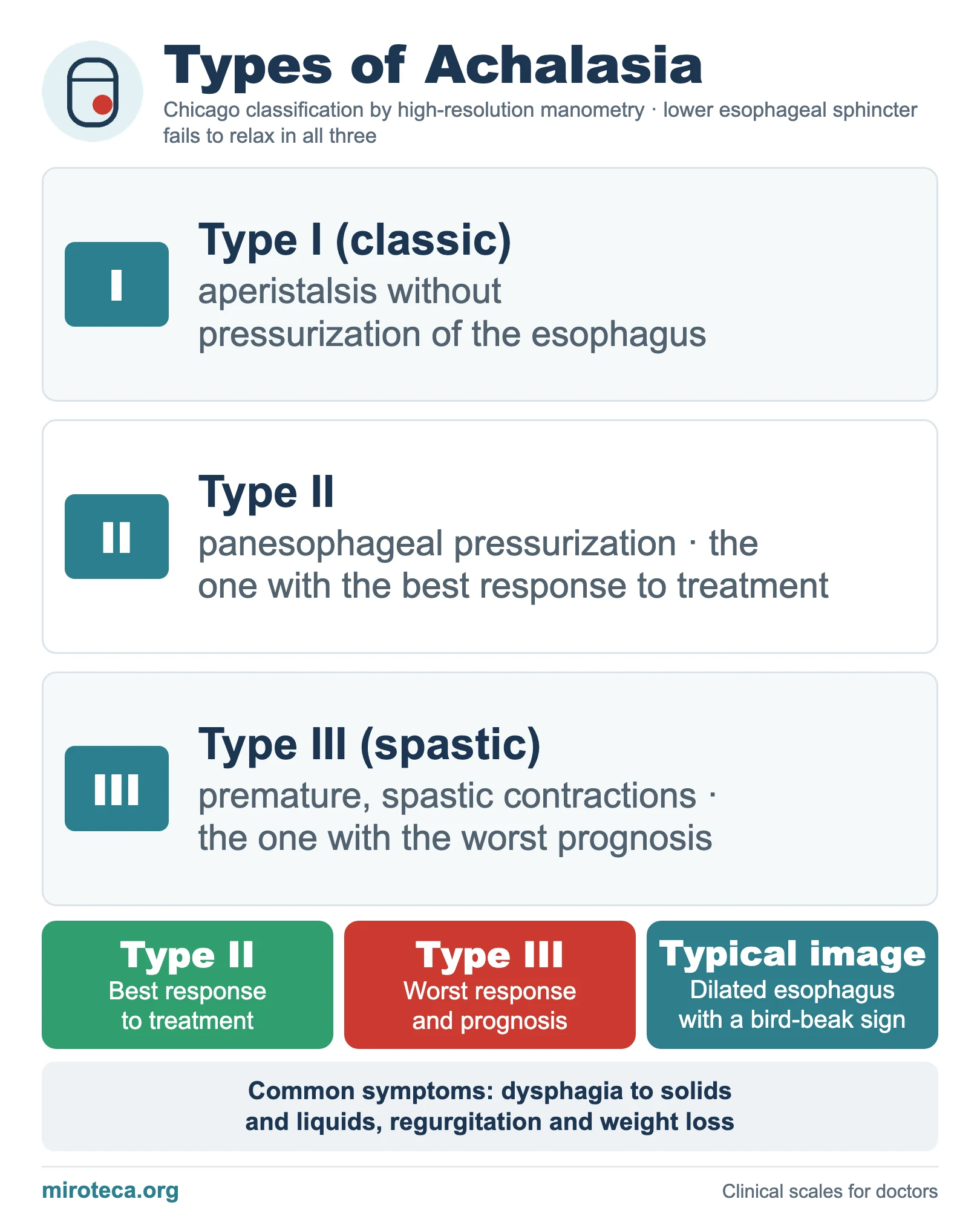
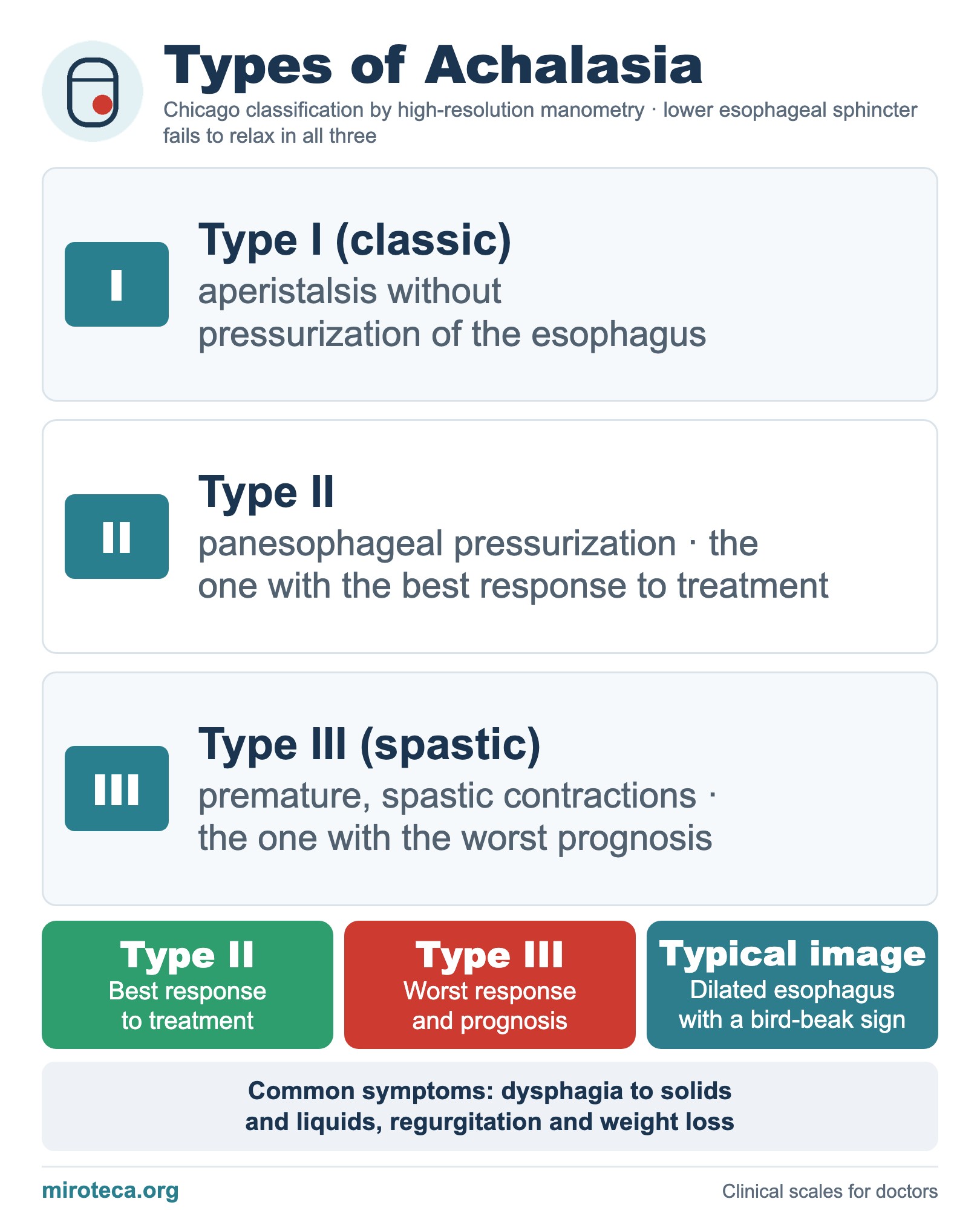
Achalasia is divided into three types (Chicago classification, by high-resolution manometry), which helps to predict the response to treatment. The chart gives the manometric pattern of each type and what it means for the outcome.
The detail that settles it
In all three, relaxation of the lower esophageal sphincter fails. Type I (classic) has aperistalsis without pressurization; type II (with panesophageal pressurization) has the best prognosis and the best response to treatment; type III (spastic) has premature contractions and the worst response. The common clinical picture is dysphagia to solids and liquids, regurgitation and weight loss.
The typical image is a dilated esophagus with a "bird-beak" appearance.
In exam questions
The two points that are asked are the extremes: type II is the one that responds best to treatment, and type III (spastic) is the one with the worst prognosis.
Keep practicing
This page is the visual summary. To test yourself with real clinical reasoning, Medicinedle, a Wordle-inspired game, gives you one clinical case a day: guess the diagnosis in six tries, with a new clue after every miss. It is free and available in English.