
What the chart shows
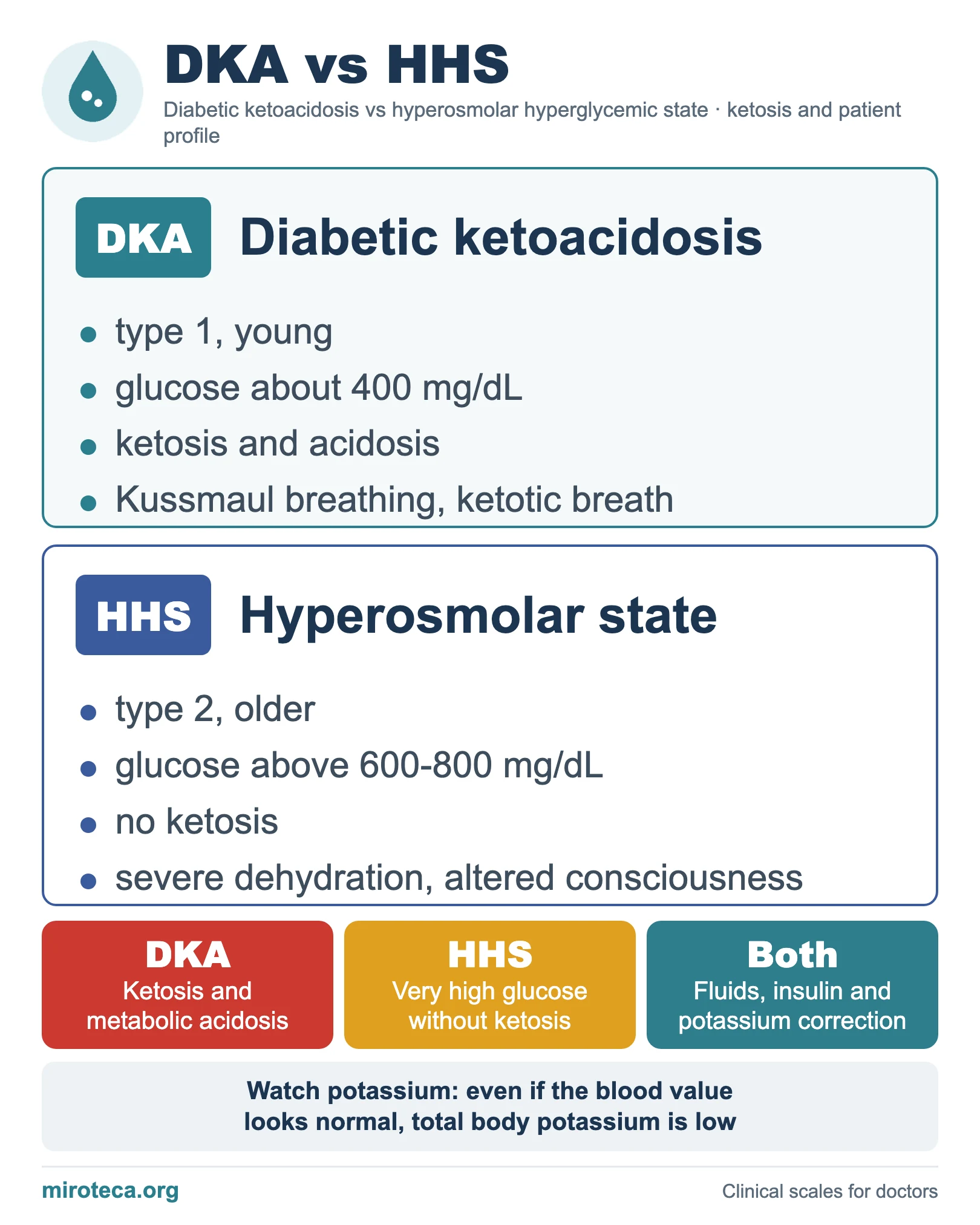
Two emergencies of diabetes that are told apart by the presence of ketosis and by the profile of the patient: diabetic ketoacidosis (DKA) and the hyperosmolar hyperglycemic state (HHS).
The detail that settles it
DKA is typical of type 1 diabetes, with moderately high glucose, ketosis and metabolic acidosis, Kussmaul breathing and ketotic breath. HHS is typical of the older person with type 2 diabetes, with very high glucose (often above 600 mg/dL), no significant ketosis, intense dehydration and an altered level of consciousness.
Both are treated with fluid therapy, insulin and correction of potassium. Watch potassium: even if it looks "normal" in the blood, total body potassium is low.
In exam questions
The question gives a patient and a glucose value and asks which emergency it is: ketosis and acidosis in a young person with type 1 diabetes is DKA; very high glucose without ketosis in an older person with type 2 diabetes is HHS. See also glucose and arterial blood gas interpretation.
Keep practicing
This page is the visual summary. To test yourself with real clinical reasoning, Medicinedle, a Wordle-inspired game, gives you one clinical case a day: guess the diagnosis in six tries, with a new clue after every miss. It is free and available in English.