
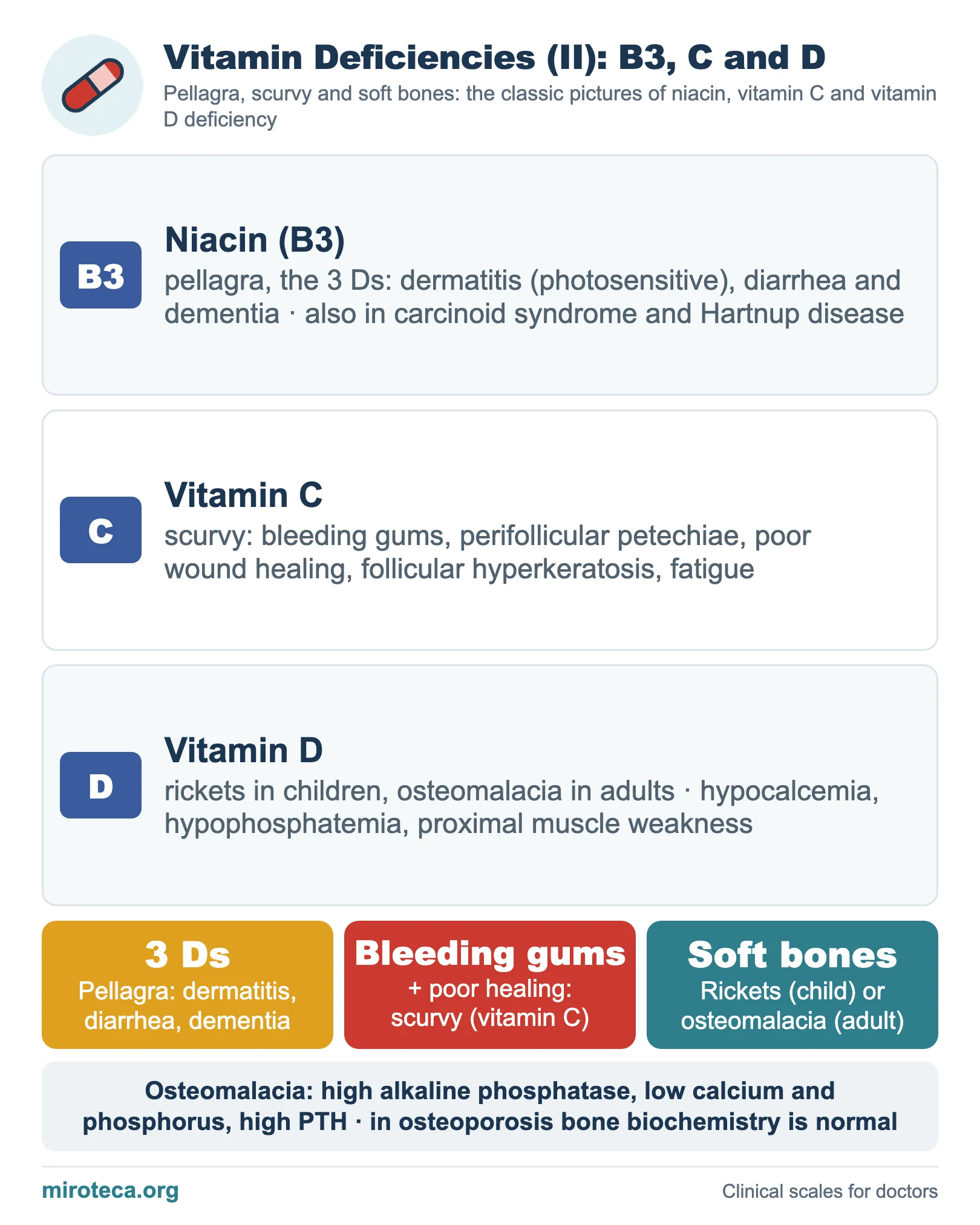
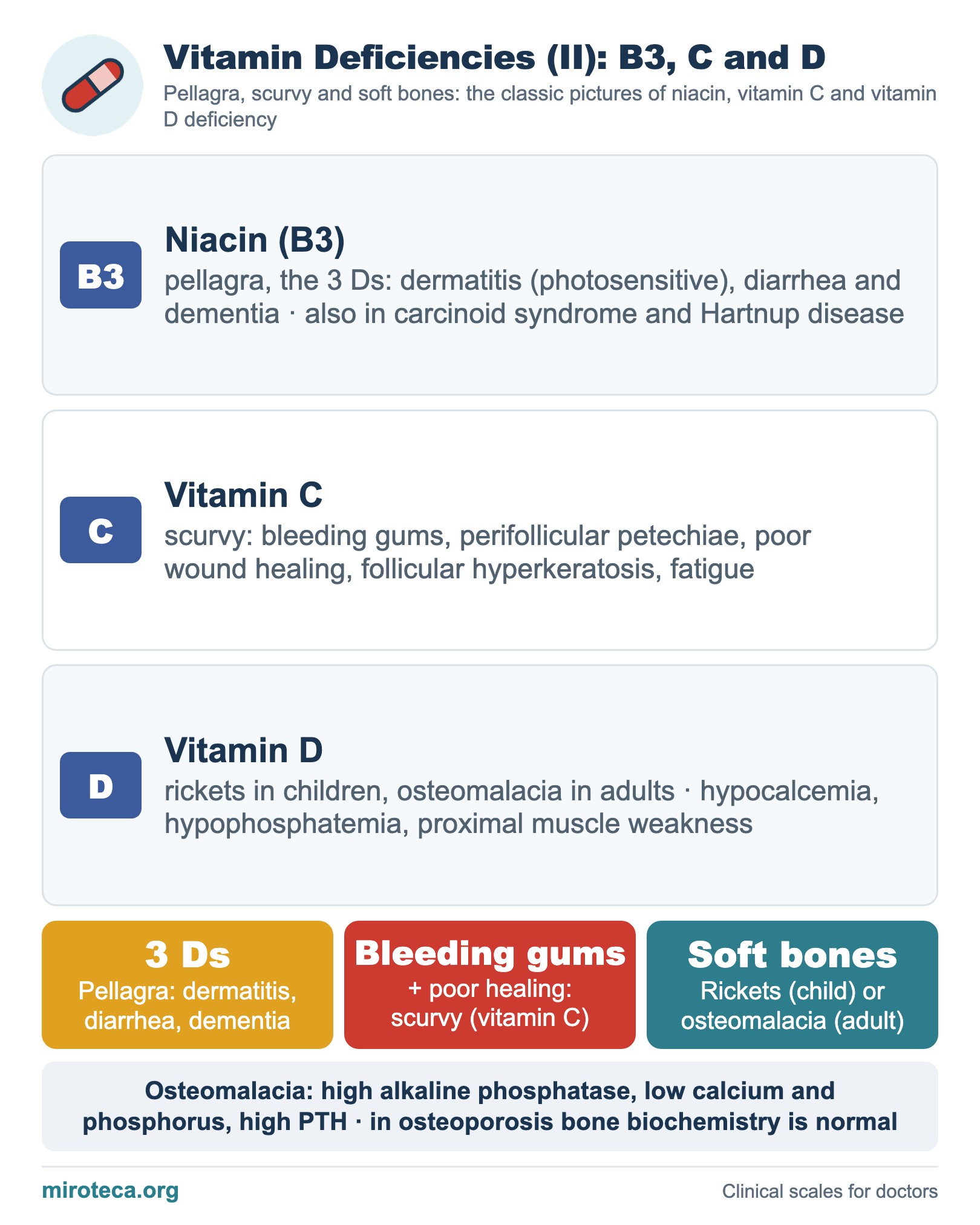
What the chart shows
The second part of the classic vitamin deficiencies covers niacin (B3), vitamin C and vitamin D. The most profitable memory aid is the "3 Ds" of pellagra. The first part is vitamins A, K and B1.
The detail that settles it
Niacin deficiency produces pellagra with photosensitive dermatitis, diarrhea and dementia; it also appears in carcinoid syndrome (which consumes tryptophan) and in Hartnup disease. Vitamin C deficiency causes scurvy: bleeding gums, perifollicular petechiae, poor wound healing, follicular hyperkeratosis and fatigue. Vitamin D deficiency gives rickets in children and osteomalacia in adults, with hypocalcemia, hypophosphatemia and proximal muscle weakness.
Mind the labs in osteomalacia: high alkaline phosphatase, low calcium and phosphorus, and high PTH (secondary hyperparathyroidism), unlike osteoporosis, where bone biochemistry is normal. See alkaline phosphatase and calcium.
In exam questions
Short rules: the 3 Ds (dermatitis, diarrhea, dementia) mean pellagra; bleeding gums with poor wound healing mean scurvy (vitamin C); soft bones mean rickets in the child and osteomalacia in the adult.
Keep practicing
This page is the visual summary. To test yourself with real clinical reasoning, Medicinedle, a Wordle-inspired game, gives you one clinical case a day: guess the diagnosis in six tries, with a new clue after every miss. It is free and available in English.