
What the chart shows
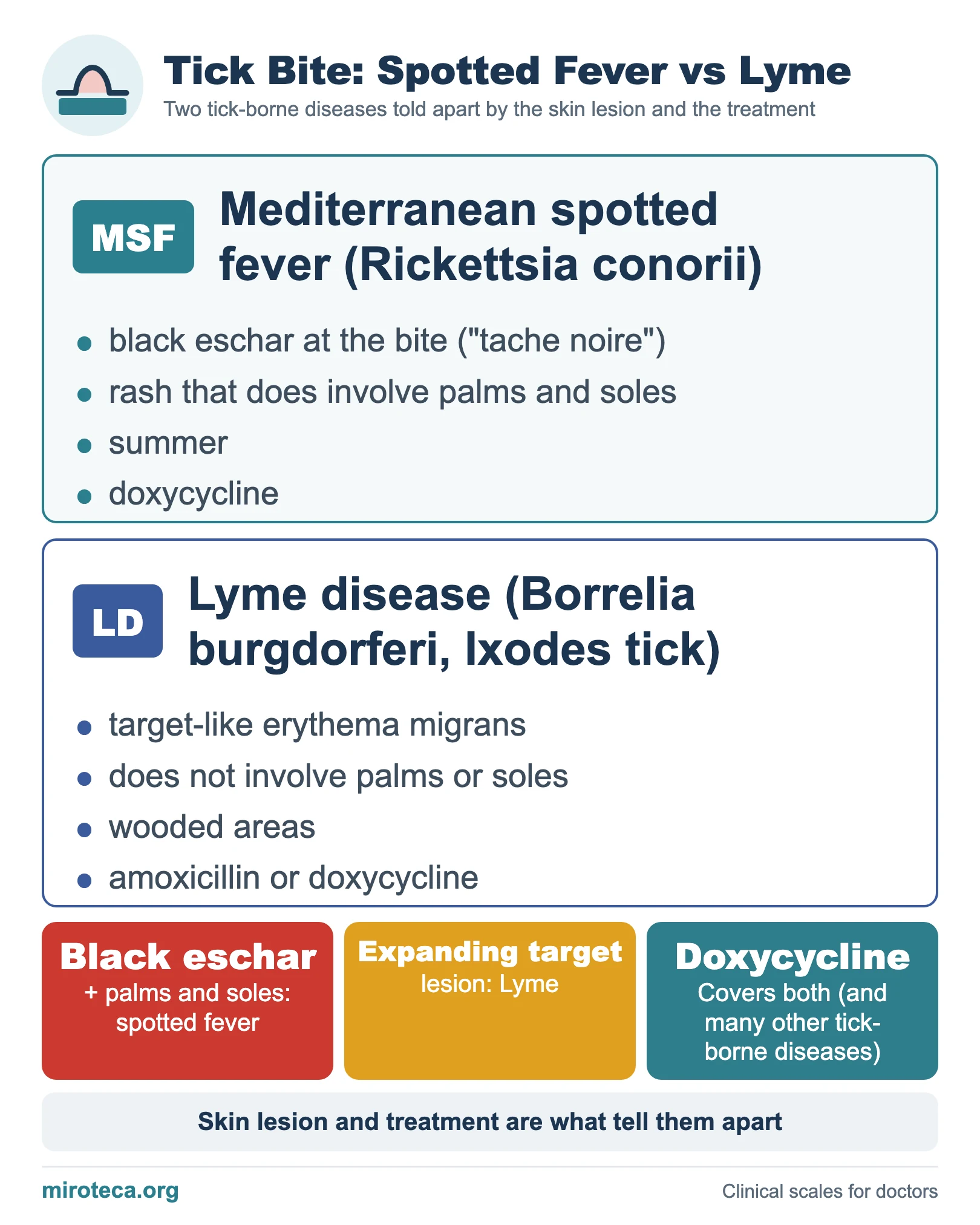
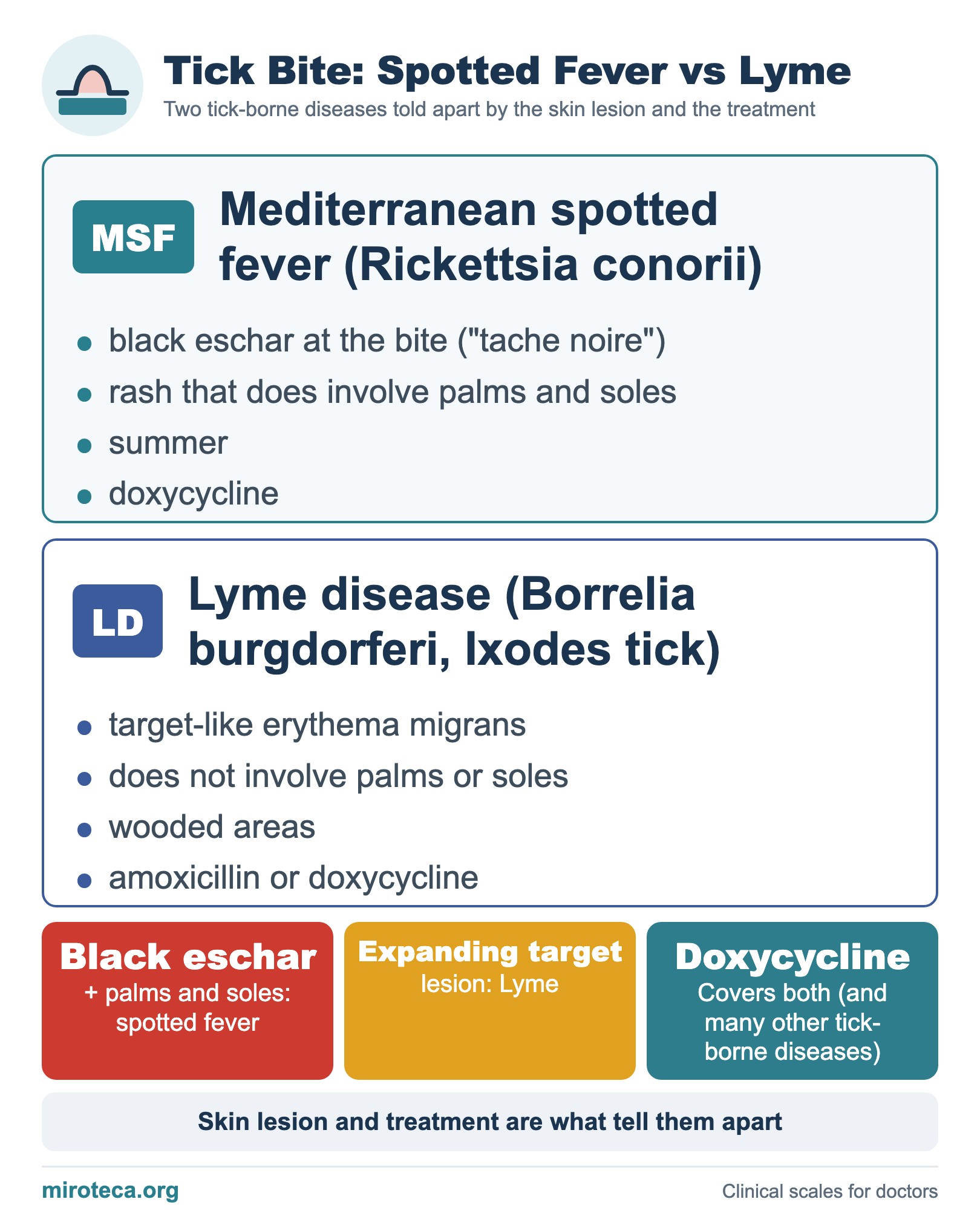
Two diseases transmitted by ticks that are told apart by the skin lesion and the treatment. Mediterranean spotted fever is the Mediterranean rickettsiosis; Lyme disease is the one caused by Borrelia.
The detail that settles it
Mediterranean spotted fever (Rickettsia conorii) leaves a black eschar at the bite site and a rash that does involve the palms and soles; it is treated with doxycycline. Lyme disease (Borrelia burgdorferi, Ixodes tick) produces target-like erythema migrans, which does not involve palms or soles; treatment is doxycycline or amoxicillin.
In exam questions
Short rules: black eschar plus palms and soles means spotted fever; an expanding target-like lesion means Lyme; doxycycline covers both.
Keep practicing
This page is the visual summary. To test yourself with real clinical reasoning, Medicinedle, a Wordle-inspired game, gives you one clinical case a day: guess the diagnosis in six tries, with a new clue after every miss. It is free and available in English.