
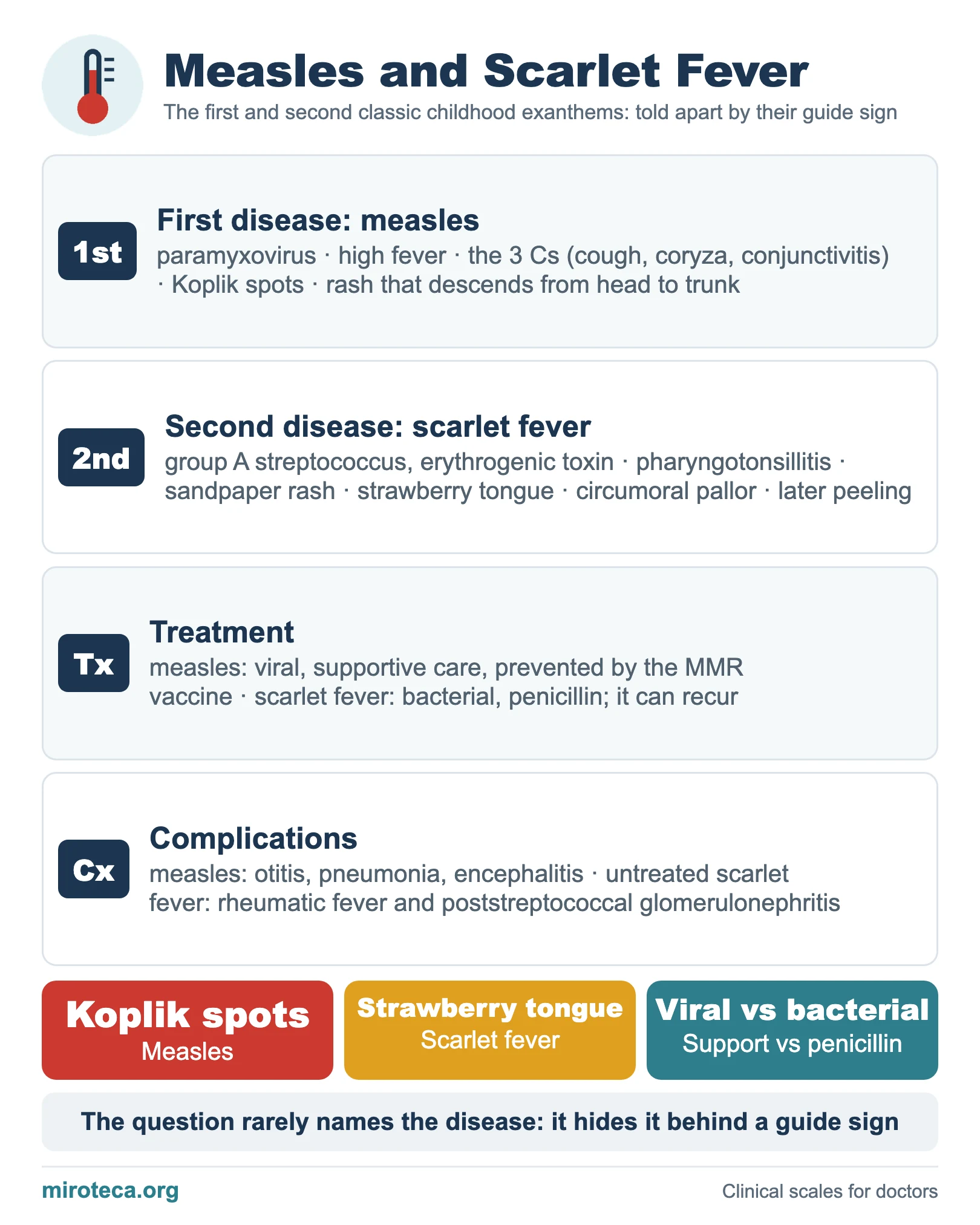
What the chart shows
The classic exanthematous diseases of childhood are numbered from 1 to 6 for historical reasons. Exams ask for the causative agent and, above all, the signs that tell them apart. This chart covers the first two; the others are third and fourth and fifth and sixth.
The detail that settles it
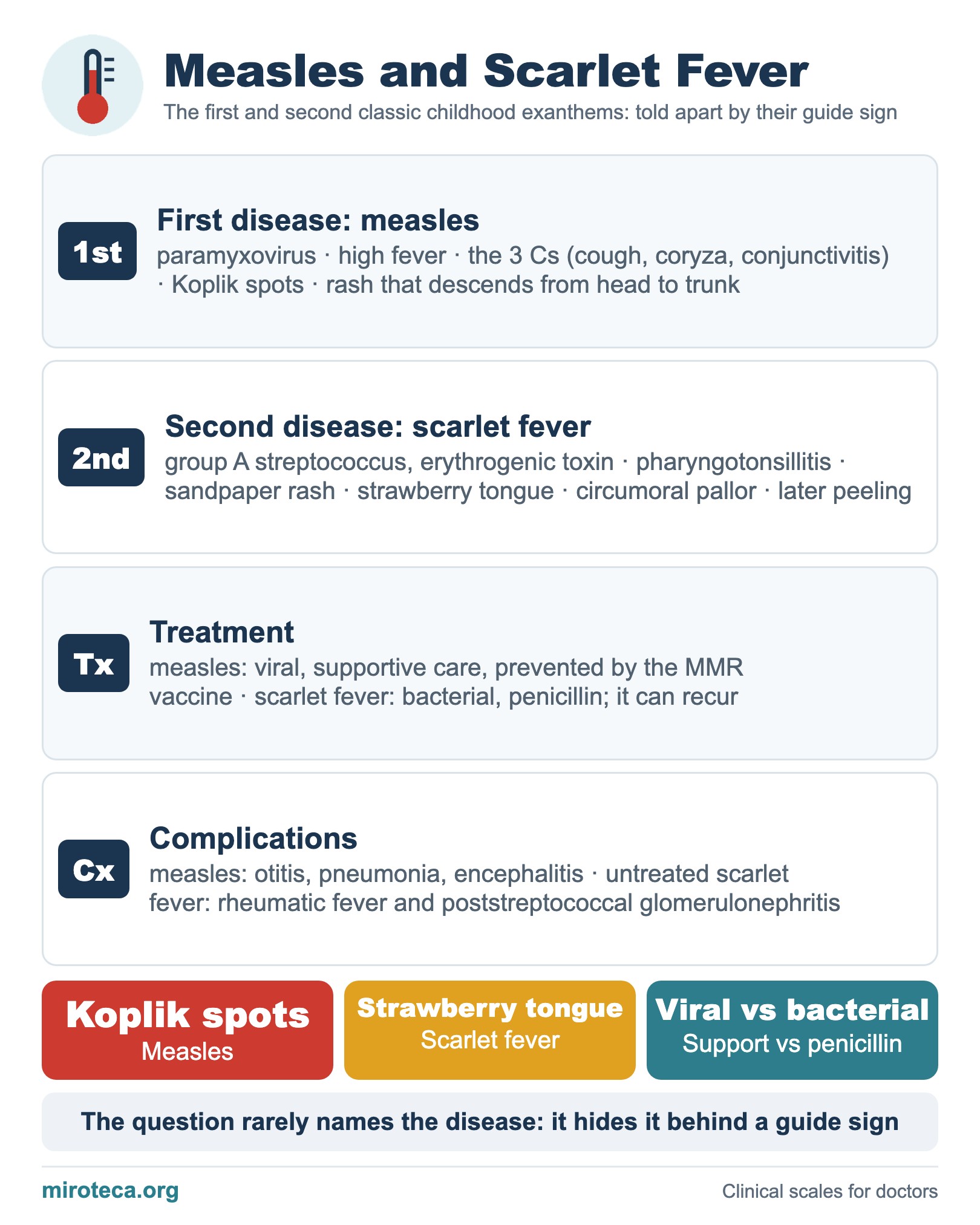
The first disease is measles (a paramyxovirus): high fever, the three Cs (conjunctivitis, coryza and cough), Koplik spots on the oral mucosa (pathognomonic) and a maculopapular rash that descends from the head to the trunk. The second disease is scarlet fever, due to the erythrogenic toxin of Streptococcus pyogenes (group A streptococcus): a rough "sandpaper" rash, strawberry tongue, circumoral pallor and later peeling.
Measles is viral (supportive care) and is prevented by the MMR vaccine; scarlet fever is bacterial, is treated with penicillin and can recur.
In exam questions
The question rarely names the disease: it hides it behind a guide sign. Measles can be complicated by otitis, pneumonia and encephalitis; untreated scarlet fever is associated with rheumatic fever and poststreptococcal glomerulonephritis, which is why penicillin is required.
Keep practicing
This page is the visual summary. To test yourself with real clinical reasoning, Medicinedle, a Wordle-inspired game, gives you one clinical case a day: guess the diagnosis in six tries, with a new clue after every miss. It is free and available in English.