
What the chart shows
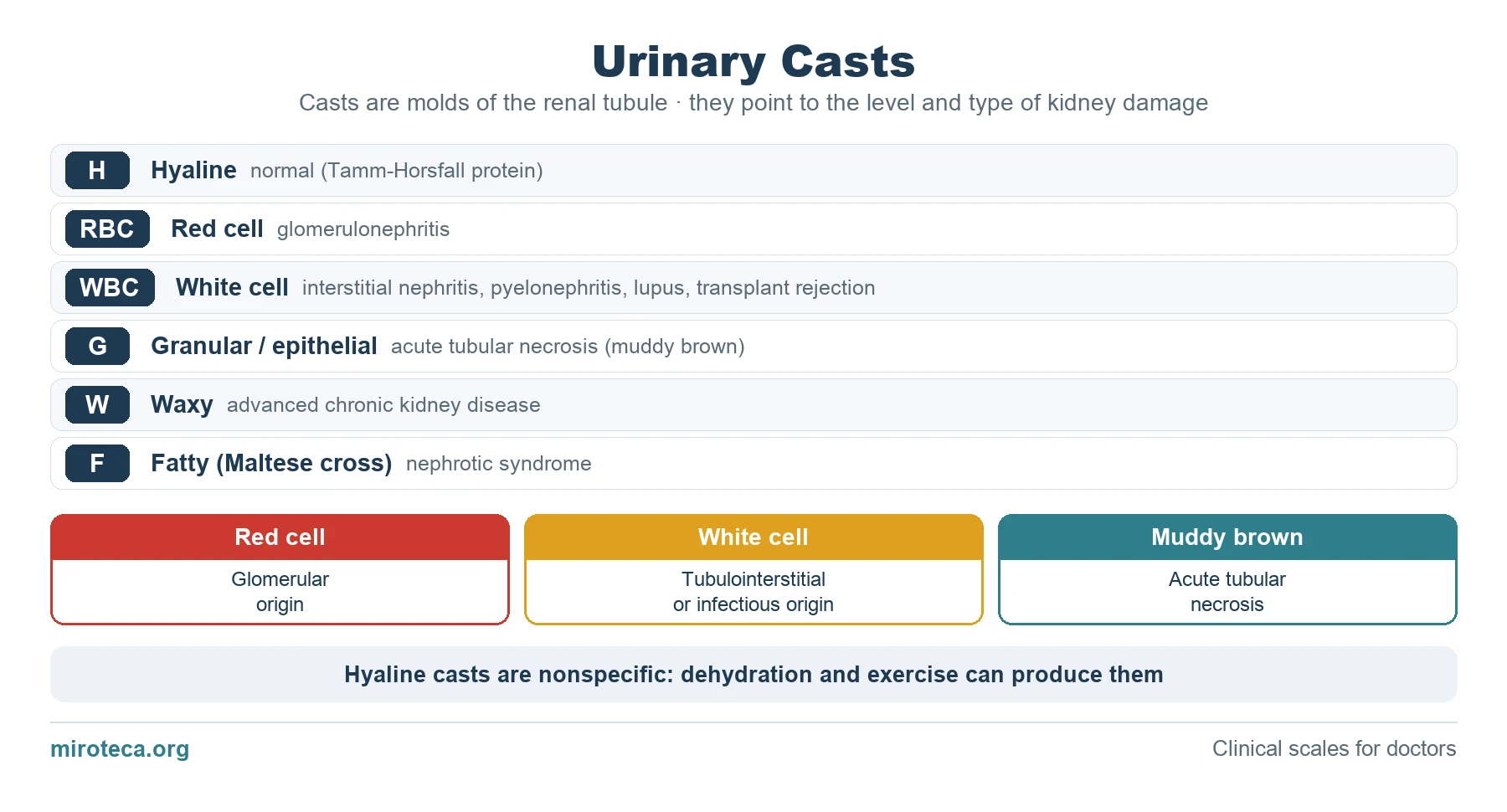
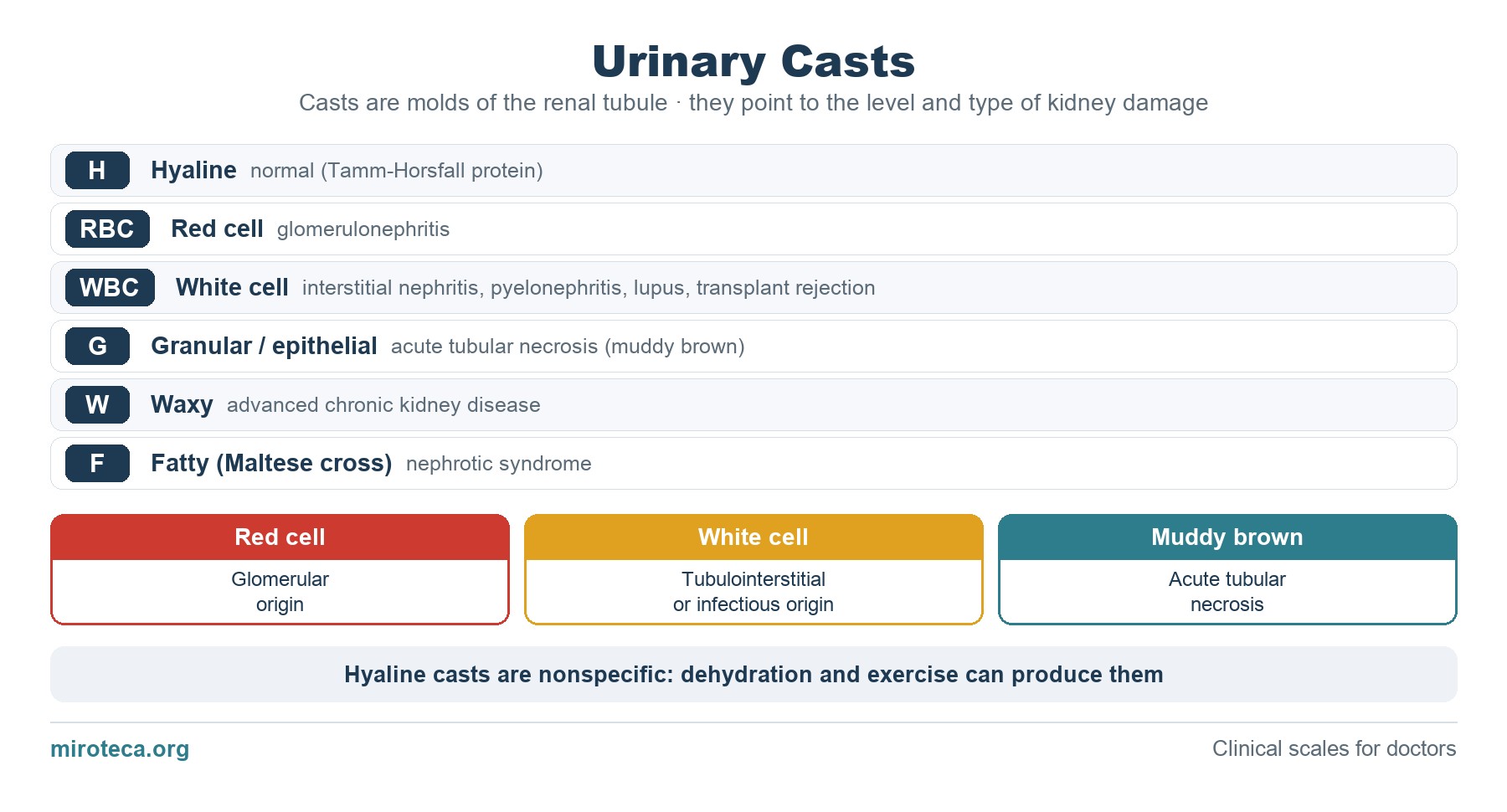
The casts of the urinary sediment are "molds" of the renal tubule and point to the level and type of kidney damage. It is a classic nephrology question. The chart gives one line for each type of cast and the disease it points to.
The detail that settles it
Hyaline casts are nonspecific (dehydration, exercise). Red cell casts indicate glomerulonephritis (glomerular bleeding). White cell casts point to pyelonephritis or interstitial nephritis. Granular "muddy brown" casts are typical of acute tubular necrosis. Waxy and broad casts reflect advanced chronic kidney disease.
Short rules: red cell casts point to a glomerular origin; white cell casts, to a tubulointerstitial or infectious origin; muddy brown granular casts, to acute tubular necrosis.
In exam questions
Questions give a sediment finding and ask for the lesion or the syndrome. Matching the cast to the level of damage (glomerulus, interstitium, tubule) answers most of them.
Keep practicing
This page is the visual summary. To test yourself with real clinical reasoning, Medicinedle, a Wordle-inspired game, gives you one clinical case a day: guess the diagnosis in six tries, with a new clue after every miss. It is free and available in English.