
What the diagram shows
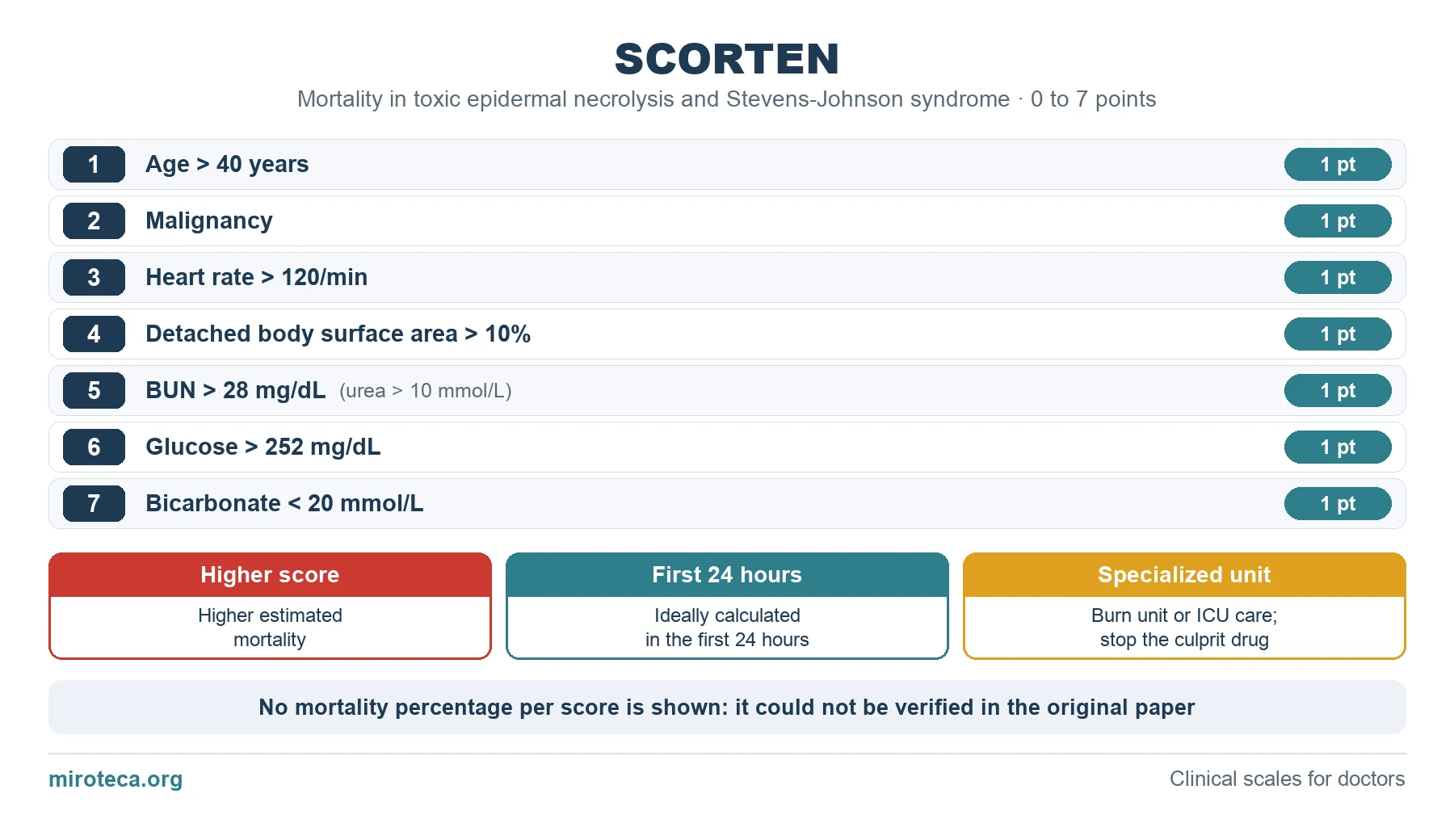
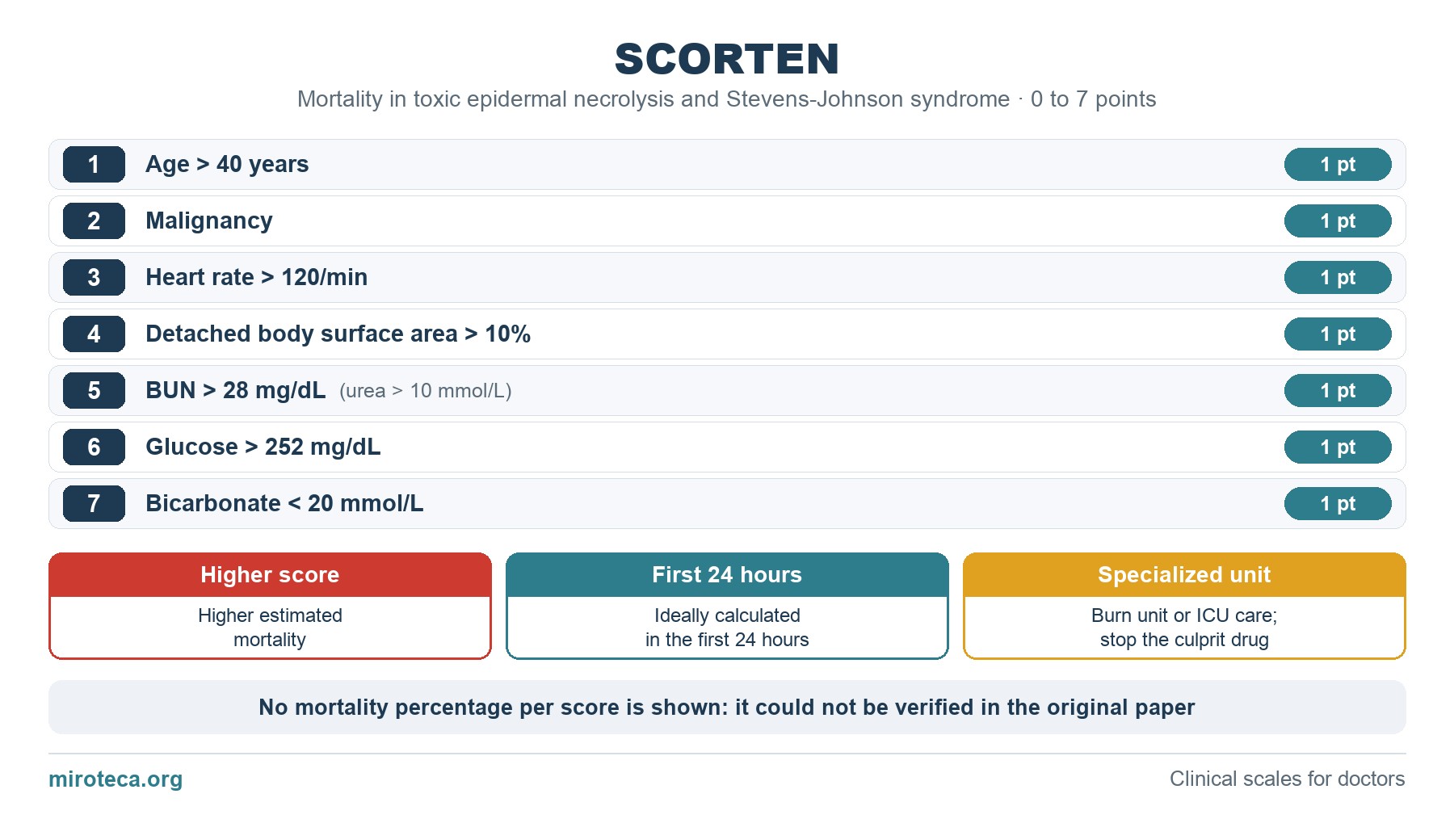
SCORTEN estimates the mortality of patients with toxic epidermal necrolysis (TEN) or Stevens-Johnson syndrome, severe skin reactions that are usually caused by drugs. It adds 1 point for each of seven criteria, from 0 to 7: age over 40, malignancy, heart rate over 120, detached body surface area over 10%, BUN over 28 mg/dL (urea over 10 mmol/L), glucose over 252 mg/dL and bicarbonate below 20 mmol/L.
Where the sources do not agree
Many places give a table that assigns a specific mortality percentage to each score, and it is not shown here. When the source sheet was prepared, that table could not be matched with the original publication (Bastuji-Garin and colleagues, 2000): the abstract gives an odds ratio of 3.45 per point and the overall agreement between expected mortality (19.6%) and observed mortality (20%) in the validation sample, not a percentage per score. Two secondary sources also disagreed on the figure for 3 points.
What is confirmed is the seven criteria and their cut-offs. The exact figures should be taken from the original paper or the local protocol. The BUN cut-off of 28 mg/dL is the same criterion as a urea above 10 mmol/L.
Common mistakes
Underestimating severity by looking only at the skin extent without assessing the rest of the parameters.
In exam questions
The context matters: TEN and Stevens-Johnson syndrome are emergencies managed like a major burn (admission to a specialized unit, fluid and electrolyte support and, above all, stopping the culprit drug as early as possible). A positive Nikolsky sign and epidermal detachment are the clinical clues. The difference between the two is the body surface involved: less than 10% in Stevens-Johnson syndrome and more than 30% in TEN. Common culprit drugs are allopurinol, anticonvulsants and sulfonamides.
Keep practicing
This page is the visual summary. To test yourself with real clinical reasoning, Medicinedle, a Wordle-inspired game, gives you one clinical case a day: guess the diagnosis in six tries, with a new clue after every miss. It is free and available in English.