
What the diagram shows
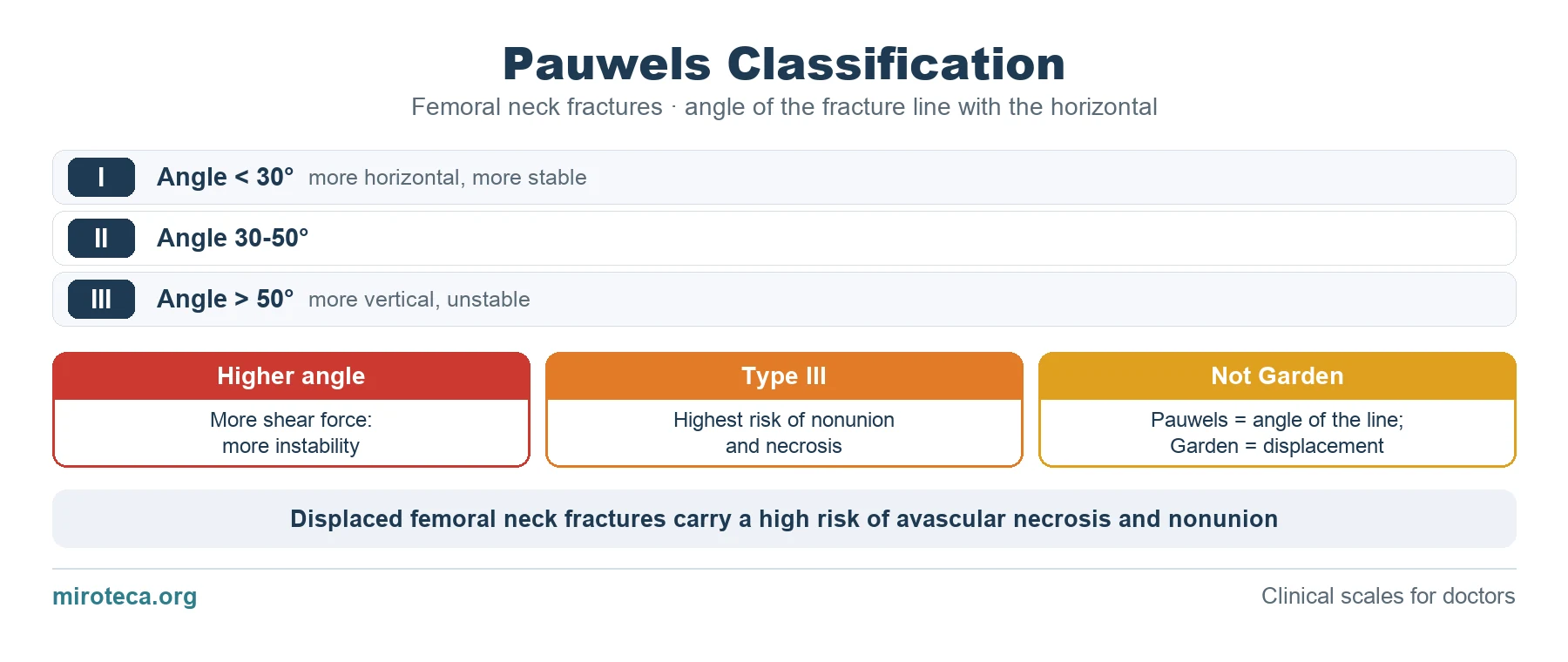
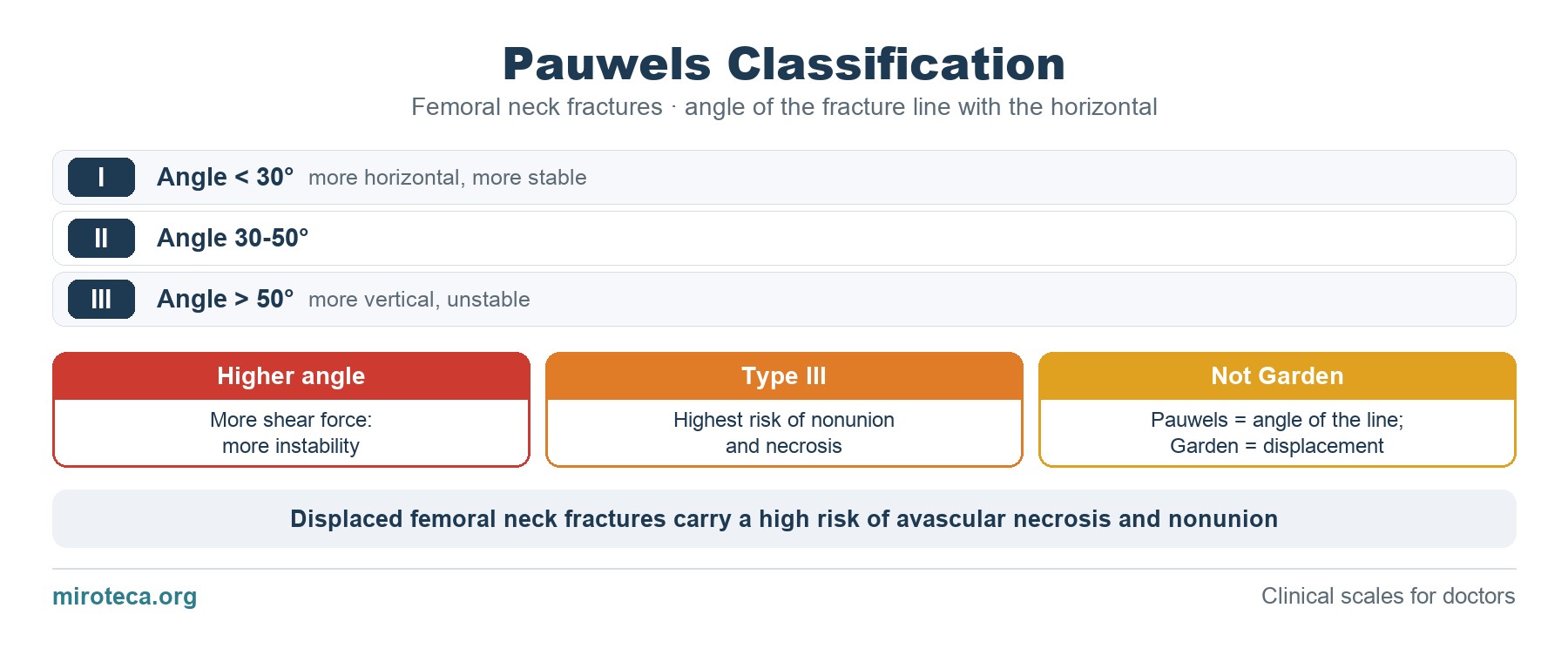
The Pauwels classification grades femoral neck fractures by the angle that the fracture line makes with the horizontal. The more vertical the line, the more shear forces it carries and the more unstable it is.
The angle is measured on the X-ray: type I is below 30°, type II is 30 to 50° and type III is above 50°.
The detail that settles it
A higher angle means greater instability and a higher risk of nonunion and necrosis. Type III, the most vertical, is the most unstable. Displaced femoral neck fractures, especially in older people, have a high risk of avascular necrosis of the femoral head and nonunion because of its precarious blood supply.
Common mistakes
Confusing Pauwels (the angle of the fracture line) with the Garden classification (the degree of displacement).
In exam questions
Questions usually describe an almost vertical fracture line, above 50°: Pauwels III, with a high risk of nonunion. The typical action in an older patient with a displaced fracture is arthroplasty (prosthesis), while in a young patient urgent reduction and fixation are attempted to preserve the head.
Keep practicing
This page is the visual summary. To test yourself with real clinical reasoning, Medicinedle, a Wordle-inspired game, gives you one clinical case a day: guess the diagnosis in six tries, with a new clue after every miss. It is free and available in English.