
What the diagram shows
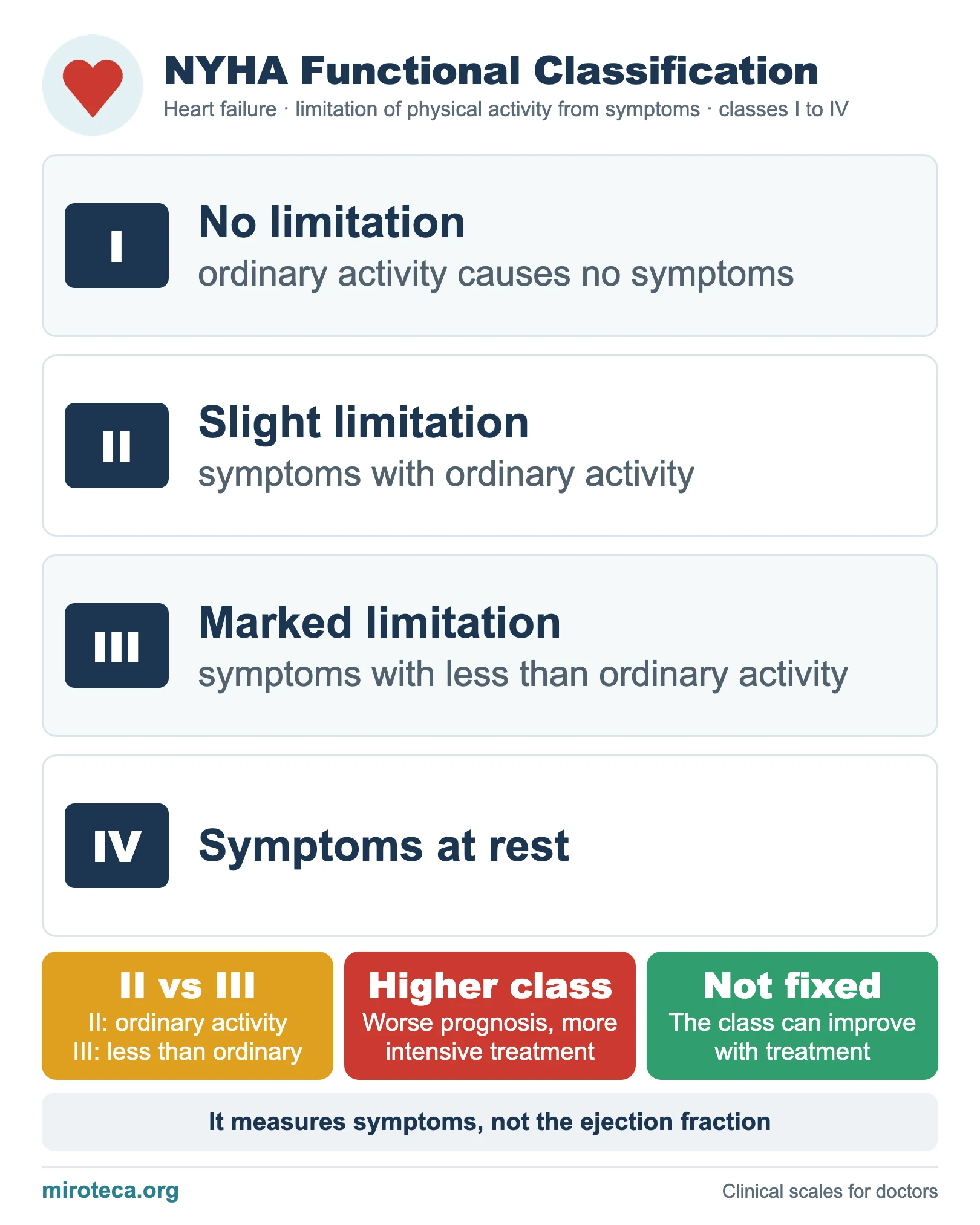
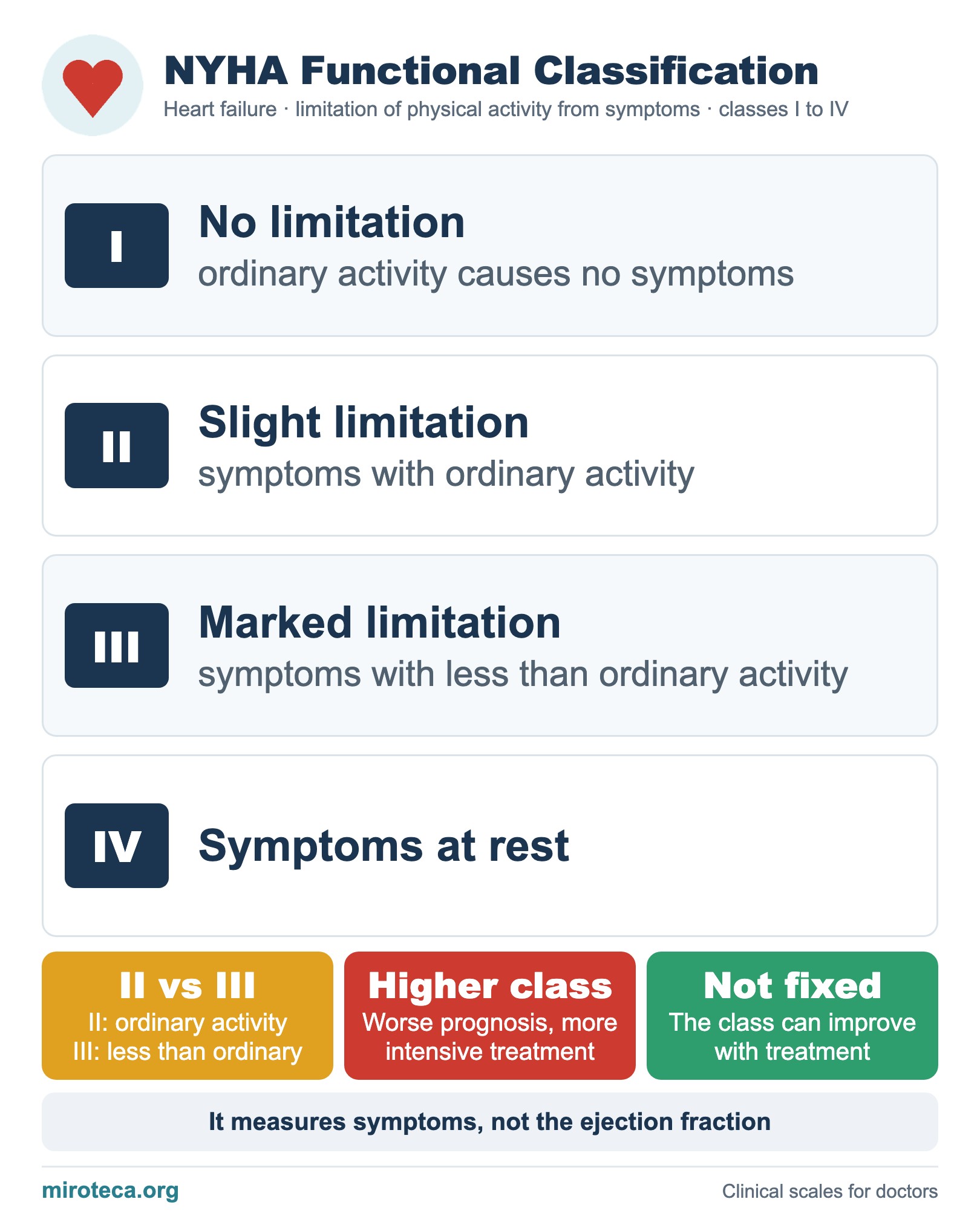
The NYHA classification grades heart failure by how much physical activity the patient tolerates before symptoms appear, from class I to class IV.
The detail that settles it
Although it is subjective, it has great prognostic value and is used to indicate advanced treatments such as devices or transplant. A higher class means a worse prognosis, and the class can improve with treatment.
Common mistakes
Confusing class II (symptoms with ordinary activity) with class III (symptoms with less than ordinary activity).
Using it as if it reflected the ejection fraction: it does not.
In exam questions
Questions usually describe what the patient can and cannot do (climbing stairs, walking to the bathroom, symptoms at rest) and ask for the class.
Keep practicing
This page is the visual summary. To test yourself with real clinical reasoning, Medicinedle, a Wordle-inspired game, gives you one clinical case a day: guess the diagnosis in six tries, with a new clue after every miss. It is free and available in English.