
What the diagram shows
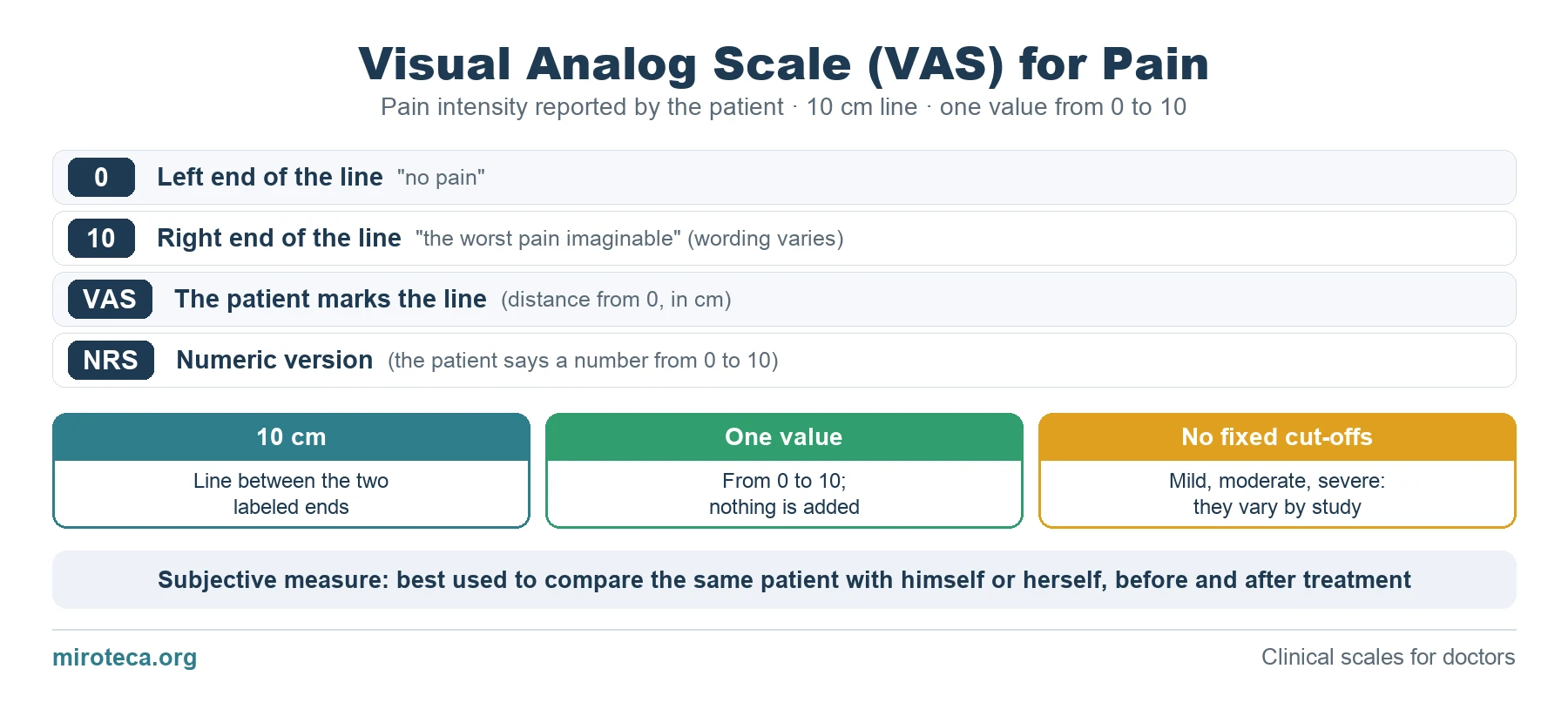
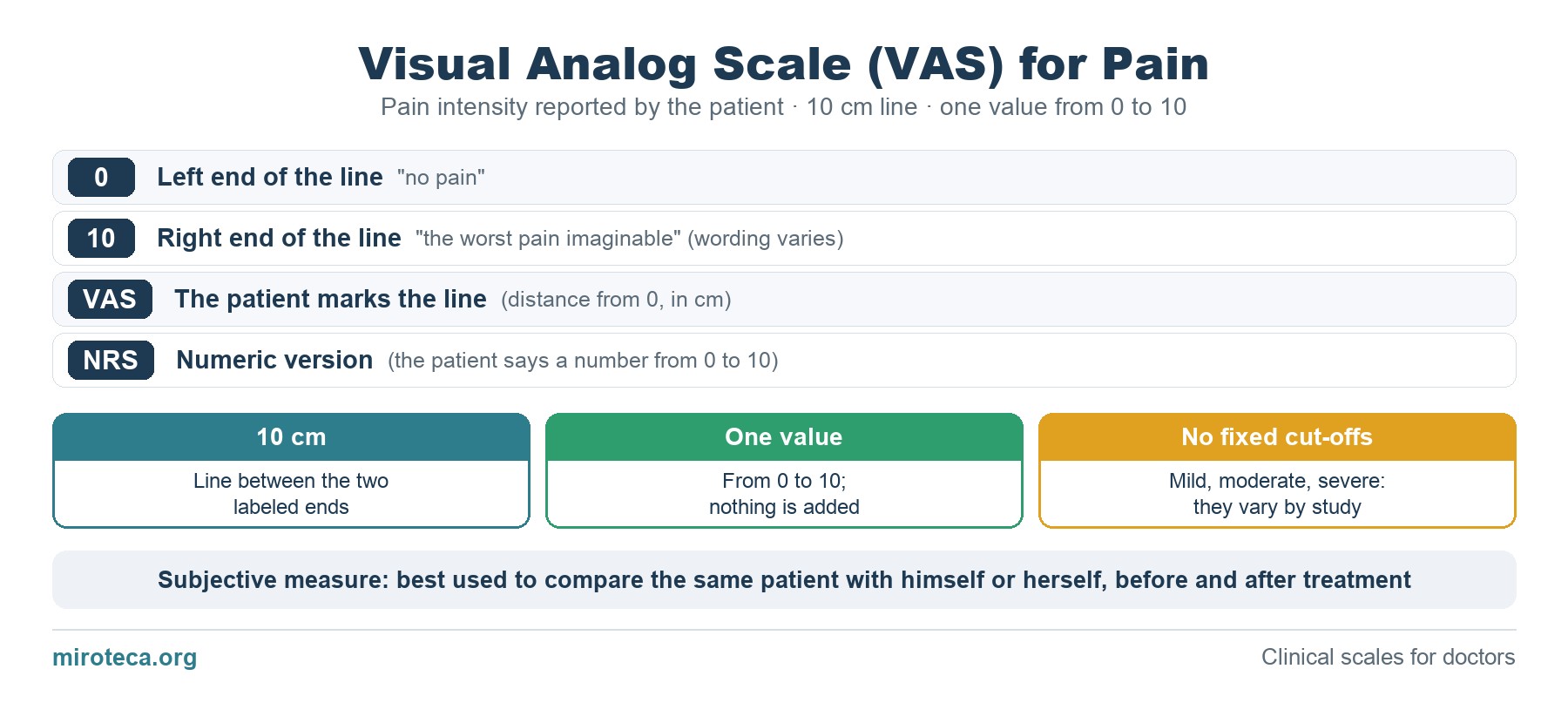
The visual analog scale (VAS) for pain measures the intensity of pain reported by the patient. It is usually a 10 cm line with one end meaning "no pain" and the other "the worst pain imaginable"; the patient marks a point and the distance from the "no pain" end is measured.
Nothing is added: the result is one single value from 0 to 10, in centimeters from the 0 end (or the number the patient says, in the numeric version).
The detail that settles it
A higher value means more pain reported. It is a subjective measure, useful above all to follow the same patient over time and to check the effect of a treatment.
It measures what the patient reports, not an objective finding.
Where sources differ
The scale measures intensity from 0 to 10, but calling a value "mild", "moderate" or "severe" depends on the study. In one study of the VAS in chronic musculoskeletal pain the cut-offs varied with the criterion used, and another study proposed different cut-offs for the numeric scale. The authors of one of the studies noted that translating a VAS score into these categories in clinical practice seems doubtful. This page therefore sets no cut-offs: the criterion of the local protocol or guideline should be used.
Common mistakes
Treating one classification into mild, moderate and severe as the only one, comparing values between different patients as if they were objective, and mixing the centimeter measurement of the VAS with the number a patient says on the numeric scale.
Keep practicing
This page is the visual summary. To test yourself with real clinical reasoning, Medicinedle, a Wordle-inspired game, gives you one clinical case a day: guess the diagnosis in six tries, with a new clue after every miss. It is free and available in English.