
What the diagram shows
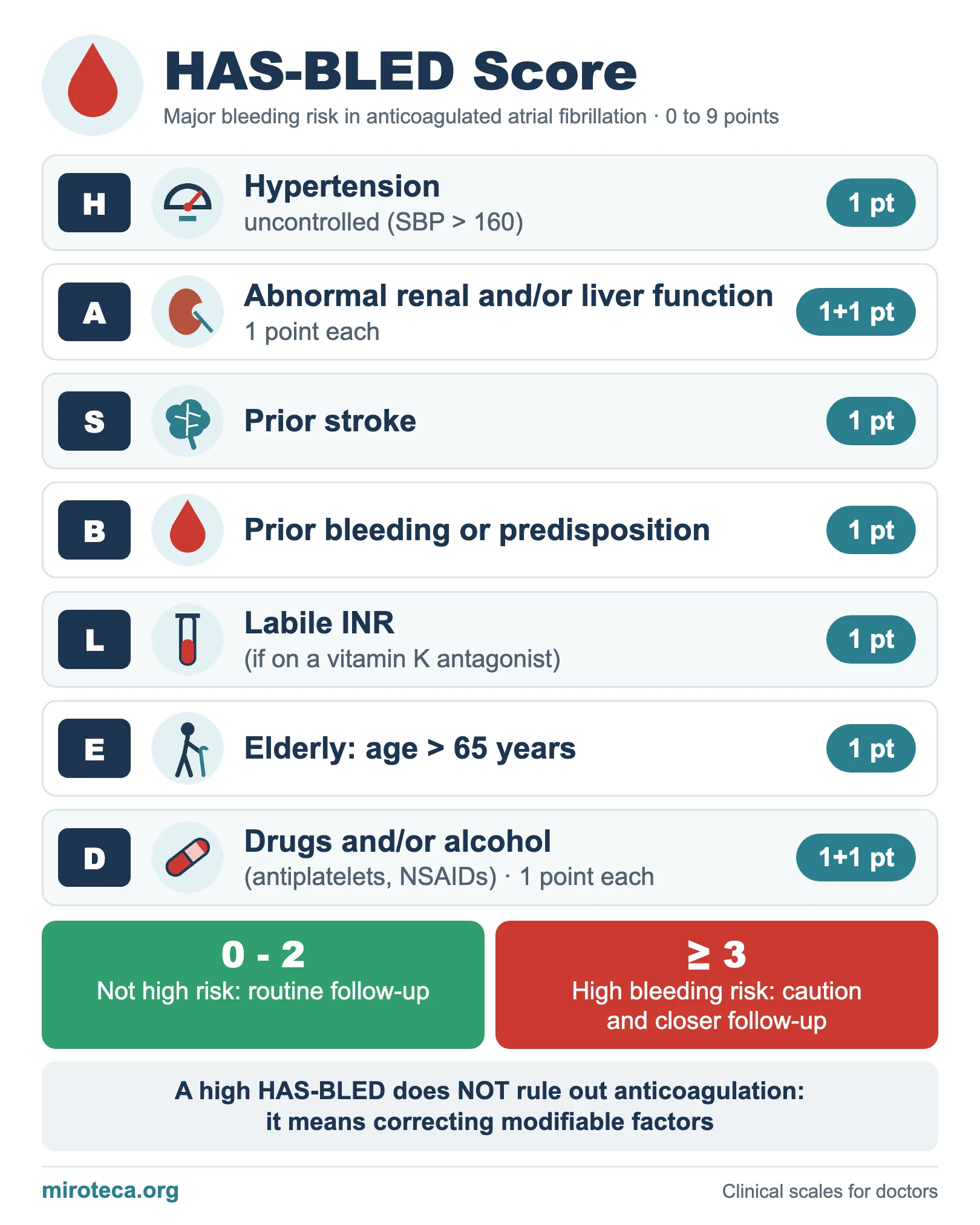
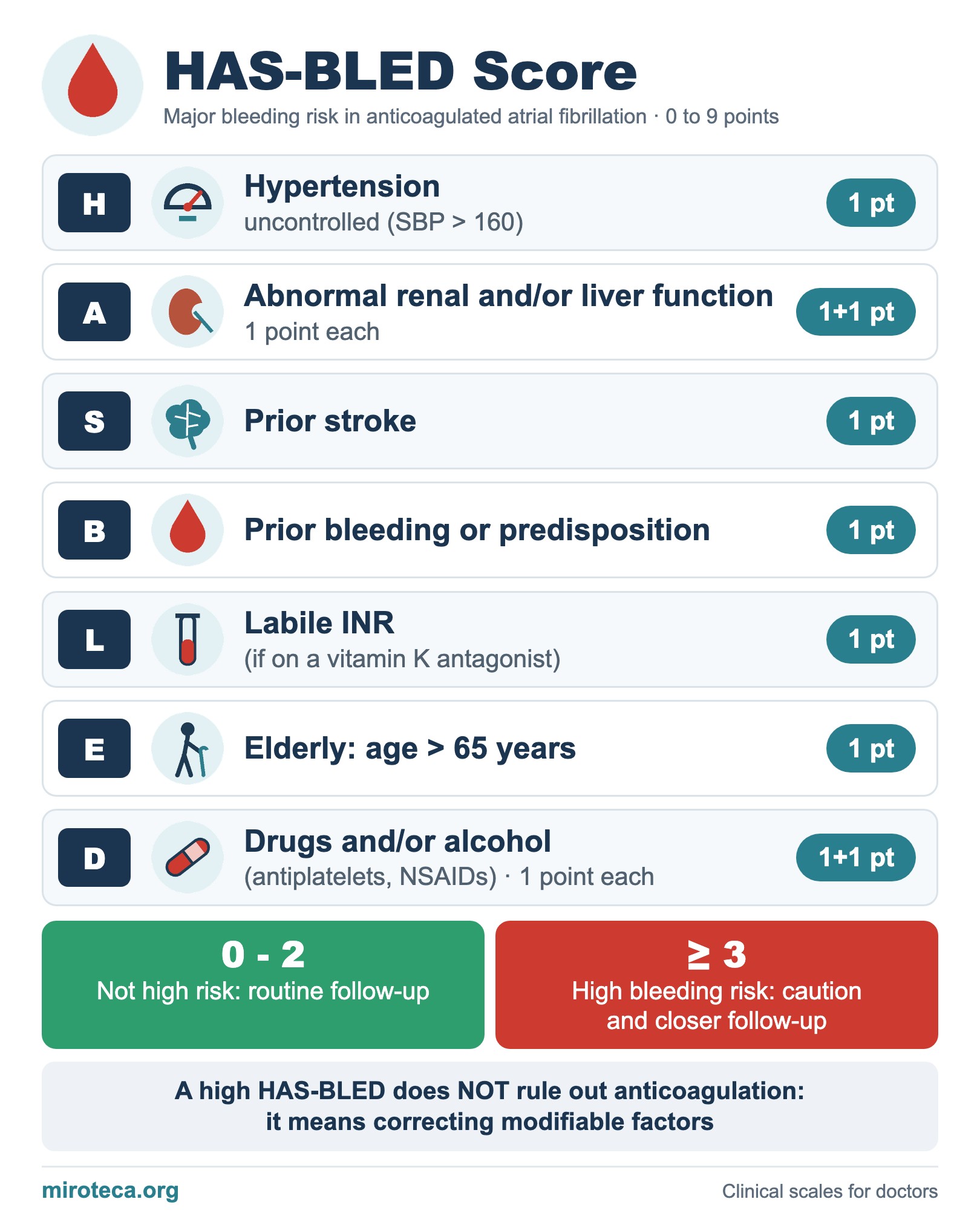
HAS-BLED estimates the risk of major bleeding in anticoagulated atrial fibrillation. It is the partner of CHA₂DS₂-VASc: one measures the reason to anticoagulate, the other its main complication.
Each letter adds 1 point, except A and D, which group two factors each and can add 2. That is why the maximum is 9, even though the word has 7 letters.
The detail that settles it
Several factors can be corrected: poorly controlled blood pressure, labile INR, antiplatelets or NSAIDs, and alcohol. That is the practical value of the score, beyond the final number.
Common mistakes
The classic mistake is stopping anticoagulation because the score is ≥ 3. The score does not say that: it calls for caution, closer follow-up and action on what can be modified.
It is also easy to forget that H is not any hypertension but uncontrolled hypertension, with systolic pressure above 160 mmHg.
Keep practicing
This page is the visual summary. To test yourself with real clinical reasoning, Medicinedle, a Wordle-inspired game, gives you one clinical case a day: guess the diagnosis in six tries, with a new clue after every miss. It is free and available in English.