
What the chart shows
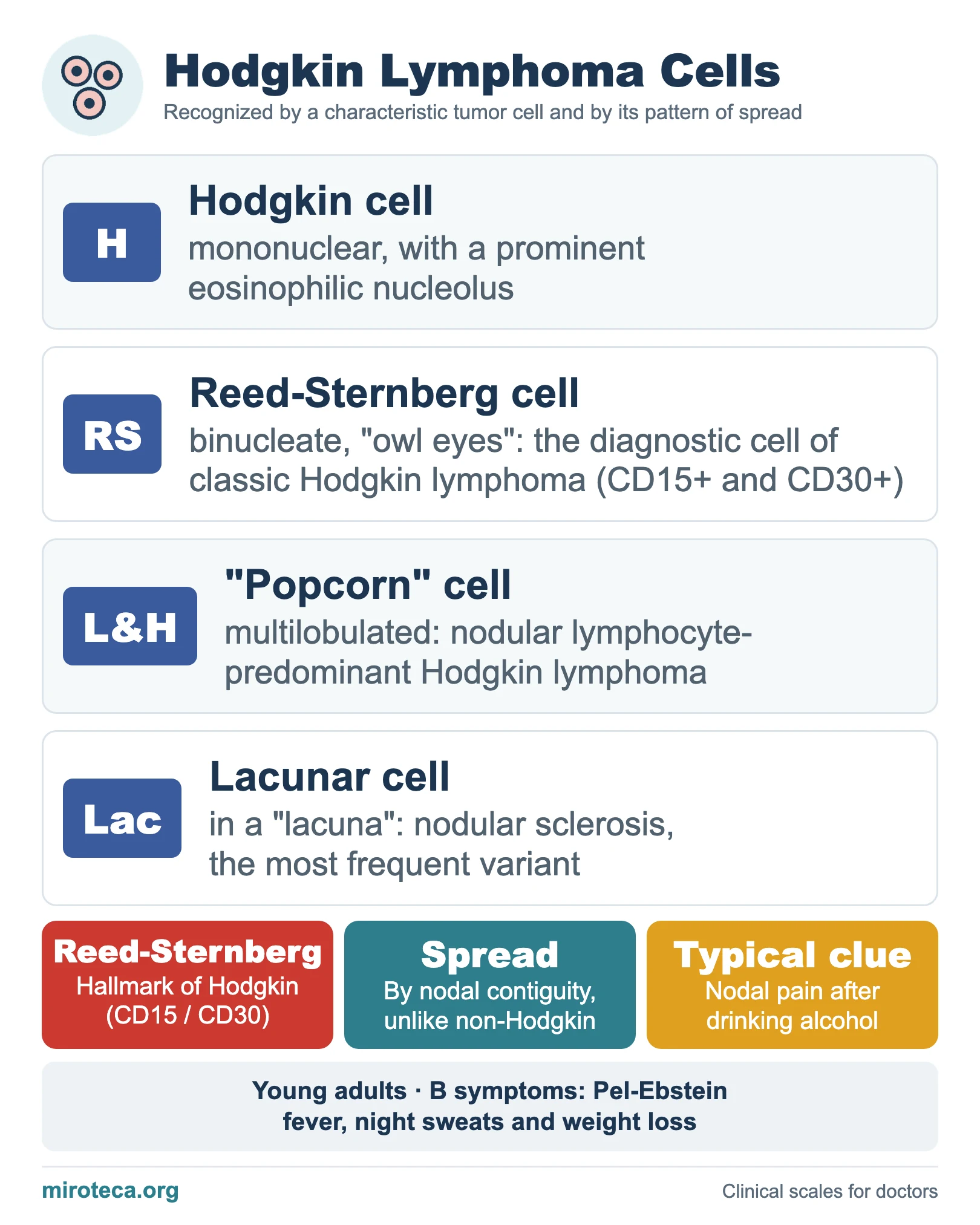
Hodgkin lymphoma is recognized by a characteristic tumor cell and by its pattern of spread, which differs from non-Hodgkin lymphoma. The chart shows the four cells and the subtype each one points to.
The detail that settles it
The diagnostic cell is the Reed-Sternberg cell ("owl eyes", CD15+ and CD30+). Hodgkin lymphoma spreads in an orderly way by nodal contiguity, predominates in young adults, and comes with B symptoms (Pel-Ebstein fever, night sweats, weight loss) and sometimes nodal pain after alcohol. The most frequent subtype is nodular sclerosis. See the Ann Arbor staging.
In exam questions
Short rules: Reed-Sternberg is the hallmark of Hodgkin (CD15 and CD30); it spreads by contiguity, unlike non-Hodgkin; and nodal pain after drinking alcohol is a very typical finding.
Keep practicing
This page is the visual summary. To test yourself with real clinical reasoning, Medicinedle, a Wordle-inspired game, gives you one clinical case a day: guess the diagnosis in six tries, with a new clue after every miss. It is free and available in English.