
What the chart shows
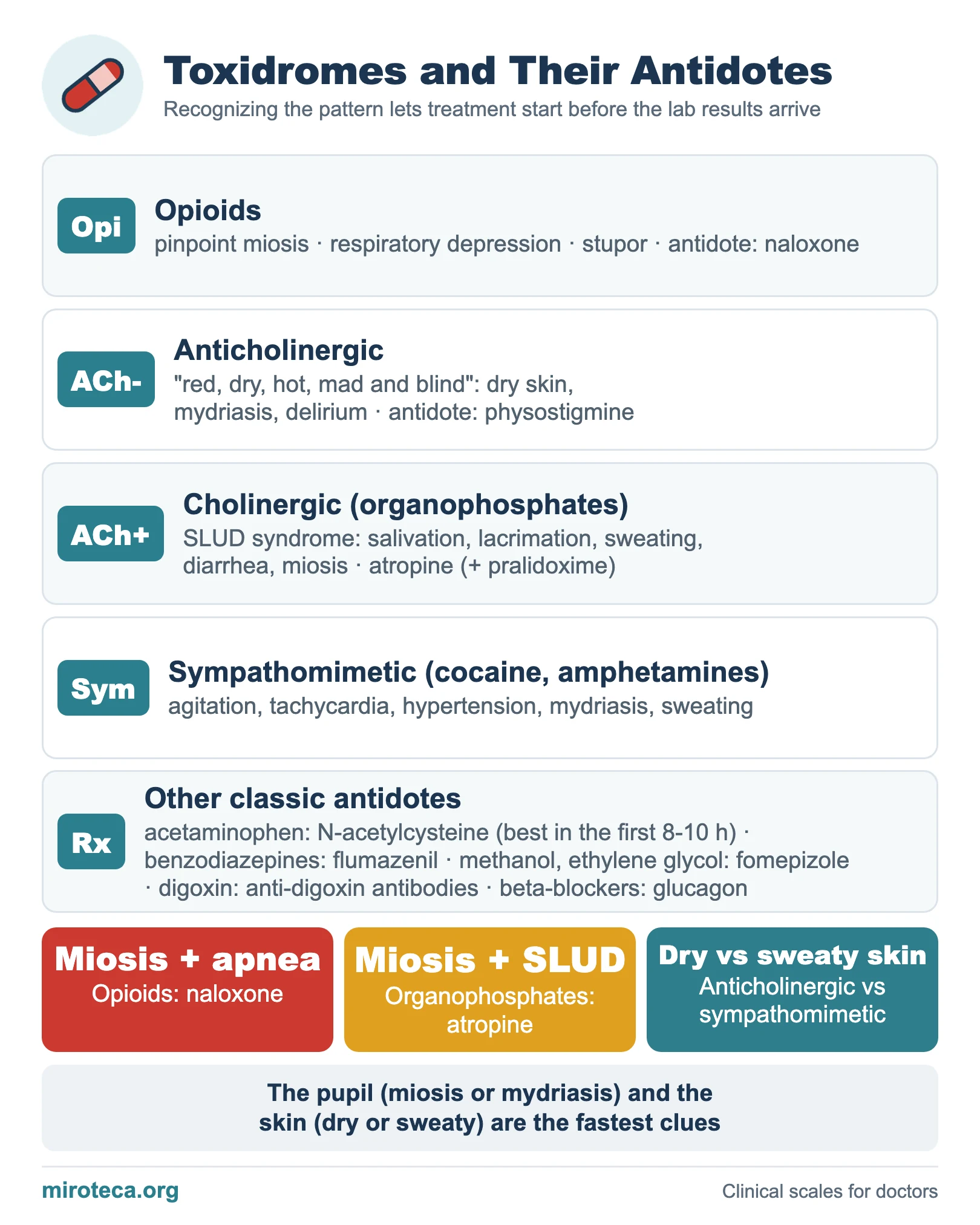
A toxidrome is the set of signs typical of a group of toxic agents. Recognizing it makes it possible to treat before the lab results arrive, and each one has its antidote. The chart sets out the four main patterns and the classic antidotes.
The detail that settles it
Opioids give pinpoint miosis and respiratory depression, treated with naloxone. The anticholinergic picture is "red, dry, hot, mad and blind" (mydriasis), with physostigmine as the antidote. The cholinergic picture from organophosphates is the SLUD syndrome with miosis, treated with atropine plus pralidoxime. The sympathomimetic picture (cocaine, amphetamines) shows agitation, hypertension, mydriasis and sweating.
Other classic antidotes: acetaminophen, N-acetylcysteine (best in the first 8-10 hours); benzodiazepines, flumazenil; methanol and ethylene glycol, fomepizole; digoxin, anti-digoxin antibodies; beta-blockers, glucagon. The difference between anticholinergic and sympathomimetic lies in the skin: dry in the first, sweaty in the second.
In exam questions
Short rules: miosis with apnea means opioids and naloxone; SLUD with miosis means organophosphates and atropine; acetaminophen means N-acetylcysteine. The pupil (miosis or mydriasis) and the skin (dry or sweaty) are the fastest clues.
Keep practicing
This page is the visual summary. To test yourself with real clinical reasoning, Medicinedle, a Wordle-inspired game, gives you one clinical case a day: guess the diagnosis in six tries, with a new clue after every miss. It is free and available in English.