
What the diagram shows
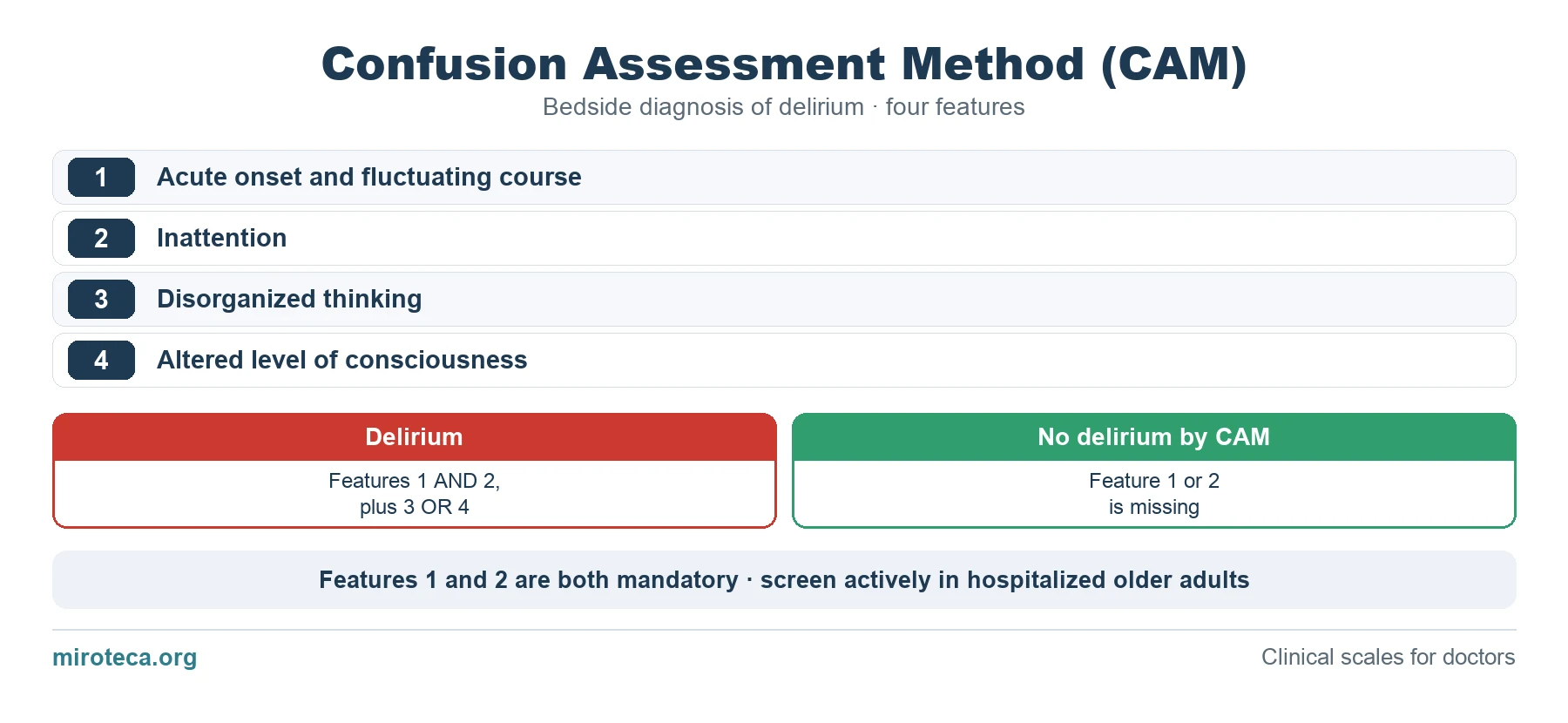
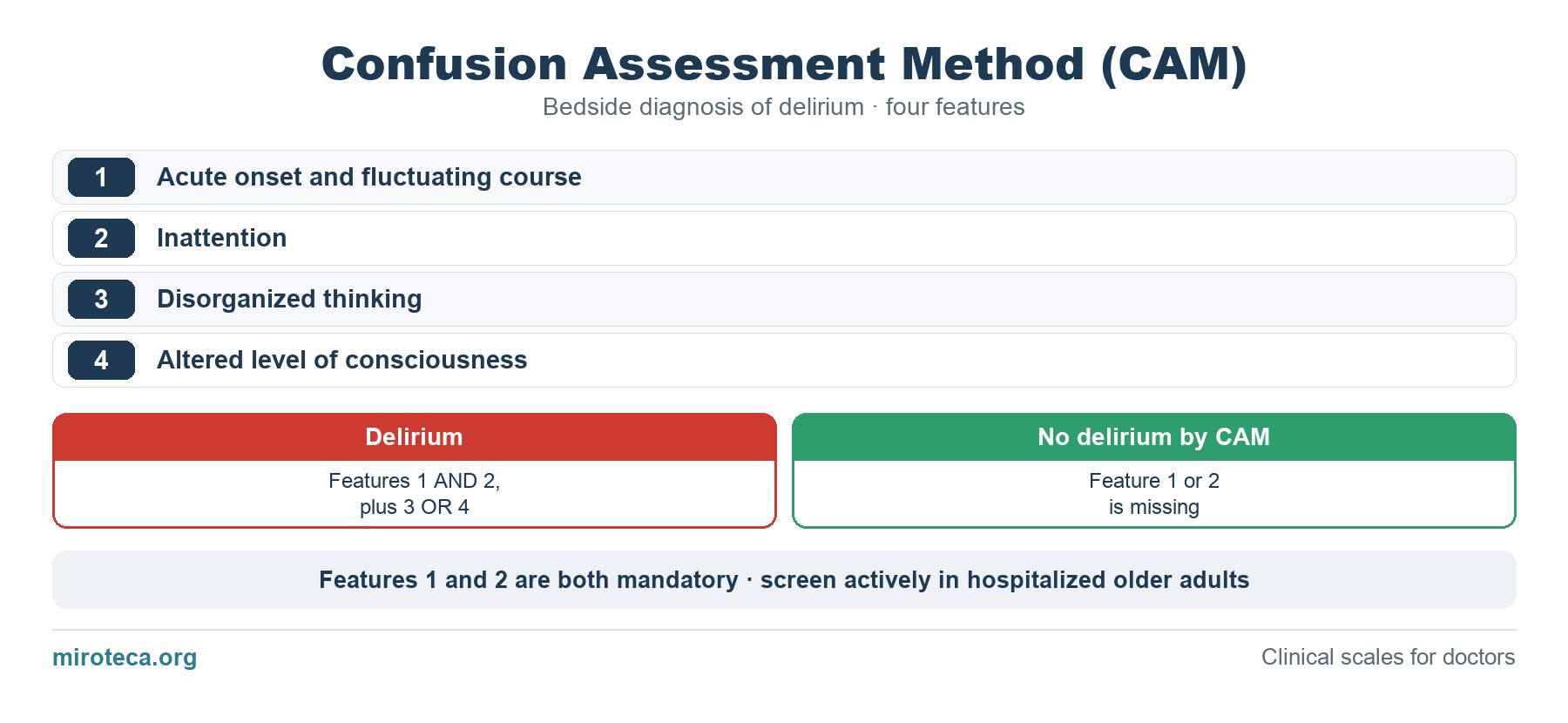
The Confusion Assessment Method (CAM) is a bedside tool to diagnose delirium (acute confusional state). It looks at four features.
The detail that settles it
Delirium is diagnosed when features 1 and 2 are present, plus at least one of features 3 or 4.
Delirium is very common in hospitalized older adults and is associated with a worse prognosis, so it should be looked for actively.
Common mistakes
Requiring only one of the first two features: acute or fluctuating onset AND inattention are both mandatory.
In exam questions
Questions usually describe an older patient who has changed from one day to the next, cannot keep attention and says incoherent things, and ask for the diagnosis. That patient meets features 1, 2 and 3: delirium.
Keep practicing
This page is the visual summary. To test yourself with real clinical reasoning, Medicinedle, a Wordle-inspired game, gives you one clinical case a day: guess the diagnosis in six tries, with a new clue after every miss. It is free and available in English.