
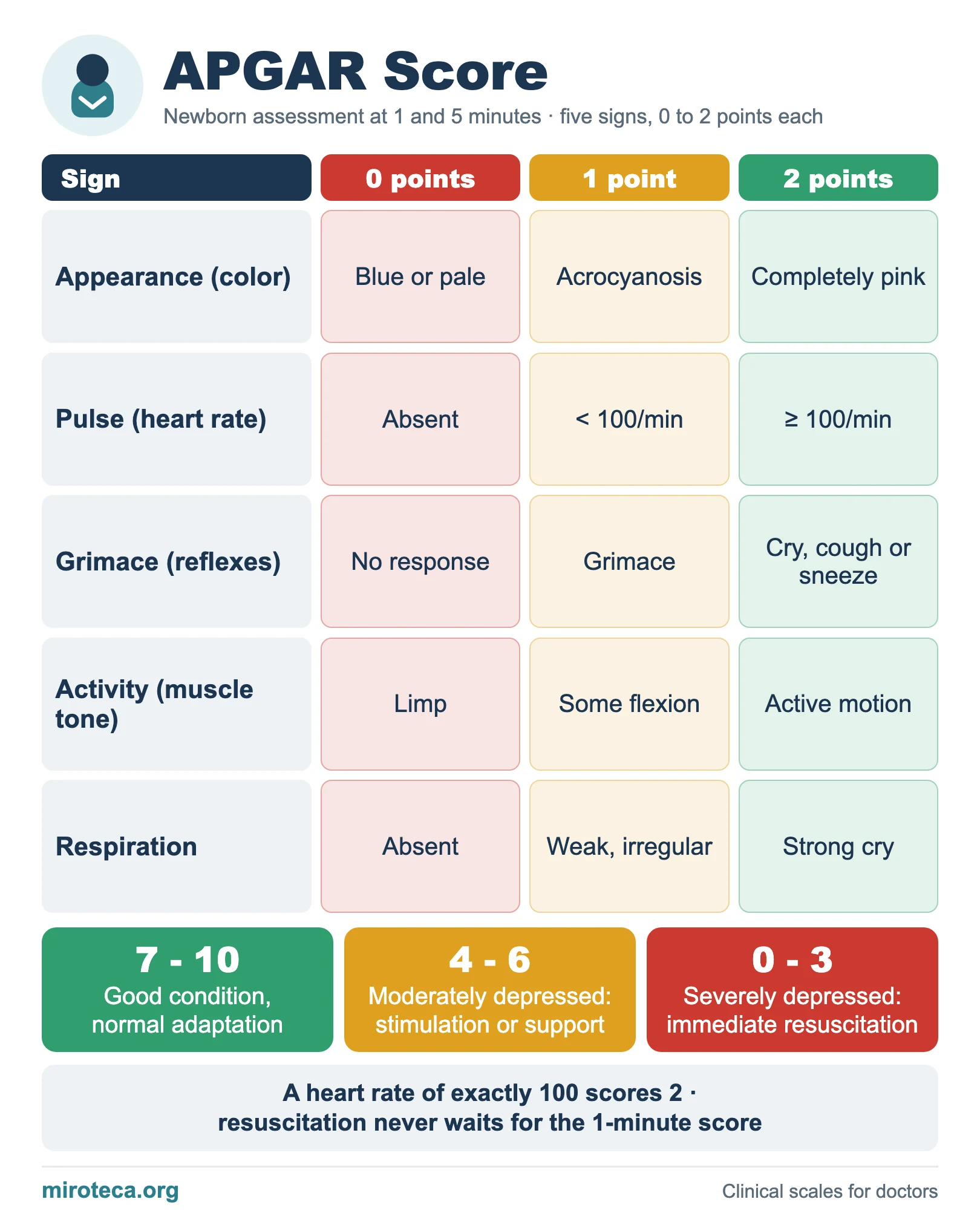
What the diagram shows
The APGAR score describes the condition of the newborn with five signs, each scored 0, 1 or 2: Appearance (color), Pulse (heart rate), Grimace (reflex irritability), Activity (muscle tone) and Respiration.
It is scored at 1 and 5 minutes. More important than a single value is how it changes from the first to the fifth minute.
The detail that settles it
A heart rate of 100 per minute scores 2, not 1: the cut-off is "100 or more".
Color rarely earns the full 2 points, because acrocyanosis (blue hands and feet) is normal in the first hours of life.
Common mistakes
The APGAR is not used to decide when to start resuscitation: that does not wait for the 1-minute score. It describes the condition and the response.
A low isolated APGAR does not mean asphyxia and does not by itself predict the neurological outcome.
In exam questions
Questions usually describe the baby (heart rate, breathing, tone, response, color) and ask for the score. Most errors come from the heart rate at exactly 100 and from giving 2 points for color when the extremities are blue.
Keep practicing
This page is the visual summary. To test yourself with real clinical reasoning, Medicinedle, a Wordle-inspired game, gives you one clinical case a day: guess the diagnosis in six tries, with a new clue after every miss. It is free and available in English.