
What the chart shows
Several skin conditions have names that do not match their cause. Exam questions use this as a trap, so it pays to fix the real disease behind each term.
The real cause of each one
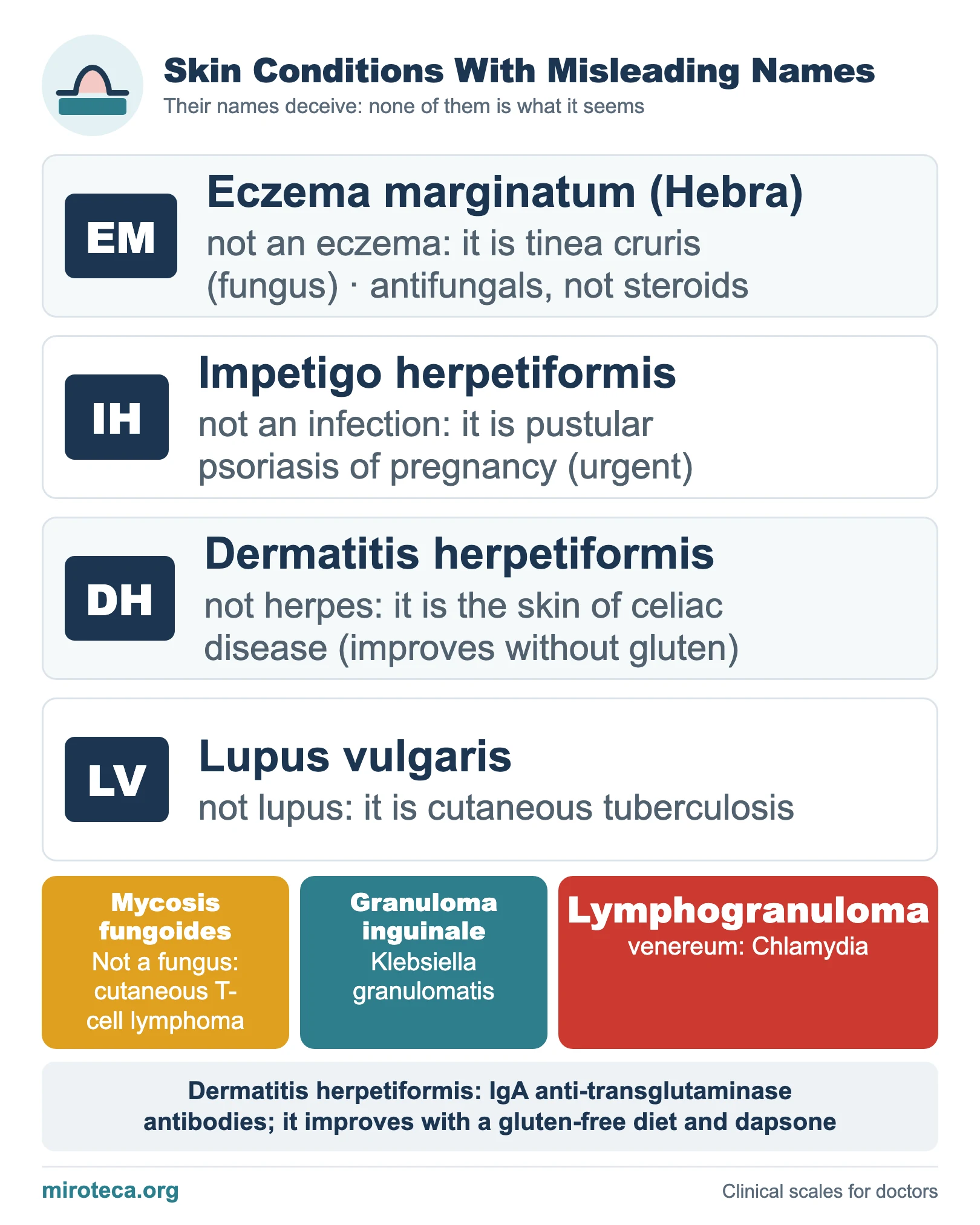
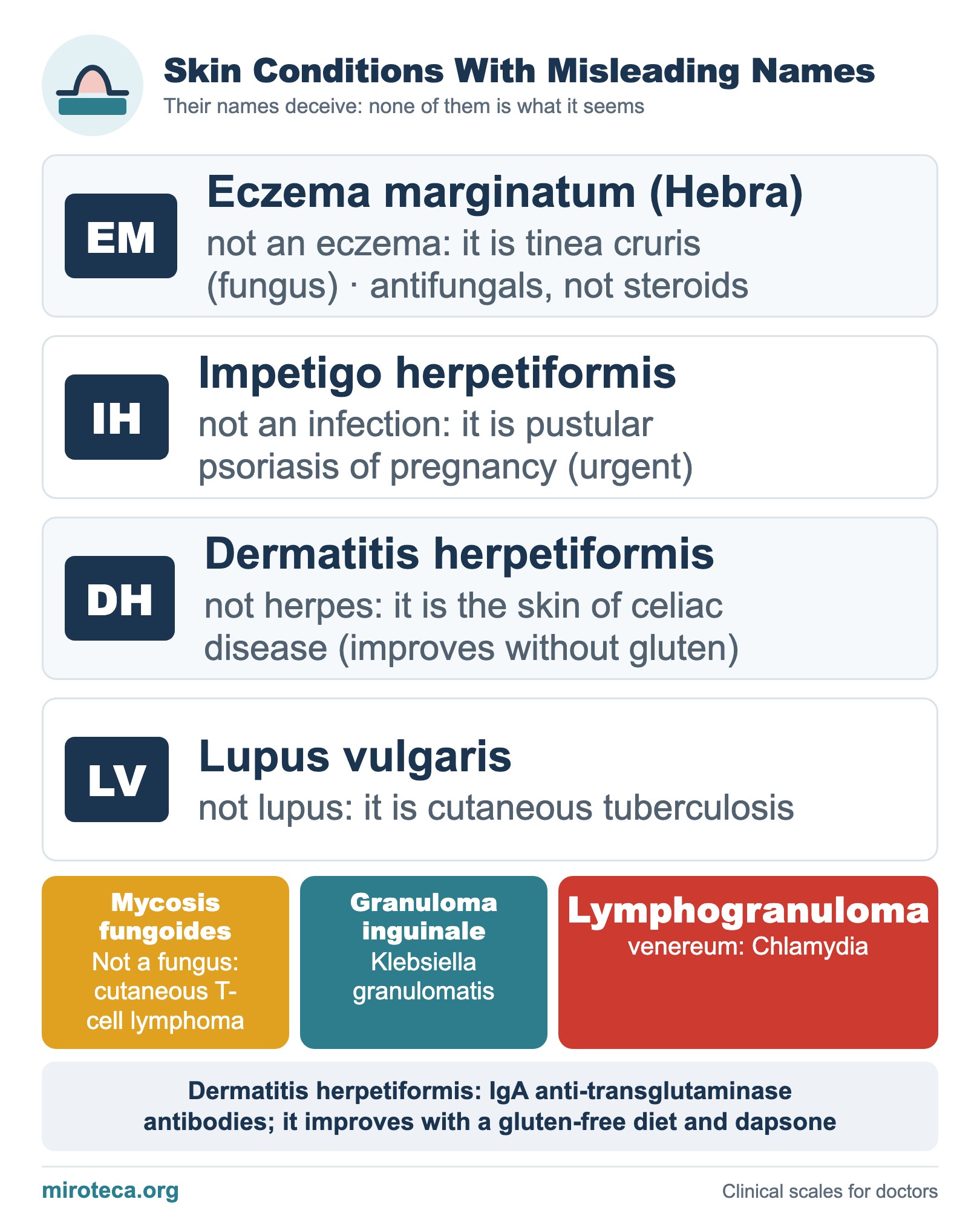
Eczema marginatum of Hebra is not an eczema but tinea cruris (a fungus), treated with antifungals, not corticosteroids. Impetigo herpetiformis is not an infection but pustular psoriasis of pregnancy (an obstetric emergency). Dermatitis herpetiformis is not caused by herpes but is the skin of celiac disease (IgA anti-transglutaminase; it improves without gluten and with dapsone). Lupus vulgaris is not lupus but cutaneous tuberculosis.
Other classic "false friends": granuloma inguinale (donovanosis, from Klebsiella granulomatis) is not the same as lymphogranuloma venereum (Chlamydia), and mycosis fungoides is not a fungus but a cutaneous T-cell lymphoma. See also pemphigus vs pemphigoid.
In exam questions
Short rules: dermatitis herpetiformis means celiac disease, not herpes; lupus vulgaris means tuberculosis of the skin; the name deceives, look at the real cause.
Keep practicing
This page is the visual summary. To test yourself with real clinical reasoning, Medicinedle, a Wordle-inspired game, gives you one clinical case a day: guess the diagnosis in six tries, with a new clue after every miss. It is free.
Prefer quick questions? The clinical scores quiz gives you 5 case-based questions in about a minute, with the answer explained.