
What the chart shows
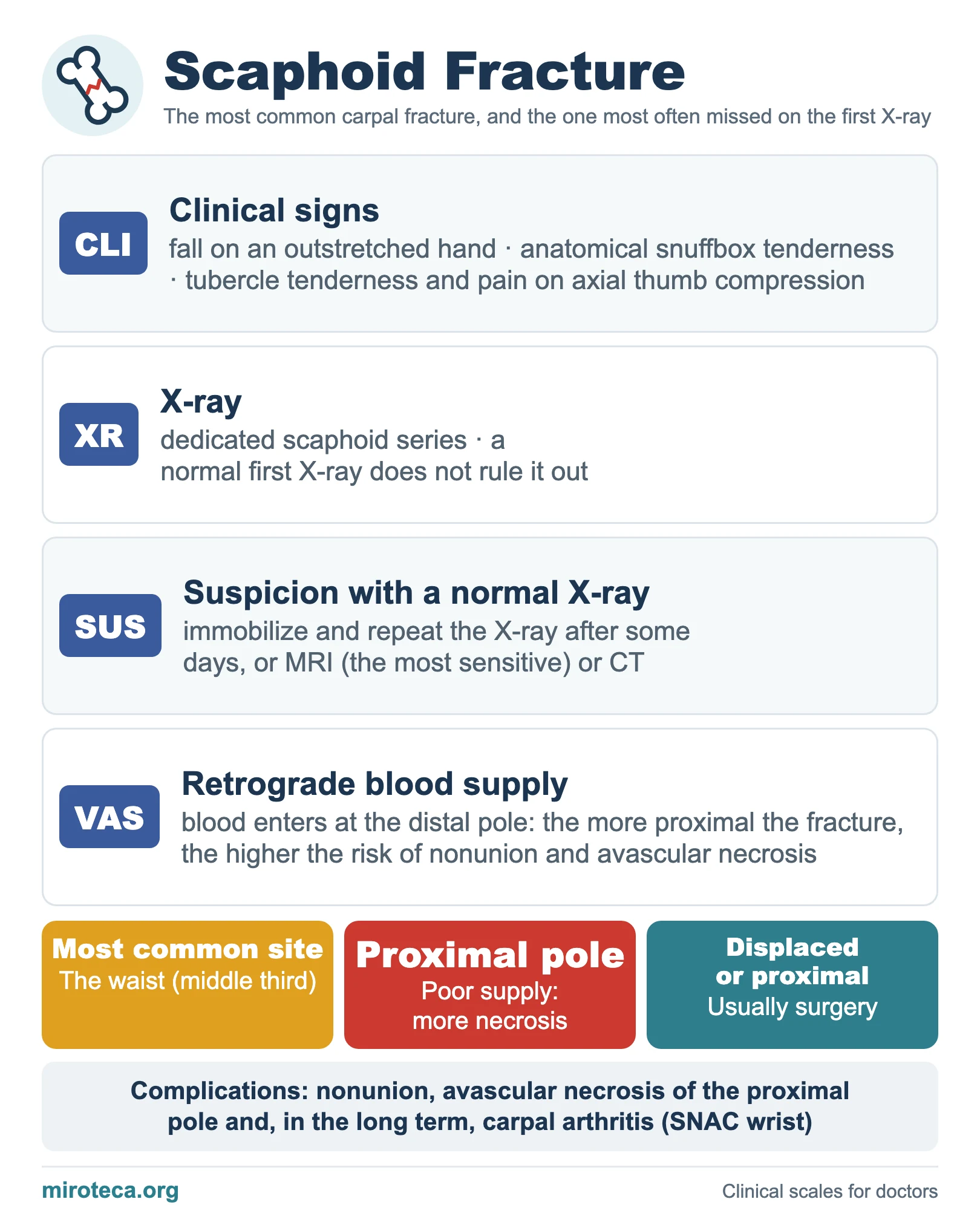
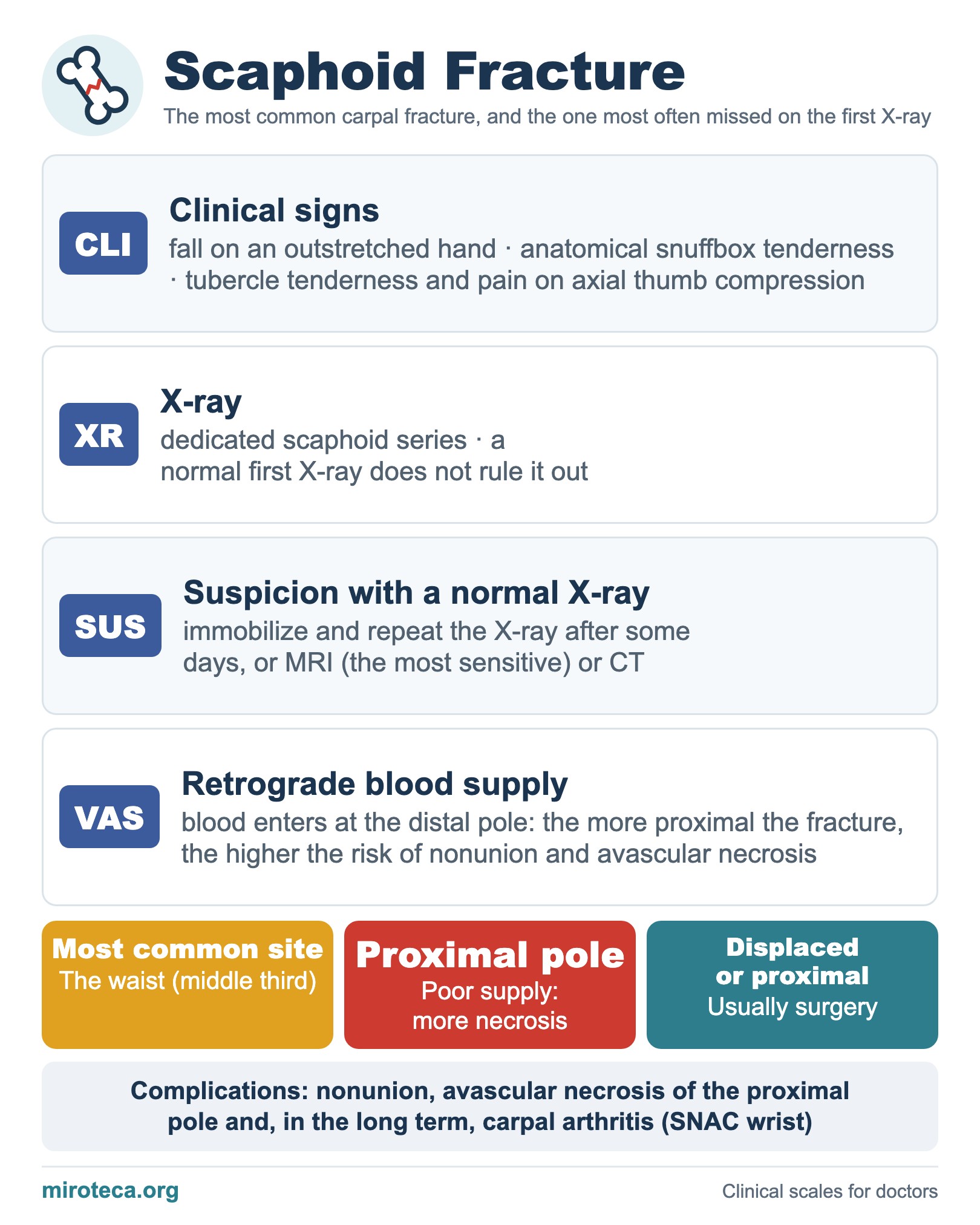
The scaphoid is the most commonly fractured carpal bone. The typical mechanism is a fall on an outstretched hand, and the most common site is the waist (middle third). The chart gathers what matters: how to suspect it, why the first X-ray can mislead and why the proximal pole has a poor prognosis.
A normal X-ray does not rule it out
With tenderness in the anatomical snuffbox, over the scaphoid tubercle or on axial compression of the thumb, a dedicated scaphoid series is ordered. But a normal first X-ray does not exclude a fracture: some are not visible in the first days.
If clinical suspicion persists, the wrist is immobilized and the X-ray is repeated after some days, or MRI (the most sensitive test) or CT is used.
Why the proximal pole necroses
The scaphoid has a retrograde blood supply: the vessels enter at the distal pole. That is why the more proximal the fracture, the more the blood supply of the proximal fragment is compromised and the higher the risk of nonunion and avascular necrosis. Displaced and proximal pole fractures are usually treated surgically.
In the long term, nonunion can lead to carpal arthritis (the so-called SNAC wrist).
In exam questions
Short rules: snuffbox tenderness with a normal X-ray does not allow a simple discharge; the blood supply enters distally; the proximal pole is the one that necroses. See also Colles fracture.
Keep practicing
This page is the visual summary. To test yourself with real clinical reasoning, Medicinedle, a Wordle-inspired game, gives you one clinical case a day: guess the diagnosis in six tries, with a new clue after every miss. It is free.
Prefer quick questions? The clinical scores quiz gives you 5 case-based questions in about a minute, with the answer explained.