
What the chart shows
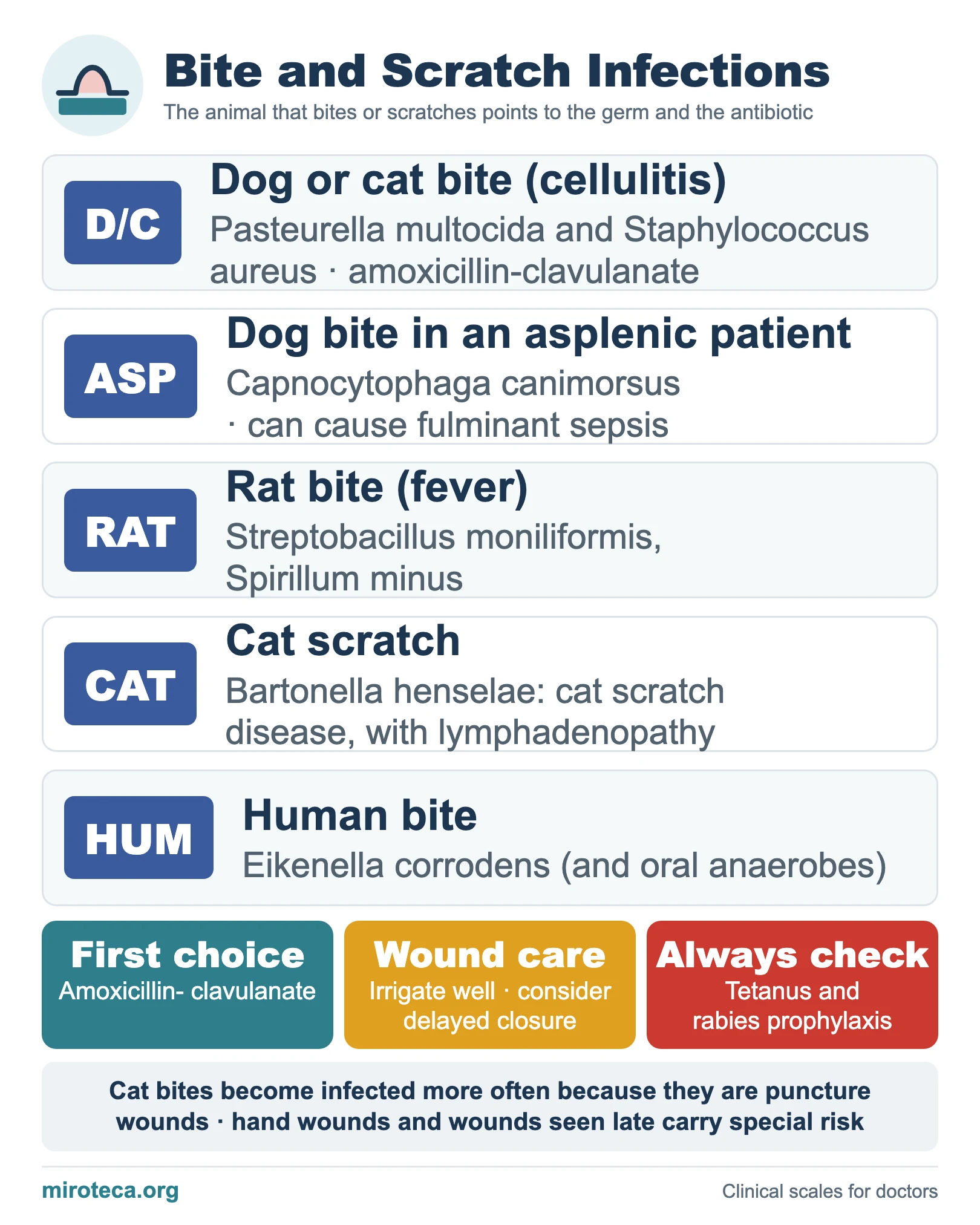
Each bite or scratch has a typical germ that determines the antibiotic of choice. The question is solved by identifying who bit or scratched; the first-line drug for almost all of them is amoxicillin-clavulanate.
Each bite with its germ
Dog or cat: Pasteurella multocida (and S. aureus), treated with amoxicillin-clavulanate; cat bites become infected more often because they are puncture wounds. Dog bite in a patient without a spleen: Capnocytophaga canimorsus, which can cause fulminant sepsis. Cat scratch with lymphadenopathy: Bartonella henselae (cat scratch disease). Human bite: Eikenella corrodens (and oral anaerobes); these are among the most infectious bites. Rat bite with fever: Streptobacillus.
Management always includes thorough irrigation, considering not suturing (or delayed closure) because of the infection risk, and checking tetanus and rabies prophylaxis. Hand wounds and wounds seen late carry special risk.
In exam questions
Short rules: dog or cat means Pasteurella and amoxicillin-clavulanate; cat scratch plus lymphadenopathy means Bartonella henselae; always assess tetanus and rabies prophylaxis. Related: zoonoses by exposure.
Keep practicing
This page is the visual summary. To test yourself with real clinical reasoning, Medicinedle, a Wordle-inspired game, gives you one clinical case a day: guess the diagnosis in six tries, with a new clue after every miss. It is free.
Prefer quick questions? The clinical scores quiz gives you 5 case-based questions in about a minute, with the answer explained.