
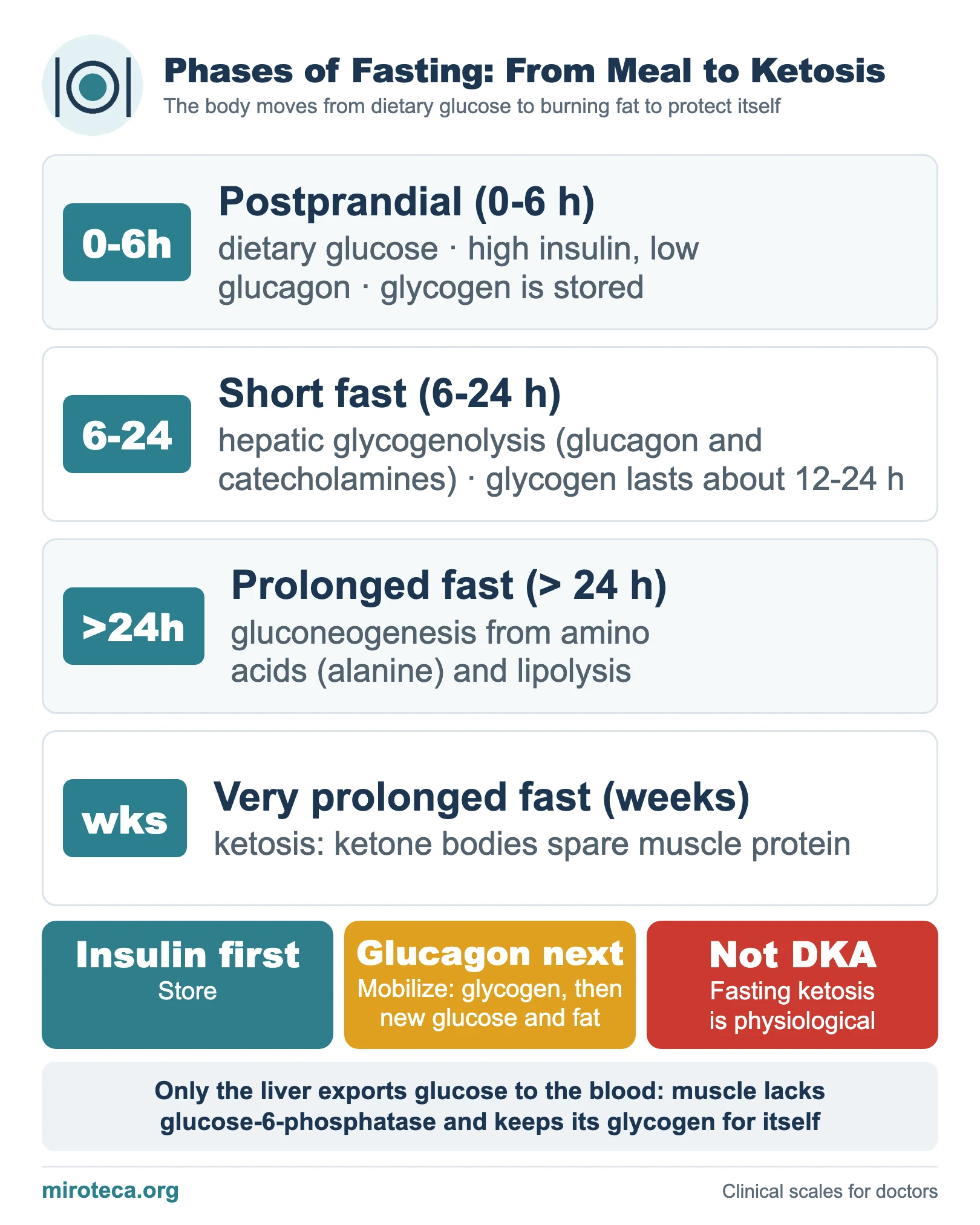
What the chart shows
How the body obtains energy depending on the hours of fasting explains questions in biochemistry and in the management of critically ill or diabetic patients. At first insulin rules (store) and, as the hours pass, glucagon takes over (mobilize), first spending glycogen and then making glucose and burning fat.
The points usually asked
Liver glycogen runs out around 24 hours; from then on gluconeogenesis (alanine, glycerol, lactate) keeps blood glucose up. Only the liver exports glucose to the blood: muscle lacks glucose-6-phosphatase and keeps its glycogen for its own use. In prolonged fasting the brain adapts to using ketone bodies, which spares muscle protein.
Do not confuse this physiological ketosis of fasting with diabetic ketoacidosis, which is pathological and causes acidosis. See DKA vs HHS.
In exam questions
Short rules: liver glycogen runs out at about 24 hours; fasting ketosis protects muscle mass; fasting ketosis is not diabetic ketoacidosis.
Keep practicing
This page is the visual summary. To test yourself with real clinical reasoning, Medicinedle, a Wordle-inspired game, gives you one clinical case a day: guess the diagnosis in six tries, with a new clue after every miss. It is free.
Prefer quick questions? The clinical scores quiz gives you 5 case-based questions in about a minute, with the answer explained.