
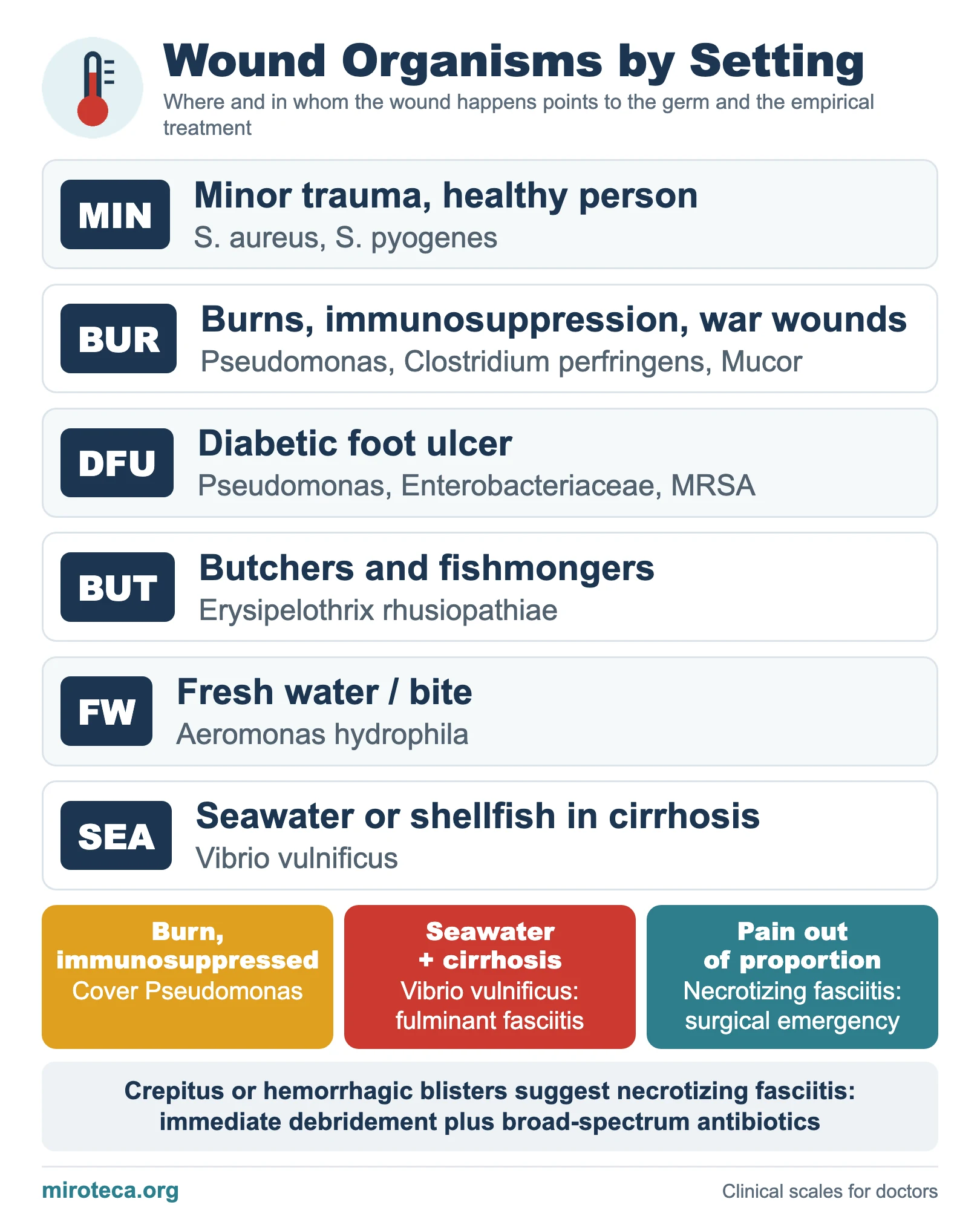
What the chart shows
Where the wound happens, and in whom, points to the most likely germ and, with it, the empirical treatment.
Classic scenarios
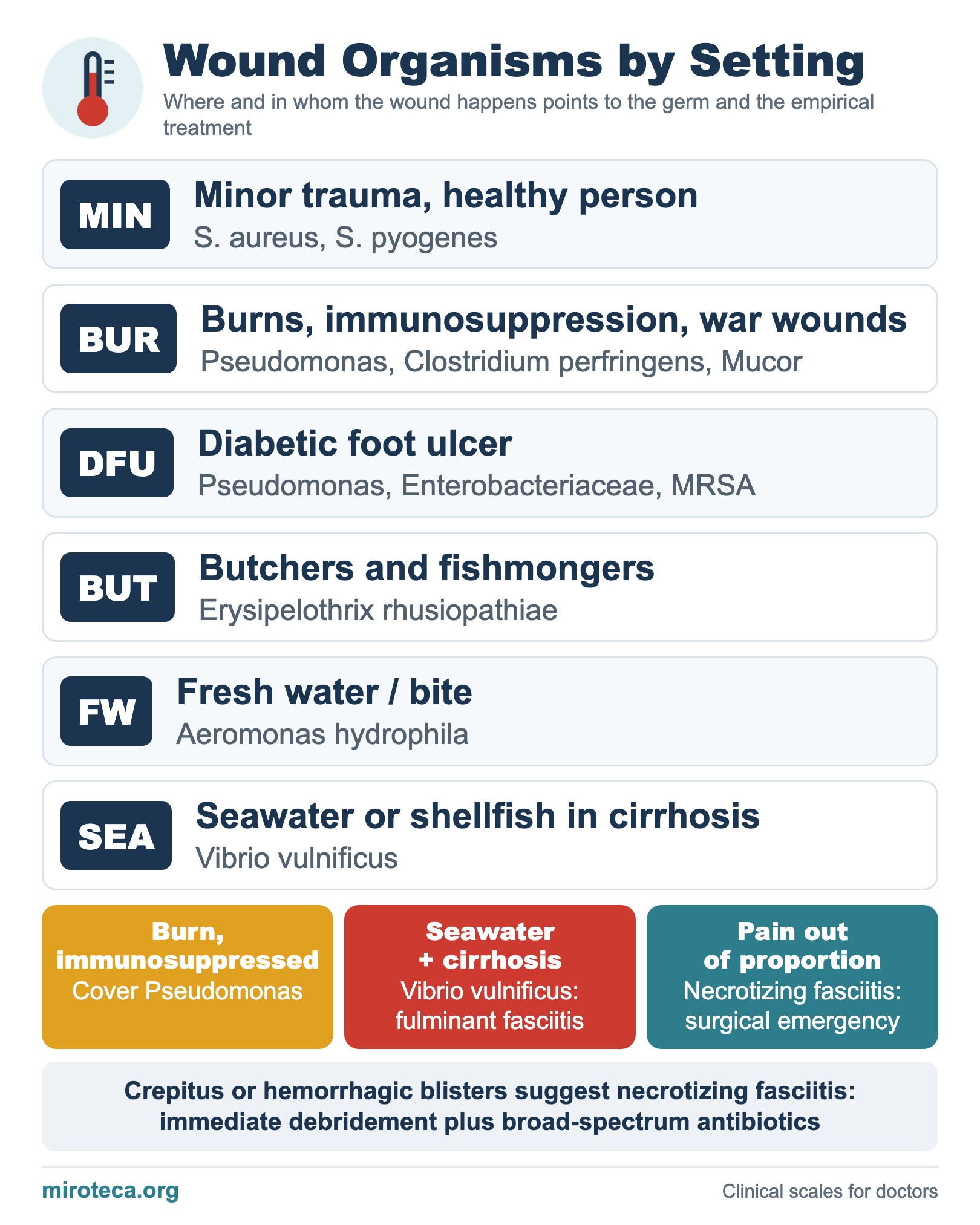
Minor trauma in a healthy person: S. aureus and S. pyogenes. Burn, immunosuppression or war wound: cover Pseudomonas (and Clostridium, Mucor). Diabetic foot: mixed flora (Pseudomonas, Enterobacteriaceae, MRSA). Seawater or shellfish in a patient with cirrhosis: Vibrio vulnificus, which can cause fulminant fasciitis. Fresh water: Aeromonas; butchers and fishmongers: Erysipelothrix.
A warning sign to recognize: pain out of proportion, crepitus or hemorrhagic blisters suggest necrotizing fasciitis, a surgical emergency (immediate debridement plus broad-spectrum antibiotics), not only a medical one. A history of cirrhosis or immunosuppression makes the prognosis much worse. See also bite infections.
In exam questions
Short rules: burned or immunosuppressed means cover Pseudomonas; a seawater wound in a patient with cirrhosis means Vibrio vulnificus; the setting of the wound guides the empirical antibiotic.
Keep practicing
This page is the visual summary. To test yourself with real clinical reasoning, Medicinedle, a Wordle-inspired game, gives you one clinical case a day: guess the diagnosis in six tries, with a new clue after every miss. It is free.
Prefer quick questions? The clinical scores quiz gives you 5 case-based questions in about a minute, with the answer explained.