
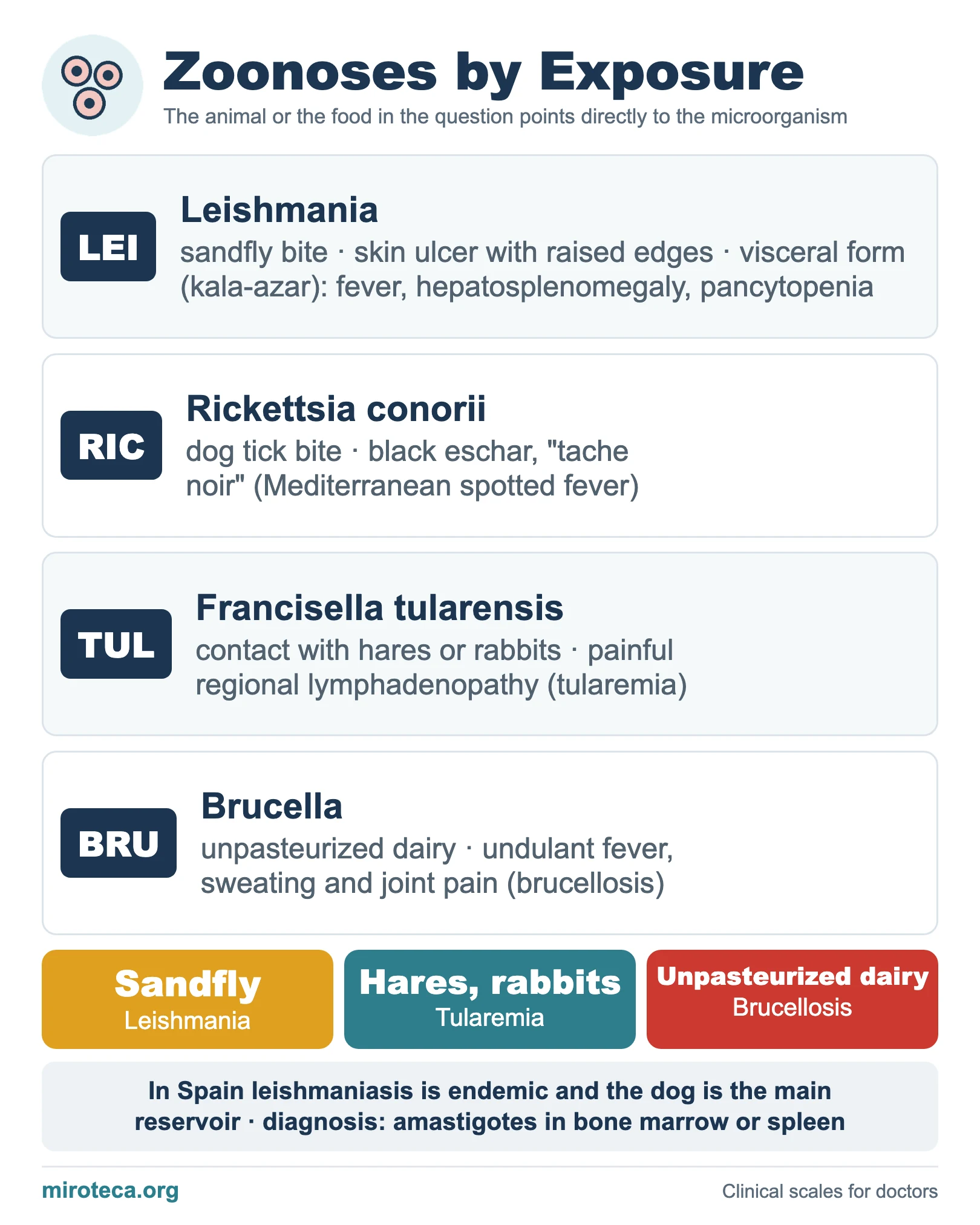
What the chart shows
Zoonoses are identified by the animal or the food involved; the context points to the germ almost without tests. The chart pairs four exposures with their microorganism.
The pairs to master
Sandfly: Leishmania, with a skin ulcer with raised edges or, in the visceral form (kala-azar), fever, hepatosplenomegaly and pancytopenia. Dog tick: Rickettsia conorii (Mediterranean spotted fever, with "tache noir"). Hares or rabbits: Francisella tularensis (tularemia, with painful lymphadenopathy). Unpasteurized dairy: Brucella (undulant fever, sweating and joint pain).
An exam detail: in Spain leishmaniasis is endemic and the dog is the main reservoir; in patients with HIV the visceral form can be the first manifestation. Diagnosis relies on seeing amastigotes in bone marrow or spleen.
In exam questions
Short rules: sandfly means Leishmania; unpasteurized dairy means brucellosis; contact with hares or rabbits means tularemia. See also tick bites: spotted fever vs Lyme and infections by exposure.
Keep practicing
This page is the visual summary. To test yourself with real clinical reasoning, Medicinedle, a Wordle-inspired game, gives you one clinical case a day: guess the diagnosis in six tries, with a new clue after every miss. It is free.
Prefer quick questions? The clinical scores quiz gives you 5 case-based questions in about a minute, with the answer explained.