
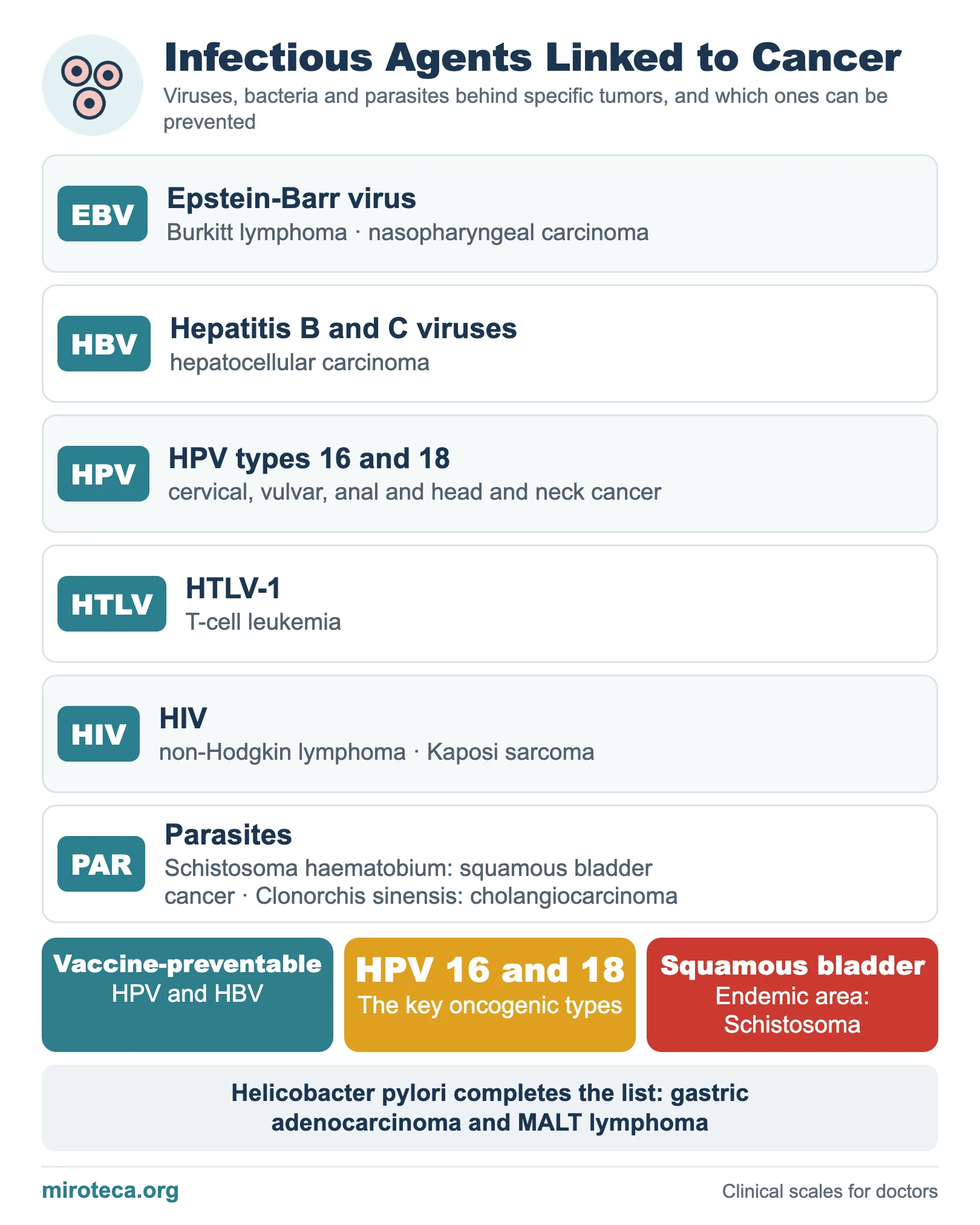
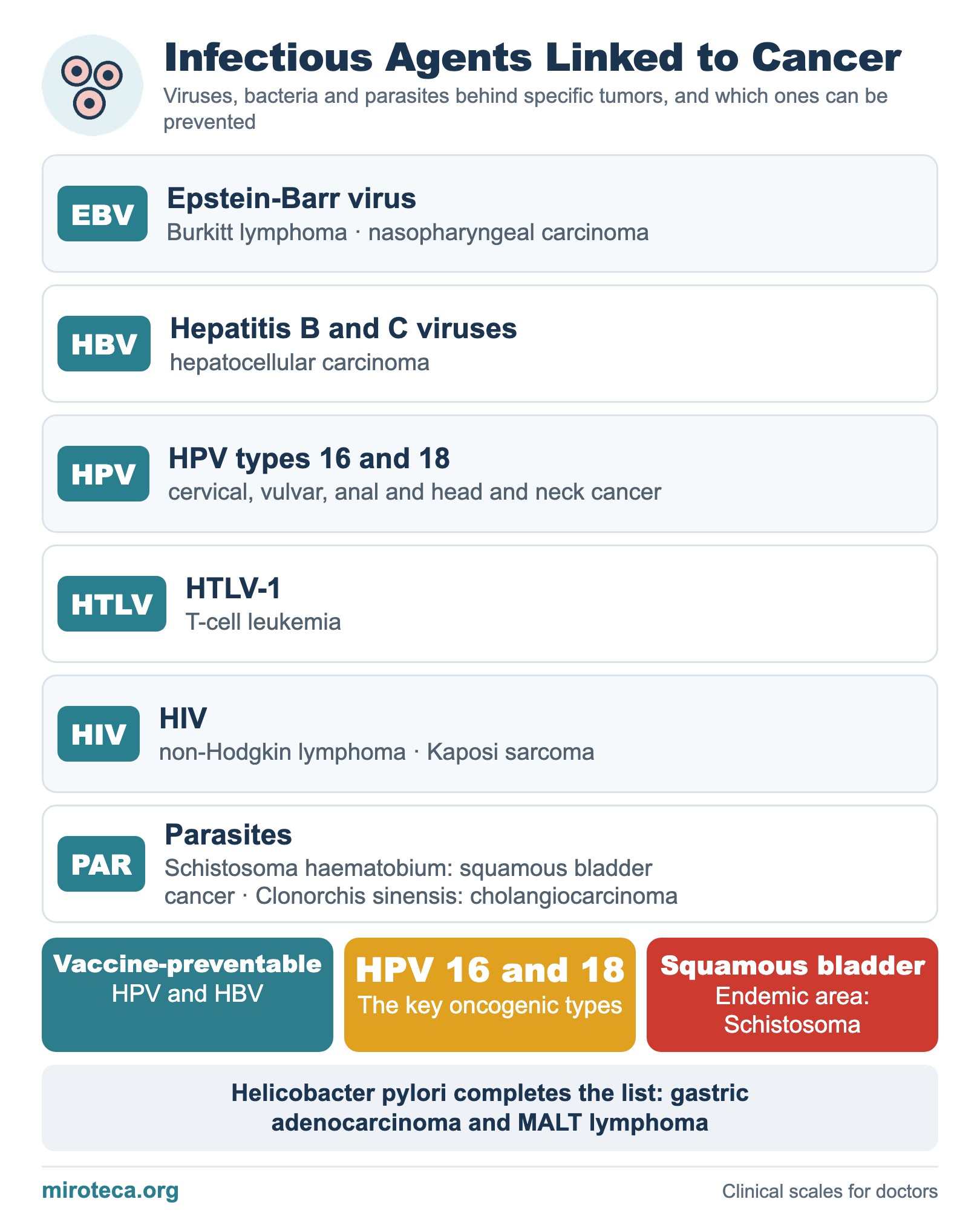
What the chart shows
Many viruses, bacteria and parasites are involved in the development of cancer. Exam questions ask for the germ-tumor association in both directions, and for which cancers can be prevented with vaccines or treatment.
What can be prevented, and the usual mistakes
HPV 16 and 18 are the key oncogenic types (cervix, anus, oropharynx); the vaccine and screening with cytology or HPV testing reduce cervical cancer. HBV is prevented with a vaccine and, together with HCV, causes hepatocellular carcinoma on a cirrhotic liver.
A frequent mistake is forgetting the parasites: Schistosoma haematobium causes squamous (not urothelial) bladder carcinoma in endemic areas, and Clonorchis is linked to cholangiocarcinoma. The bacterium Helicobacter pylori completes the list with gastric adenocarcinoma and MALT lymphoma.
In exam questions
Short rules: vaccine-preventable and highly preventable, HPV and HBV; HPV 16 and 18 are the key oncogenic types; squamous bladder cancer in an endemic area means Schistosoma. Related: HLA disease associations.
Keep practicing
This page is the visual summary. To test yourself with real clinical reasoning, Medicinedle, a Wordle-inspired game, gives you one clinical case a day: guess the diagnosis in six tries, with a new clue after every miss. It is free.
Prefer quick questions? The clinical scores quiz gives you 5 case-based questions in about a minute, with the answer explained.