
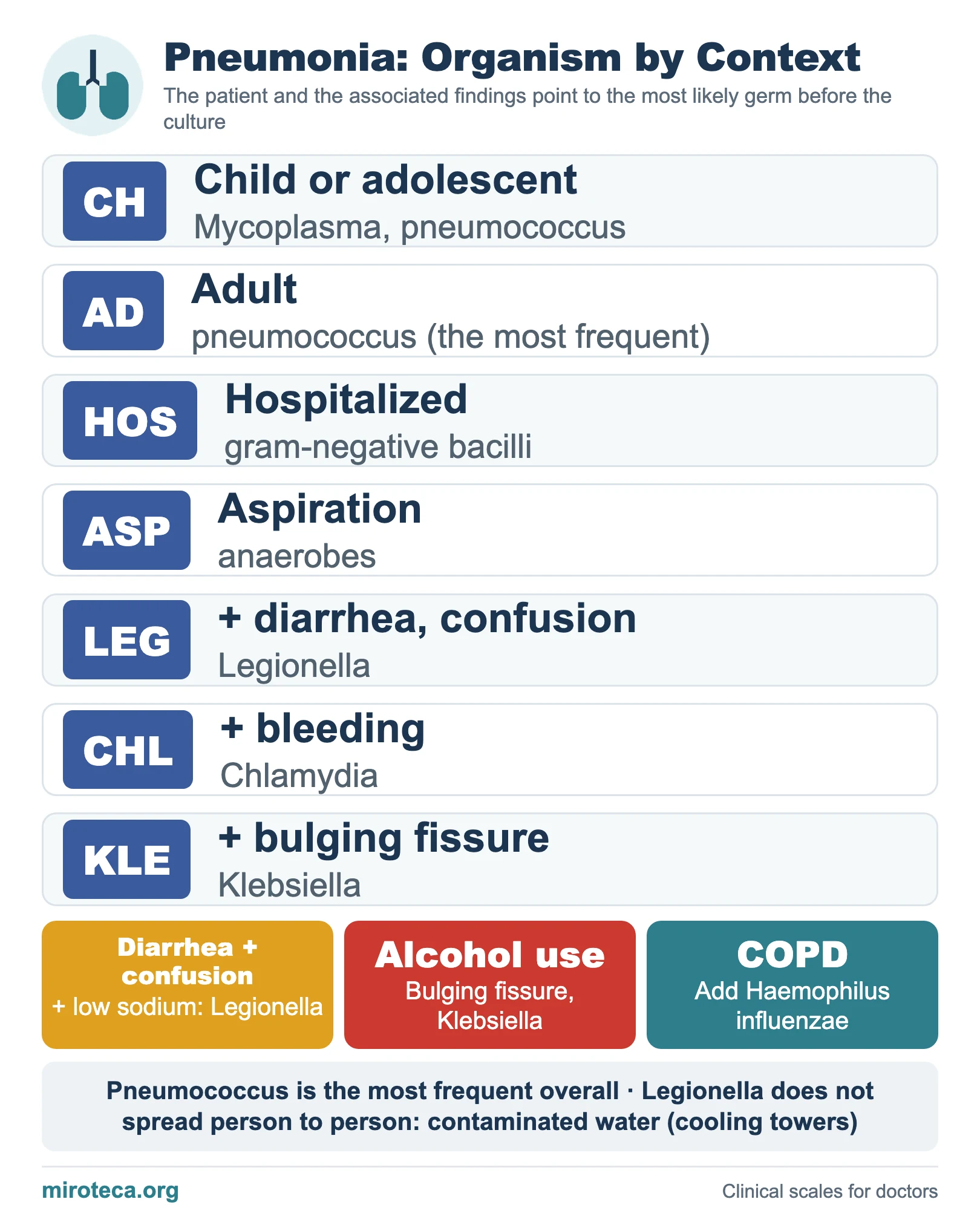
What the chart shows
The patient context and the associated findings point to the most likely germ of a pneumonia before the culture. Pneumococcus is the most frequent overall and the default starting point.
Clues that solve the case
Young patient with an "atypical" picture (dry cough, clinical-radiological dissociation): Mycoplasma. Diarrhea, confusion and low sodium: Legionella (urinary antigen; treated with a macrolide or a quinolone). Aspiration (reduced consciousness, poor oral hygiene): anaerobes. Patient with alcohol use disorder, a bulging fissure and "currant jelly" sputum: Klebsiella. COPD: add Haemophilus influenzae.
To decide on admission, scores such as CURB-65 are used (confusion, urea, respiratory rate, blood pressure and age 65 or over). A Legionella nuance: it does not spread from person to person and is linked to contaminated water (cooling towers).
In exam questions
Short rules: diarrhea plus confusion plus low sodium means Legionella; aspiration means anaerobes; a bulging fissure in a patient with alcohol use disorder means Klebsiella.
Keep practicing
This page is the visual summary. To test yourself with real clinical reasoning, Medicinedle, a Wordle-inspired game, gives you one clinical case a day: guess the diagnosis in six tries, with a new clue after every miss. It is free.
Prefer quick questions? The clinical scores quiz gives you 5 case-based questions in about a minute, with the answer explained.