
What the chart shows
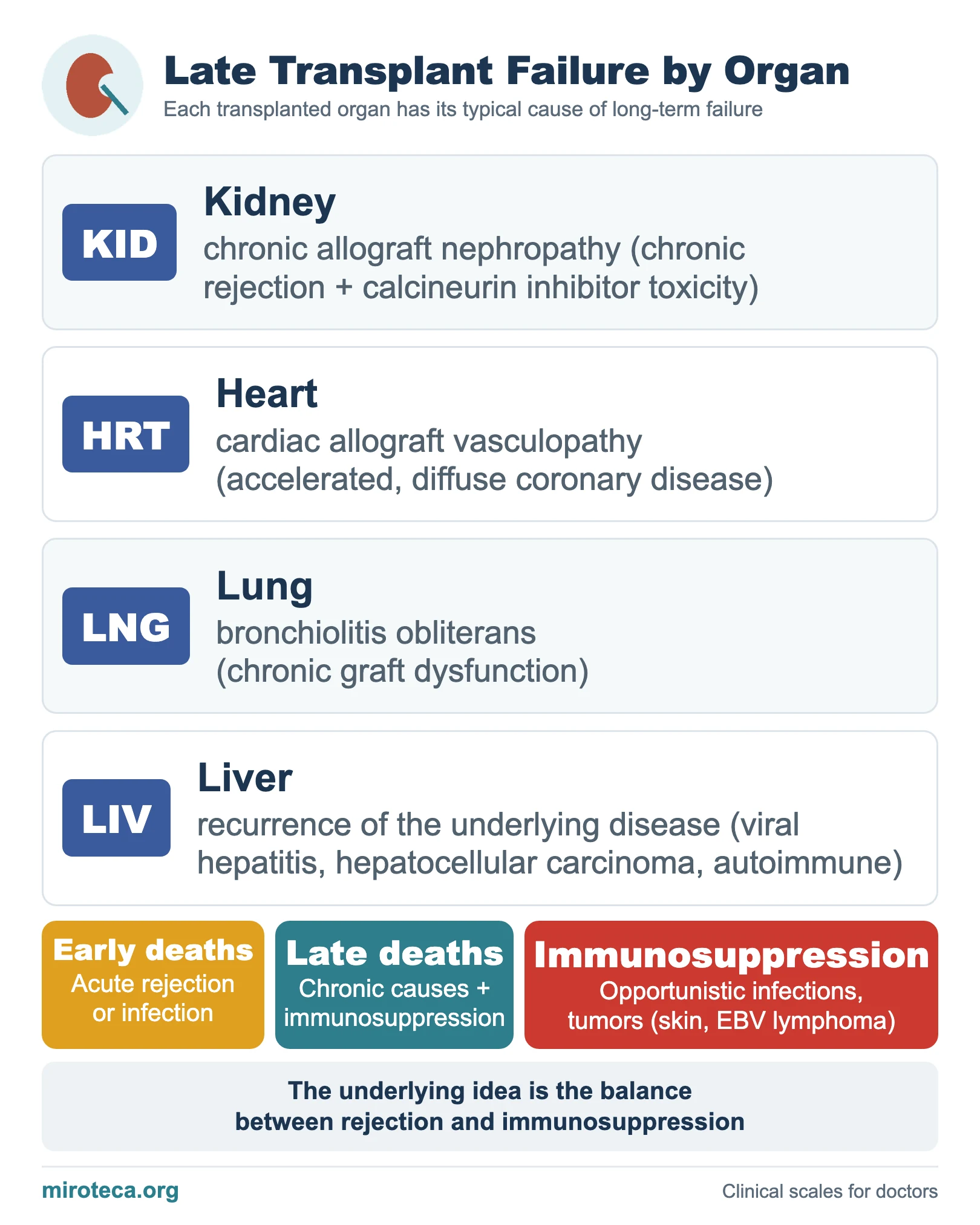
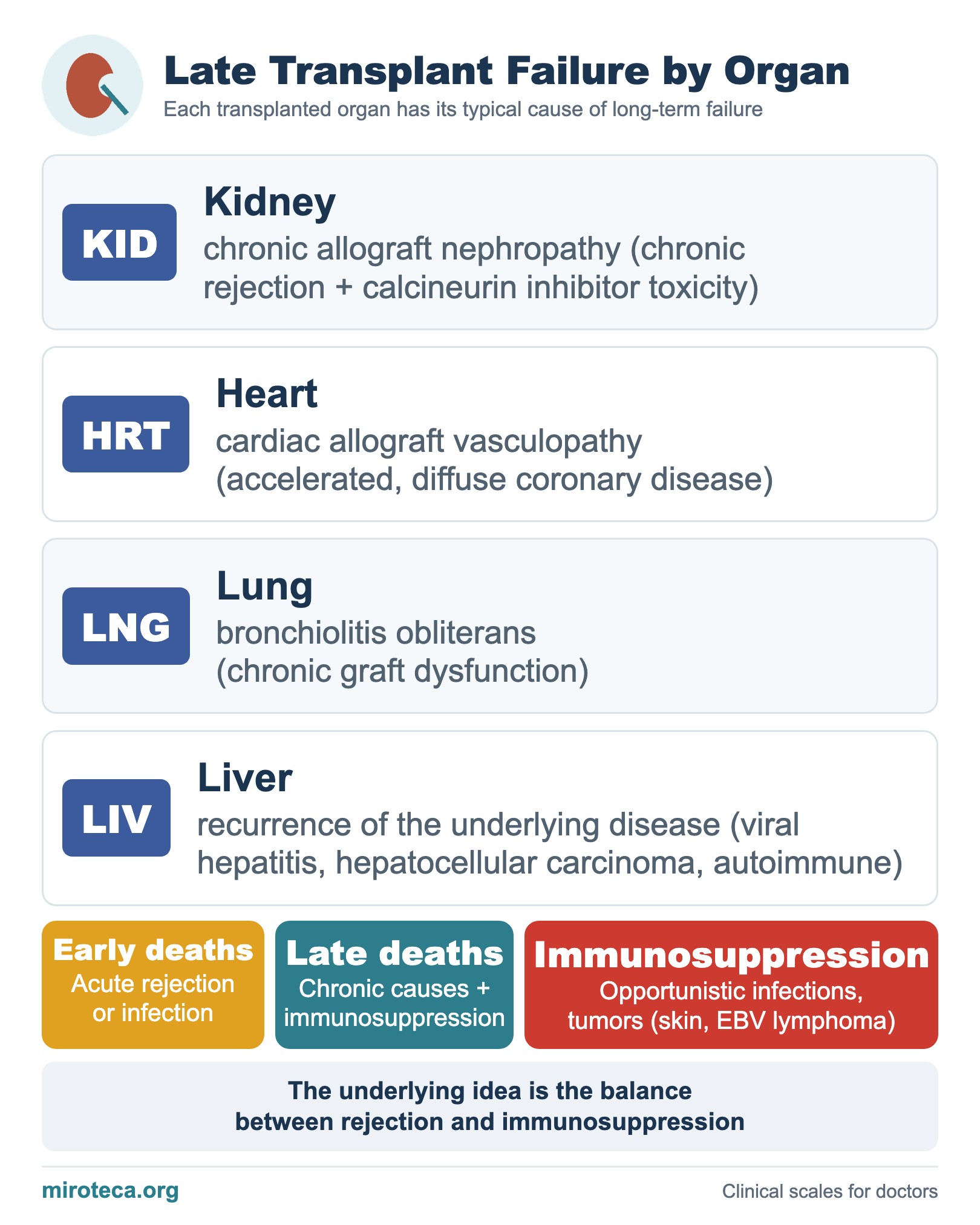
Each transplanted organ has a typical cause of long-term graft loss, a very specific exam question. The key is to link the organ with its form of chronic rejection or of recurrence.
The associations to memorize
Kidney: chronic allograft nephropathy (chronic rejection plus calcineurin inhibitor toxicity). Heart: cardiac allograft vasculopathy (accelerated, diffuse coronary disease). Lung: bronchiolitis obliterans (chronic graft dysfunction). Liver: recurrence of the underlying disease (viral hepatitis, hepatocellular carcinoma, autoimmune disease).
A nuance worth separating: early transplant mortality is usually from acute rejection or infection, while late mortality comes from these chronic causes plus the effects of long-term immunosuppression, which raises the risk of opportunistic infections and tumors (skin cancer, EBV-related lymphomas). That balance between rejection and immunosuppression is the underlying idea of the topic.
In exam questions
Short rules: lung means bronchiolitis obliterans; heart means allograft vasculopathy; chronic immunosuppression raises infections and tumors.
Keep practicing
This page is the visual summary. To test yourself with real clinical reasoning, Medicinedle, a Wordle-inspired game, gives you one clinical case a day: guess the diagnosis in six tries, with a new clue after every miss. It is free.
Prefer quick questions? The clinical scores quiz gives you 5 case-based questions in about a minute, with the answer explained.