
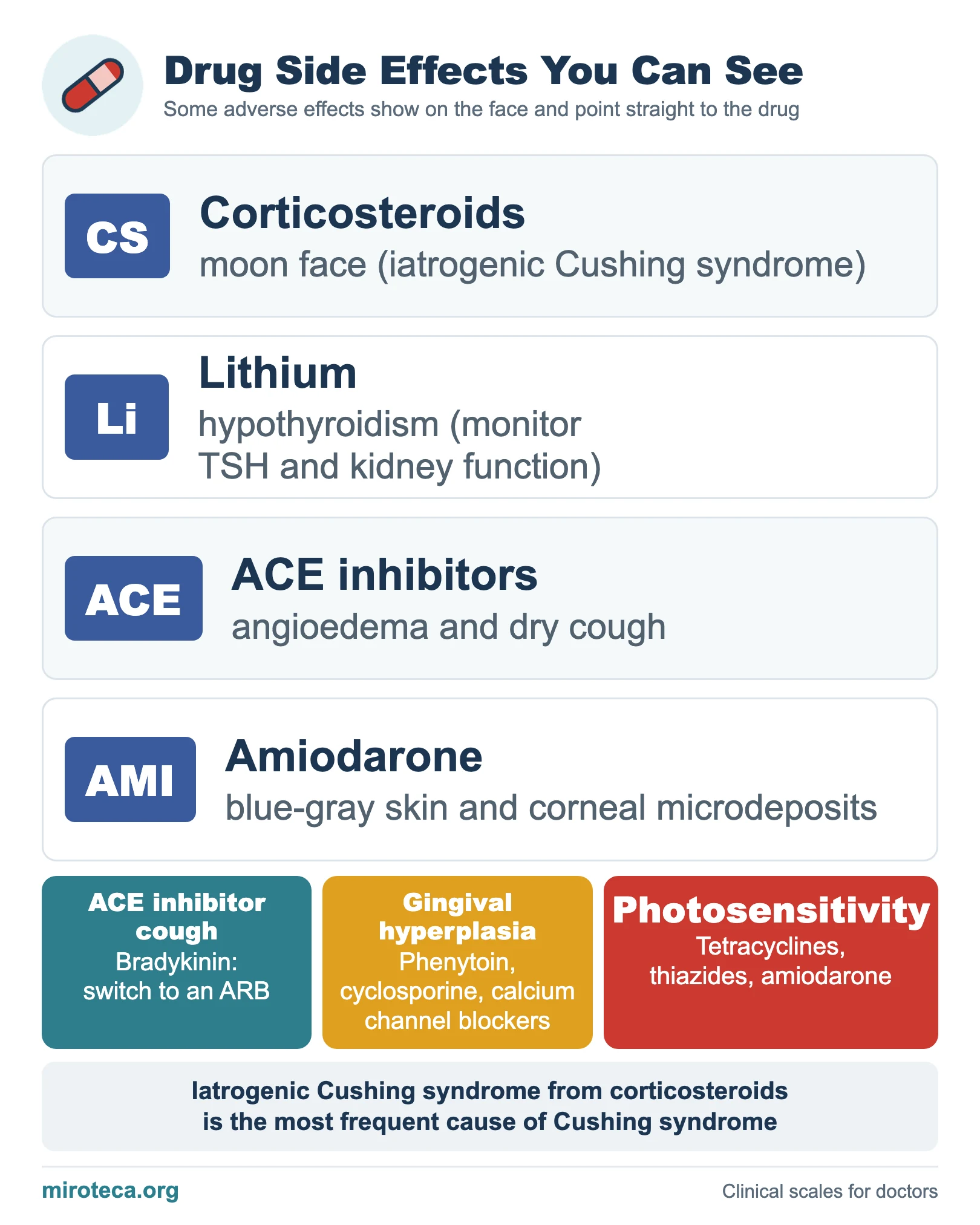
What the chart shows
Some drugs leave visible clues on the face or skin that give away their adverse effect in a clinical case. Recognizing the sign identifies the drug and its toxicity at a glance.
The highest-yield clues
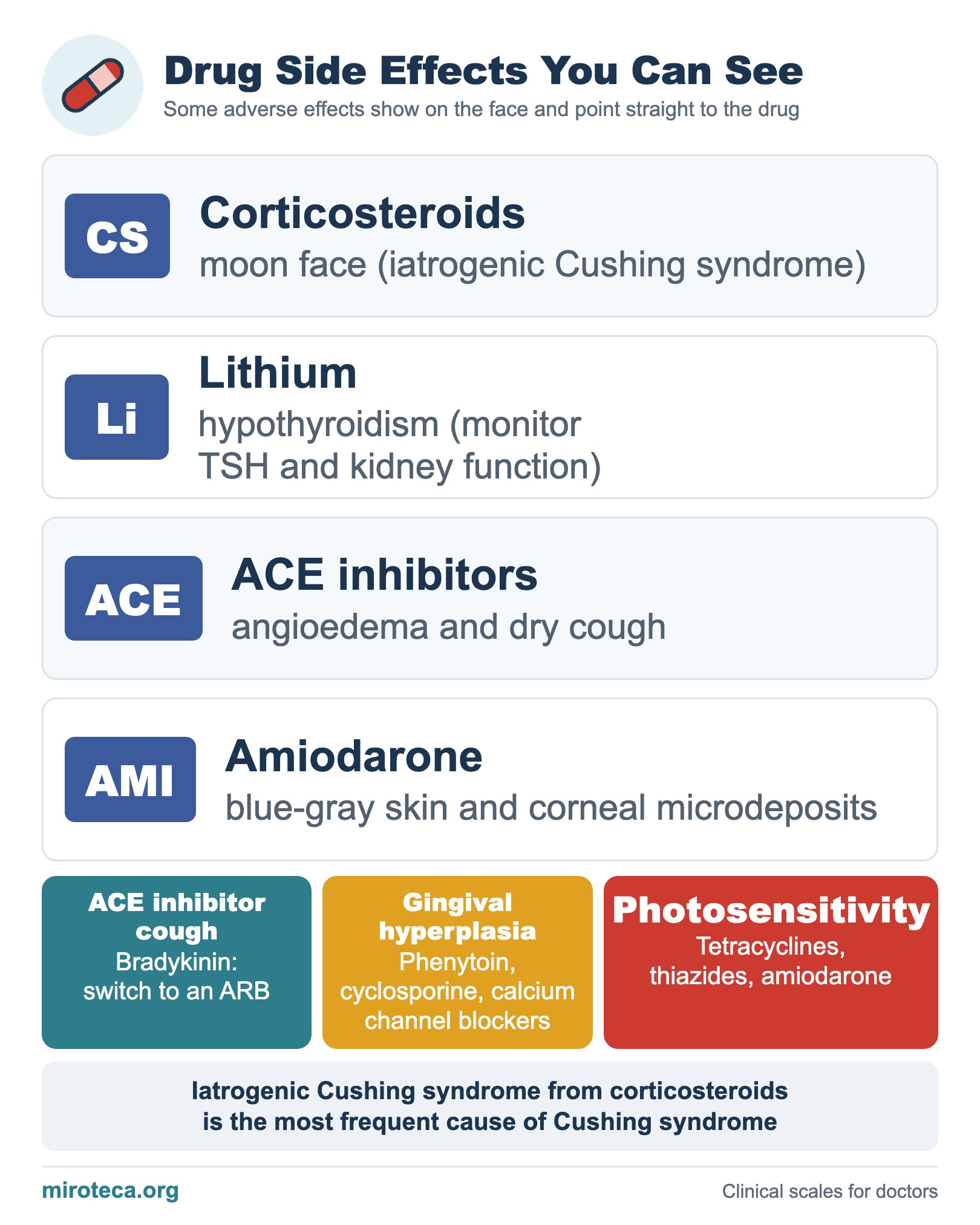
Moon face and cushingoid features: corticosteroids (iatrogenic Cushing syndrome, the most frequent cause of Cushing syndrome). Blue-gray (slate) skin and corneal microdeposits: amiodarone, which also affects the thyroid and the lungs. Angioedema and dry cough: ACE inhibitors (bradykinin build-up); the solution is to switch to an ARB. Gingival hypertrophy: phenytoin, cyclosporine and some calcium channel blockers.
A dermatology classic: photosensitivity from tetracyclines, thiazides or amiodarone, appearing precisely on sun-exposed areas (face and neckline). More pairs in classic adverse drug reactions.
In exam questions
Short rules: moon face means corticosteroids; blue-gray skin plus corneal deposits means amiodarone; angioedema or dry cough means an ACE inhibitor (switch to an ARB).
Keep practicing
This page is the visual summary. To test yourself with real clinical reasoning, Medicinedle, a Wordle-inspired game, gives you one clinical case a day: guess the diagnosis in six tries, with a new clue after every miss. It is free.
Prefer quick questions? The clinical scores quiz gives you 5 case-based questions in about a minute, with the answer explained.