
What the chart shows
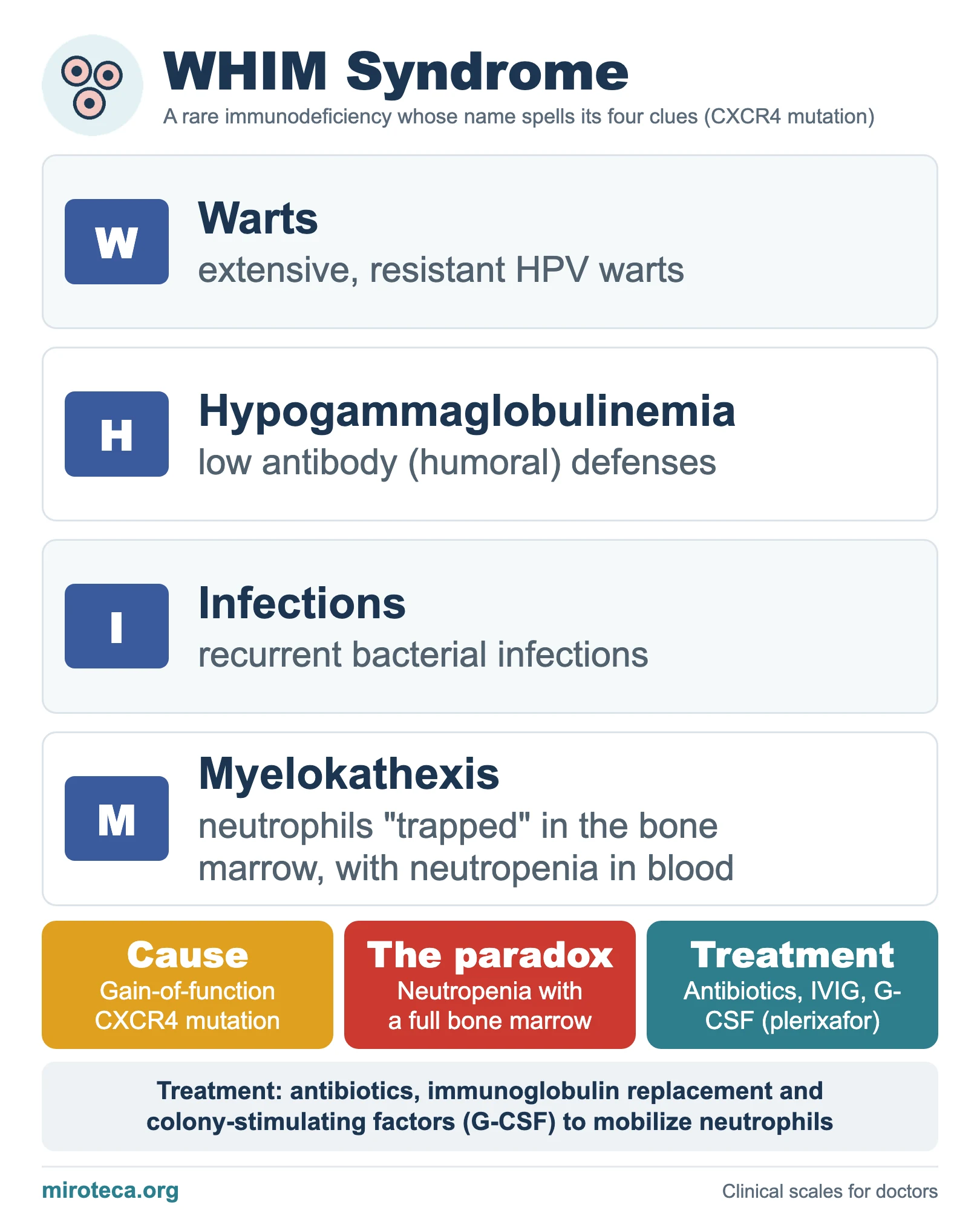
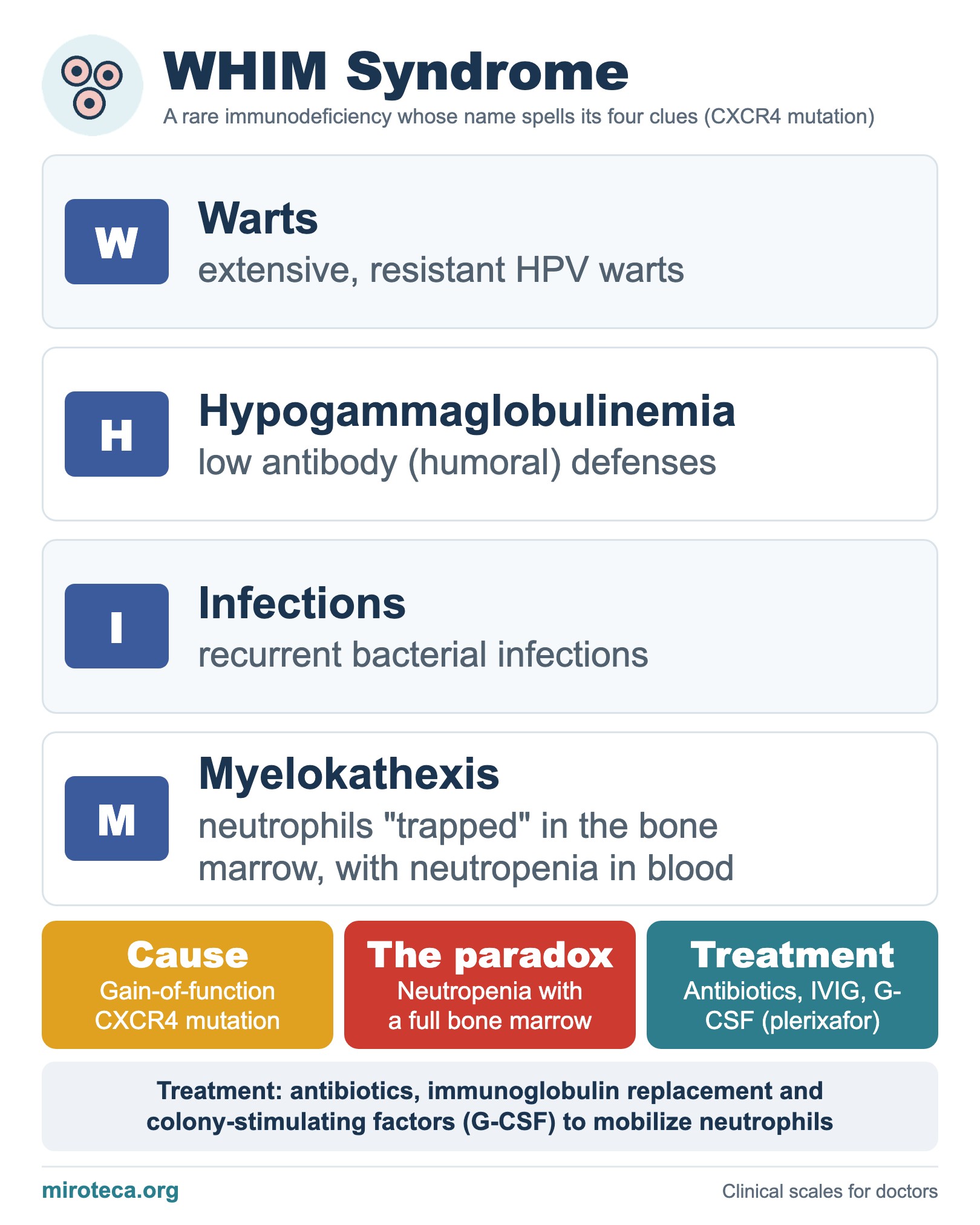
WHIM syndrome is a rare immunodeficiency whose name is an acronym of its four features. The combination of warts, neutropenia and low defenses is the signature that identifies it.
Decoding the acronym
Warts: extensive, resistant HPV warts. Hypogammaglobulinemia: low humoral defenses. Infections: recurrent bacterial infections. Myelokathexis: neutrophils stay "trapped" in the bone marrow, with neutropenia in blood.
The cause is a gain-of-function mutation in the CXCR4 receptor, which prevents neutrophils from leaving the bone marrow (hence the myelokathexis). Treatment combines antibiotics, immunoglobulin replacement and colony-stimulating factors (G-CSF) to mobilize neutrophils; CXCR4 antagonists (plerixafor) also exist. The key exam detail is the paradox: neutropenia in blood despite a bone marrow full of neutrophils that cannot get out.
In exam questions
Short rules: warts plus neutropenia plus hypogammaglobulinemia means WHIM; the defect is in CXCR4; myelokathexis means neutrophils trapped in the marrow.
Keep practicing
This page is the visual summary. To test yourself with real clinical reasoning, Medicinedle, a Wordle-inspired game, gives you one clinical case a day: guess the diagnosis in six tries, with a new clue after every miss. It is free.
Prefer quick questions? The clinical scores quiz gives you 5 case-based questions in about a minute, with the answer explained.