
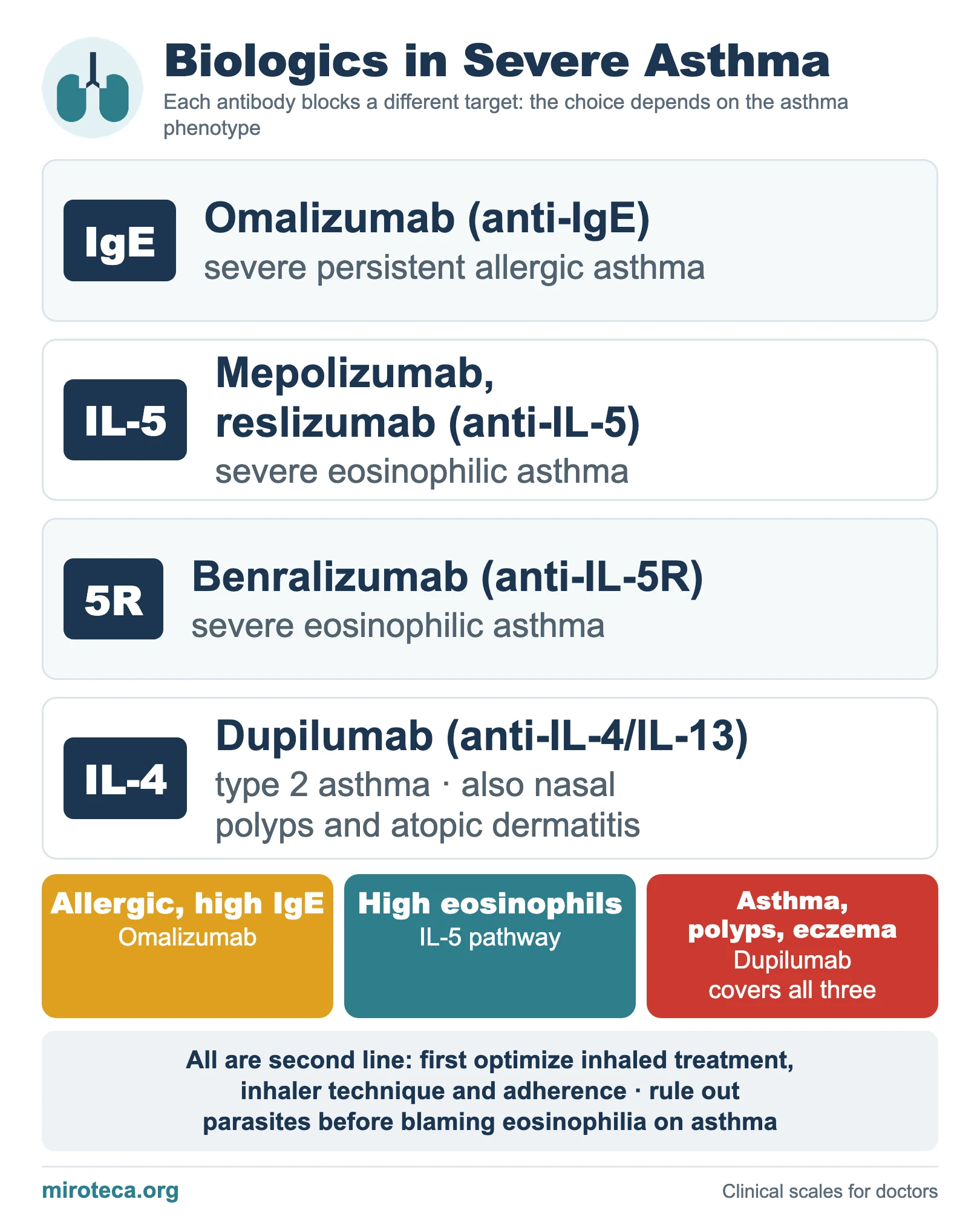
What the chart shows
In severe asthma not controlled with inhaled corticosteroids, biologic drugs block specific targets of the inflammation. Knowing which antibody goes with each phenotype is very testable.
Choosing the biologic by phenotype
The typical question describes severe asthma that remains poorly controlled despite high-dose inhaled corticosteroids and asks for the right biologic. The key is the phenotype: IgE and allergic sensitization versus blood eosinophils.
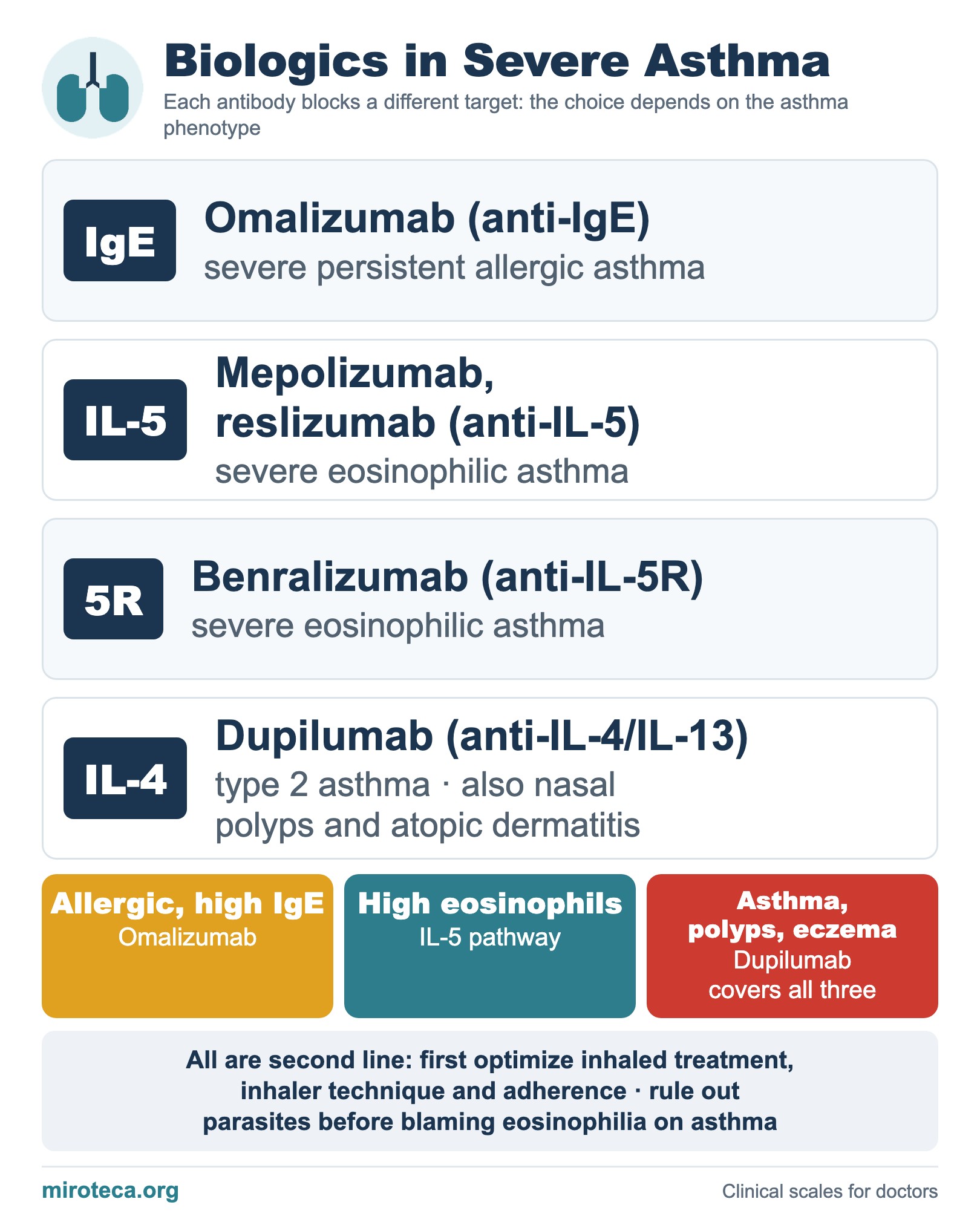
Allergic asthma (high IgE, sensitization to aeroallergens): omalizumab (anti-IgE). Eosinophilic asthma: blocking the IL-5 pathway with mepolizumab, reslizumab (anti-IL-5) or benralizumab (anti-IL-5R). Dupilumab (anti-IL-4/IL-13) covers type 2 asthma and also nasal polyps and atopic dermatitis, useful when they coexist. All are second line: inhaled treatment, technique and adherence are optimized first.
The aim is fewer exacerbations and lower doses of oral corticosteroids, avoiding their long-term adverse effects. Before starting them, parasites should be ruled out and it should be confirmed that the eosinophilia belongs to the asthma and not to another cause.
In exam questions
Short rules: allergic means omalizumab; eosinophilic means the IL-5 pathway; dupilumab covers the atopic "pack" of type 2 asthma, polyps and dermatitis.
Keep practicing
This page is the visual summary. To test yourself with real clinical reasoning, Medicinedle, a Wordle-inspired game, gives you one clinical case a day: guess the diagnosis in six tries, with a new clue after every miss. It is free.
Prefer quick questions? The clinical scores quiz gives you 5 case-based questions in about a minute, with the answer explained.